Flat painted walls are fine, but sometimes you want something that makes people do a double-take. You know that moment when someone walks into a room and actually stops to look at the walls? That’s what good 3D painting does—it tricks your eye into seeing depth that isn’t really there, or it plays with perspective making spaces feel completely different.
3D wall painting ideas use shading, perspective, and optical illusions creating dimension on flat surfaces. The techniques range from simple geometric shapes to complex trompe l’oeil murals that look photorealistic. It’s turning ordinary walls into art installations that change how you experience the entire room.
We’re covering 9 3D wall painting ideas from beginner-friendly to seriously impressive. Some require artistic skills while others use clever tape placement and basic shading. And honestly? Even simple 3D effects make rooms feel way more interesting than any flat color could.
What Makes 3D Wall Painting Work
- Shading Creates Depth Perception: Light and shadow placement tricks brains into seeing three dimensions on flat surfaces. It’s using gradient transitions making shapes appear to pop out or recede. The convincing shading sells the illusion completely.
- Perspective Adds Realism: Vanishing points and foreshortening create believable dimensional scenes. It’s applying drawing principles at wall scale. The proper perspective makes impossible things look absolutely real.
- Strategic Placement Maximizes Impact: Positioning 3D elements where people naturally look—behind furniture, on focal walls—ensures the effect gets noticed. It’s placing illusions where they’ll be appreciated. The thoughtful positioning makes the effort worthwhile.
- Lighting Enhances the Effect: Directional lighting emphasizes shadows and highlights making 3D illusions more convincing. It’s using actual light supporting painted shadows. The coordinated approach amplifies the dimensional effect.
9 3D Wall Painting Ideas
Transform flat walls into dimensional art with these 3D wall painting ideas that create depth through paint and perspective.
Create Geometric Cube Illusions
Paint interlocking cubes or hexagons using shading creating 3D geometric patterns. The mathematical shapes use simple light-to-dark gradients generating dimensional effects. It’s optical illusion wallpaper you paint yourself.
Use painter’s tape mapping precise shapes then apply paint in gradients from light to dark. Work methodically keeping edges crisp. This 3D wall painting idea requires patience with taping but minimal artistic skill creating impressive dimensional patterns.
Paint a Fake Window or Door
Create a trompe l’oeil window with a view or door opening to another space. The architectural illusion adds depth and brings outdoor scenes inside. It’s giving windowless rooms views or creating passages to imaginary places.
Sketch the architectural element carefully using proper perspective. Add realistic details like window frames, hinges, and views beyond. This 3D wall painting idea requires drawing skills but transforms walls into architectural features.
Add Dimensional Stripes
Paint stripes using gradient shading making them appear three-dimensional—like ribbons twisting or tubes bending. The enhanced stripes add movement and depth. It’s taking basic stripes to the next level through shading technique.
Map stripe placement with tape then add shading along edges creating cylindrical or folded effects. Practice shading on paper first. This 3D wall painting idea builds on basic stripe painting adding dimensional complexity.
Create a Brick or Stone Effect
Paint realistic brick or stone using highlighting and shadows making flat walls appear textured. The faux finish adds architectural character. It’s getting exposed brick or stone looks without actual masonry.
Use sponges applying base color then adding darker cracks and lighter highlights. Build layers creating depth and variation. This 3D wall painting idea creates textural illusion perfect for accent walls or industrial spaces.
Paint Floating Shelves or Niches
Create painted architectural niches or floating shelves using perspective and shading. The illusory storage adds functional-looking depth. It’s architectural detail through paint alone.
Draw the niche or shelf carefully establishing light source direction. Add shadows inside the recess and highlights on edges. This 3D wall painting idea creates convincing architectural elements without construction.
Try Ombre With Geometric Shapes
Combine ombre color transitions with geometric shapes creating floating dimensional forms. The gradient-filled shapes appear to hover off the wall. It’s merging color blending with optical illusion.
Use shapes like triangles, circles, or abstract forms filling them with carefully blended gradients. Position shapes overlapping slightly. This 3D wall painting idea merges trending ombre techniques with dimensional design.
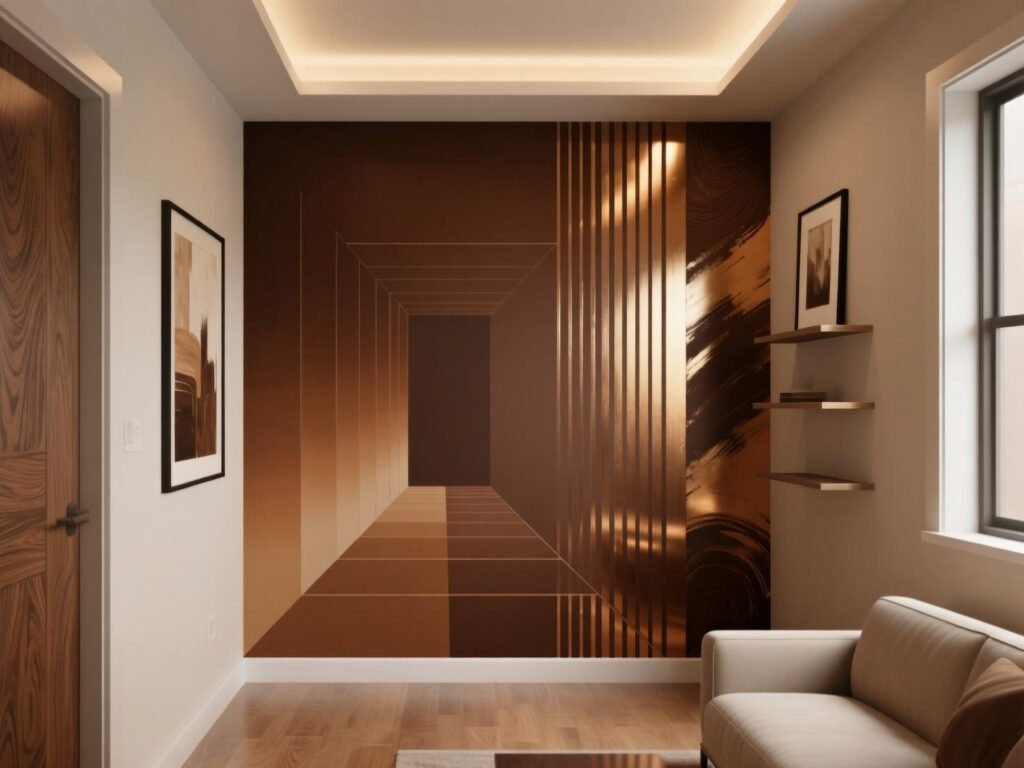
Create a Tunnel or Hallway Effect
Paint a receding hallway or tunnel using perspective making the wall appear to open into deep space. The vanishing point effect creates dramatic depth. It’s visual magic making walls disappear.
Establish a central vanishing point then draw architectural elements converging toward it. Add atmospheric perspective making distant areas lighter and hazier. This 3D wall painting idea requires understanding perspective but creates jaw-dropping results.
Add Painted Architectural Molding
Paint faux crown molding, chair rails, or decorative trim using highlights and shadows. The illusory millwork adds elegance without carpentry. It’s architectural detail for the cost of paint.
Study actual molding photographing how light creates shadows and highlights. Paint these effects carefully creating dimensional appearance. This 3D wall painting idea adds sophistication to plain walls without installation costs.
Paint Oversized Dimensional Florals
Create large botanical elements—leaves or flowers—using shading making them appear three-dimensional. The sculptural nature adds depth and organic softness. It’s botanical art with physical presence beyond flat illustration.
Paint each petal or leaf with gradient shading establishing consistent light direction. Add cast shadows where elements would overlap. This 3D wall painting idea combines nature themes with dimensional technique.
Making 3D Wall Painting Work
- Establish Consistent Light Direction: Choose where imaginary light comes from and maintain that direction throughout—inconsistent lighting breaks the illusion. It’s committing to light source and following through. The disciplined consistency makes effects believable.
- Practice Techniques First: Try shading and perspective on poster boards or canvas before tackling walls. It’s building confidence and refining technique on disposable surfaces. The practice prevents expensive wall mistakes.
- Use Reference Images: Study photos of actual three-dimensional objects noting how light creates shadows and highlights. It’s learning from reality to create convincing illusions. The observational study improves painted effects dramatically.
- Step Back Frequently: View work from the distance people will actually see it checking if the illusion reads correctly. It’s maintaining big-picture perspective instead of getting lost in details. The regular distance checks keep effects working at viewing distance.
Frequently Asked Questions About 3D Wall Painting
Do You Need Artistic Skills?
Simple geometric 3D effects work with basic shading skills and good taping. Complex trompe l’oeil murals require drawing ability and understanding of perspective. Start with simple projects building skills before attempting photorealistic scenes.
Many 3D effects rely more on patient technique than natural talent. The methodical approach to shading and clean edges delivers impressive results even without art school training.
What Paint Works Best?
Regular interior acrylic or latex paint works perfectly. Multiple shades of your chosen color create gradients—buy several values or mix your own. Matte finishes prevent glare that could break illusions. Craft acrylics work for detailed areas.
Quality paint with good coverage applies more evenly making blending easier. The smooth application helps create convincing gradients and transitions.
How Long Does It Take?
Simple geometric patterns take 4-8 hours including taping and painting. Complex murals require 20-40 hours spread over multiple sessions. The time investment depends entirely on complexity and your skill level.
Work in stages letting paint dry between layers and steps. The patient approach prevents smudging and allows adjustments.
Can You Use Stencils or Projectors?
Absolutely—projectors trace complex designs onto walls ensuring accurate proportions and perspective. Stencils create repeating geometric patterns. These tools make 3D painting accessible to people without freehand drawing skills.
The technology assists with layout and shapes while you handle the shading creating dimensional effects. The combination delivers impressive results without requiring drawing ability.
What Rooms Work for 3D Painting?
Living rooms, bedrooms, home offices, and dining rooms all suit 3D painted features. Accent walls work better than painting entire rooms. The feature wall approach creates impact without overwhelming spaces.
Consider sight lines—paint 3D effects where people naturally look from main seating or entry points. The strategic placement ensures the work gets appreciated.
How Do You Fix Mistakes?
Let mistakes dry completely, lightly sand if needed, prime, and repaint. The forgiving nature of paint allows corrections and adjustments. Keep extra base color for touch-ups and corrections.
Many perceived mistakes look fine from normal viewing distance. Resist over-correcting details nobody will see. The appropriate perspective prevents unnecessary fixing.
Does 3D Painting Work in Small Rooms?
Yes, but choose effects carefully. Receding perspectives or niches can make small rooms feel larger. Avoid effects that project outward potentially making small spaces feel more cramped. The thoughtful selection works with room dimensions.
Lighter colors and effects creating depth work better than dark protruding elements in compact spaces. The color and direction choices impact perceived room size.
Should You Hire a Professional?
Complex trompe l’oeil scenes benefit from professional muralists’ skills. Simple geometric or shading effects are totally DIY-able with practice. The decision depends on project complexity and your comfort level.
Local art students or community artists often paint custom work affordably. The middle-ground option gets custom 3D effects without full professional muralist rates.
Adding Dimension to Your Space
3D wall painting ideas prove that flat surfaces don’t have to stay flat. The creative use of shading, perspective, and optical illusions transforms ordinary walls into dimensional art that changes how you experience entire rooms. From simple geometric patterns to complex architectural trompe l’oeil, painted dimension adds drama and interest impossible with flat color alone.
Start with simple projects building confidence and technique before attempting complex illusions. Practice shading and perspective understanding how light creates dimension. The gradual skill building creates increasingly impressive results while making walls genuinely interesting instead of just backgrounds.
Which 3D technique intrigues you most? I’m curious if you’re brave enough to try a full trompe l’oeil mural or starting with geometric patterns!