
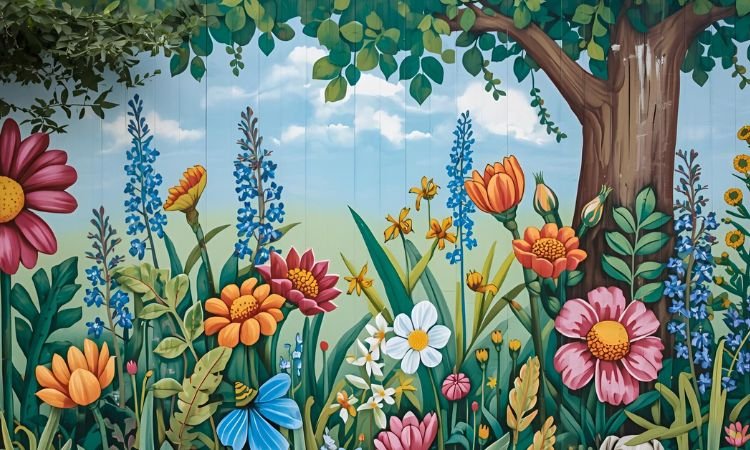

That blank fence or concrete wall in your backyard is basically a giant canvas just sitting there doing nothing. Most people leave them plain or weathered, but here’s the thing—a little paint turns boring barriers into actual garden features. It’s like adding art to your outdoor room.
Garden wall painting ideas create focal points, brighten dark corners, and add personality to outdoor spaces without major construction. The right colors and designs complement plants while making your yard feel more finished and intentional. It’s turning functional structures into beautiful backdrops.
We’re covering 9 garden wall painting ideas that work for fences, retaining walls, and outdoor structures. These range from simple solid colors to artistic murals, but they all share one goal—making your outdoor walls work as hard as your landscaping. And the best part? Outdoor paint is surprisingly durable when done right.
What Makes Garden Wall Painting Work
- Weather-Resistant Paint Is Essential: Outdoor surfaces need paint formulated for sun, rain, and temperature swings. It’s investing in products that last seasons instead of peeling after one winter. The proper paint makes the difference between lasting beauty and constant maintenance.
- Color Affects Plant Appearance: Wall colors change how your plants look—dark backgrounds make foliage pop while light colors brighten shady areas. It’s choosing hues that enhance your garden instead of competing with it. The strategic colors make plants the stars.
- Scale Matters Outdoors: What looks bold on a paint chip might disappear outside—go bigger and braver than you think. It’s remembering that outdoor spaces need larger gestures. The scaled-up approach creates impact visible from across the yard.
- Prep Work Determines Longevity: Clean surfaces, proper primer, and quality paint create lasting results. It’s doing foundation work preventing premature failure. The thorough prep pays off through years of good looks.
9 Garden Wall Painting Ideas
Transform your outdoor spaces with these garden wall painting ideas that add color, interest, and personality to plain surfaces.
Paint It Deep Charcoal or Black
Choose dramatic charcoal or black creating a moody backdrop making plants pop brilliantly. The dark surface acts like nature’s blackboard highlighting every leaf and flower. It’s the designer secret for making gardens look more lush.
Use exterior flat or satin paint applying two coats for even coverage. The dark background works especially well for white, chartreuse, or variegated foliage. This garden wall painting idea costs standard paint prices but delivers magazine-worthy garden drama immediately.
Go With Mediterranean Blue
Paint walls in soft sky blue, turquoise, or cobalt evoking Mediterranean gardens. The cheerful color brightens spaces and complements terra cotta pots perfectly. It’s instant vacation vibes in your backyard.
Choose blues with warm undertones avoiding cold gray-blues that look dingy outside. Pair with white trim or natural wood for classic appeal. This garden wall painting idea creates that European garden feel people pay landscape designers for.
Create a Sage Green Backdrop
Use soft sage or olive green blending with foliage while still providing definition. The natural color recedes visually making gardens feel larger. It’s sophisticated neutrality that works with any planting style.
Choose greens leaning slightly gray rather than bright kelly greens. The muted tones feel organic and timeless. This garden wall painting idea delivers understated elegance letting your plants take center stage.
Add a Geometric Pattern
Paint bold geometric shapes—chevrons, hexagons, or modern blocks—creating contemporary outdoor art. The graphic pattern turns walls into features regardless of plantings. It’s making a statement that works year-round.
Use painter’s tape achieving crisp lines and plan your pattern carefully before painting. Limit to 2-3 colors preventing overwhelming chaos. This garden wall painting idea requires patience but creates custom outdoor art for just paint costs.
Try Terracotta or Warm Rust
Choose warm earthy terracotta, rust, or burnt orange creating Mediterranean warmth. The clay-inspired hues complement stone, gravel, and natural materials beautifully. It’s bringing that sun-baked villa feeling to your space.
These warm tones work especially well in gardens with purple, blue, or silver foliage. The complementary colors create sophisticated combinations. This garden wall painting idea adds instant warmth even in cooler climates.
Paint a Simple Mural
Create or commission a garden-themed mural—oversized leaves, abstract botanicals, or whimsical designs. The artistic element becomes your garden’s focal point. It’s getting custom art scaled perfectly for outdoor viewing.
Keep designs simple with bold shapes and limited colors for longevity and impact. Consider your artistic ability honestly—simple abstracts work better than attempting detailed realism. This garden wall painting idea costs $200-500 if hiring an artist or just paint if you’re DIYing.
Use Crisp White for Brightness
Paint walls bright white reflecting maximum light into shady gardens. The clean backdrop makes everything look fresh and intentional. It’s the blank canvas approach letting plants and furniture provide all the color.
Use exterior white with mildew-resistant properties staying cleaner longer. Accept that white needs more frequent cleaning than darker colors. This garden wall painting idea brightens dim corners and creates that classic English garden look.
Create an Ombre Effect
Graduate color from light at top to dark at bottom (or vice versa) creating artistic interest. The blended transition adds movement and sophistication. It’s painting technique as garden feature.
Blend colors while wet working in sections for smooth transitions. Practice on boards first perfecting your technique. This garden wall painting idea takes more skill and time but creates genuinely unique results.
Add Horizontal Color Blocking
Paint wide horizontal stripes in complementary tones dividing the wall into bands. The geometric division adds modern interest without complex patterns. It’s simple color blocking with serious impact.
Use 2-3 colors maximum and make bands substantial—at least 18-24 inches wide. Align bands with natural sight lines or existing features. This garden wall painting idea creates architectural interest through simple color placement.
Making Garden Wall Painting Work
- Clean Surfaces Thoroughly First: Power wash removing dirt, mildew, and loose paint before starting. It’s creating a clean foundation for paint adhesion. The proper cleaning prevents premature peeling and failure.
- Prime Bare or Porous Surfaces: Use exterior primer on raw wood, new concrete, or previously unpainted surfaces. It’s sealing surfaces and creating uniform base for topcoats. The primer step ensures even color and better durability.
- Choose Exterior-Grade Paint: Use paint specifically formulated for outdoor exposure with UV protection and weather resistance. It’s spending a bit more on paint lasting years longer. The quality products justify their cost through performance.
- Apply Multiple Thin Coats: Two or three thin coats provide better coverage and durability than one thick coat. It’s building layers for lasting results. The patient application creates professional-looking finishes.
Frequently Asked Questions About Garden Wall Painting
What Paint Should You Use Outside?
Exterior acrylic latex paint with mildew resistance works best for most garden walls. Choose satin or semi-gloss finishes for easier cleaning and better weather resistance. Flat paint works for very protected areas but shows dirt more.
For wood fences, use exterior stain-blocking primer followed by exterior house paint. For concrete or brick, use masonry paint designed for porous surfaces. The surface-specific products ensure proper adhesion and longevity.
How Long Does Garden Wall Paint Last?
Quality exterior paint lasts 5-10 years on protected surfaces and 3-7 years on fully exposed walls. Duration depends on sun exposure, weather extremes, and surface preparation quality. South-facing walls in harsh climates need repainting more frequently.
Regular cleaning and occasional touch-ups extend paint life significantly. The maintenance effort determines how long painted surfaces look good.
Can You Paint Garden Walls Any Color?
Technically yes, but consider how colors affect your garden’s appearance. Very bright colors overwhelm plantings while dark colors make small spaces feel closed in. Test samples living with them for weeks before committing.
Check neighborhood guidelines or HOA rules—some communities restrict exterior paint colors including fences and walls. The preliminary checking prevents problems later.
Do Dark Colors Fade Faster?
Dark colors show fading more noticeably than lighter shades, especially in intense sun. Choose high-quality exterior paints with maximum UV protection minimizing fading. Accept that all colors fade somewhat over time—it’s part of outdoor life.
The graceful aging can actually look good—slightly faded paint develops character. Plan for eventual repainting as maintenance rather than failure.
How Do You Paint Textured Walls?
Use thick nap rollers (3/4 inch or more) pushing paint into crevices and texture. Spray painting works well for heavily textured surfaces like stucco. Brush work small sections ensuring complete coverage.
Textured surfaces require more paint than smooth ones—buy extra and apply liberally. The rough texture needs thorough coverage preventing thin spots showing through.
What About Painting Brick?
Painted brick is permanent—you can’t easily remove paint once applied. Ensure you’re committed before painting brick walls. Use masonry primer and quality exterior paint designed for porous surfaces.
Painted brick needs repainting eventually as original surface. Consider limewash or masonry stain for more breathable, less permanent options. The irreversible nature requires certainty before starting.
Should You Paint Both Sides?
Paint the side you see most—usually the yard-facing side. Painting both sides increases longevity protecting the structure but doubles work and cost. For privacy fences, consider neighbor relations before painting their side.
Standalone garden walls benefit from painting both sides preventing weather damage. The complete coverage maximizes durability though it requires more investment.
Transforming Your Garden Walls
Garden wall painting ideas prove that outdoor vertical surfaces deserve as much attention as plantings and hardscaping. The strategic use of color, pattern, and technique transforms boring fences and walls into garden features that enhance your entire outdoor space year-round.
Start with proper surface prep and quality exterior paint ensuring lasting results. Choose colors and designs complementing your plants and overall garden style. The thoughtful approach creates outdoor walls that beautify your space while protecting structures through proper maintenance.
What’s holding you back from painting your garden walls? I’m curious if you’re nervous about color choice or just haven’t thought of them as part of your garden design!