
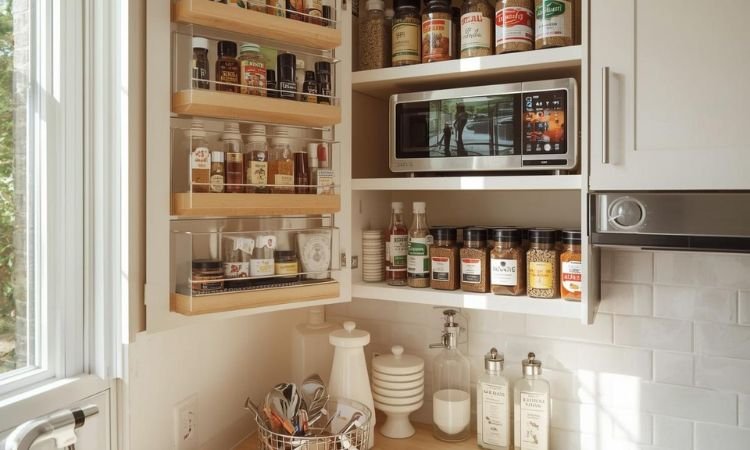

Your spice collection is crammed in a cabinet where you can’t see half of what you own. You keep buying duplicates because you swear you’re out of cumin, then find three bottles hiding in the back. Or your spices are scattered across multiple locations—some in a drawer, some in a cabinet, random ones by the stove—and you waste time hunting instead of cooking.
Small kitchens make spice storage genuinely challenging. Those Pinterest-perfect spice drawer setups need 18+ inches of drawer space you don’t have. Wall-mounted racks require wall space that’s already occupied. Cabinet lazy susans work great if you have deep cabinets, which you don’t. You need solutions that actually fit tight quarters and keep spices accessible.
Here’s what trips people up. They either buy organizational systems without measuring first, or they give up thinking small spaces can’t have organized spices. But tons of compact solutions exist specifically designed for limited space—you just need strategies working with your actual square footage instead of fantasizing about dream kitchens.
Walking through 11 spice organization ideas for small spaces with real dimensions and constraints. You’ll see which solutions fit various tight spots, how to maximize vertical space, what keeps spices visible and accessible, and the setups that work long-term instead of falling apart after two weeks.
Smart Spice Storage for Tight Kitchens
- Visibility Determines Usage: Seeing all spices at glance means actually using your collection versus forgetting what you own. It’s like closet organization where visible items get worn. The exposed storage prevents buying duplicates and wasting money.
- Vertical Space Saves Counters: Using walls, cabinet doors, and height prevents eating precious counter and shelf space. It’s like small apartment storage where up beats out. The elevated approach keeps cooking surfaces clear.
- Uniform Containers Create Order: Matching jars with clear labels transform chaotic collection into organized system. It’s like matched food storage where consistency looks intentional. The cohesive appearance makes even small spaces feel polished.
- Accessibility Beats Aesthetics: Beautiful storage you can’t reach while cooking sits unused. It’s like impractical shoes where function determines actual use. The convenient placement means grabbing spices quickly without interrupting cooking flow.
Spice Organization Small Space Ideas
Maximize limited kitchen space with these compact spice storage solutions designed for real space constraints.
Magnetic Spice Jars on Fridge
Mount magnetic spice jars on refrigerator side or front creating visible accessible storage using zero counter space. The magnetic attachment works perfectly in tight kitchens needing every inch. I’ve found this solution works especially well in galley kitchens where wall and counter space barely exist.
Buy magnetic spice tins with clear tops ($20-40 for 12-24 jars). Fill with bulk spices, label lids. Mount on any magnetic surface—fridge side works great in small kitchens keeping spices visible and reachable. Total costs $30-60 including jars and bulk spices. The vertical storage uses otherwise wasted vertical surface.
Pull-Down Spice Rack in Cabinet
Install pull-down or pull-out rack inside upper cabinet making spices accessible without step stools. The hinged mechanism brings spices to eye level preventing cabinet-diving. And honestly, this transforms those awkward high cabinets into prime real estate.
Purchase pull-down spice rack ($40-100) mounting inside cabinet door or frame. Holds 20-40 spice jars depending on size. Installation takes 30-60 minutes with drill. The mechanism makes high storage functional versus decorative keeping spices actually accessible during cooking.
Narrow Rolling Cart Between Appliances
Use slim rolling cart fitting gaps between refrigerator and counter or stove and wall. The mobile storage slides into 6-10 inch gaps storing spices vertically. Sound familiar to those Japanese organization solutions maximizing every inch? Same concept.
Buy narrow rolling cart with 3-4 tiers ($30-80) fitting your specific gap width. Measure gap accurately before purchasing—carts come in 6, 8, 10-inch widths. Load with spices, oils, and small items. Rolls out for access, tucks away otherwise. The hidden storage uses dead space brilliantly.
Tiered Shelf Risers in Cabinet
Create multiple visible levels in single cabinet shelf using tiered risers. The stepped display lets you see all spices instead of just front row. This basically triples usable space in shallow cabinets.
Purchase 2-3 expandable or fixed shelf risers ($10-25 each) in cabinet. Arrange spices on multiple levels—all bottles visible at once. Costs $25-50 total organizing 30-50 spices in single cabinet shelf. The elevation prevents hiding bottles in back never getting used.
Door-Mounted Spice Racks
Attach spice racks to inside of cabinet or pantry doors using otherwise wasted space. The door-back storage keeps spices hidden yet accessible. I mean, why leave door backs empty when they’re perfect for shallow storage?
Mount 1-3 door racks ($15-40 each) using screws or strong adhesive. Each rack holds 15-25 spices depending on size. Total costs $30-100 organizing 45-75 spices. Measure door clearance ensuring racks don’t hit shelves when closing. The invisible storage frees shelf space for taller items.
Test Tube Style Wall Rack
Mount test-tube-style spice holder on wall creating scientific-chic vertical storage. The narrow tubes hold small spice amounts perfect for home cooks. And honestly, these look way cooler than standard spice racks while using minimal wall space.
Buy wall-mounted test tube rack holding 12-24 tubes ($25-60). Fill tubes with frequently used spices. Mount on wall near stove or on side of cabinet. Costs $40-80 including bulk spices. The slim profile works in tight spaces where traditional racks protrude too much.
Drawer Insert Organization
Dedicate shallow drawer to spices using tiered inserts creating visible storage. The drawer approach keeps spices hidden yet organized and fully visible when opened. This works great if you have drawer space but zero wall or cabinet availability.
Use expandable bamboo drawer organizer with 2-3 tiers ($15-35) or individual IKEA VARIERA boxes creating levels. Lay spices flat with labels facing up. Costs $20-50 organizing 30-60 spices. The drawer storage keeps counters clear while making all spices visible and accessible.
Hanging Spice Rack Under Cabinet
Mount hanging rack underneath upper cabinets keeping spices visible and accessible without counter space. The suspended storage uses that awkward area between counter and cabinets. Sound familiar? This is basically using negative space like floating shelves.
Install under-cabinet spice rack ($25-70) holding 12-30 jars. Ensure adequate clearance for counter use—needs 2-3 inches minimum. The hanging storage keeps daily spices within arm’s reach while cooking without occupying any surface space.
Stacked Clear Storage Containers
Use stackable clear containers with small compartments organizing spices vertically in corner or cabinet. The see-through storage shows contents while stacking multiplies capacity. This works when you have height but limited width.
Buy 2-4 stackable organizers with small compartments ($15-30 each). Each container holds 6-12 spice jars. Stack in cabinet corner or on counter maximizing vertical space. Total costs $40-100. The modular stacking adapts to available space and growing spice collection.
Pegboard Spice Wall
Install small pegboard section creating customizable spice display. The movable pegs and shelves adapt to changing collection and needs. I’ve found pegboard works brilliantly for renters needing non-permanent solutions.
Mount pegboard square (12×12 or 18×18 inches) on wall or inside cabinet ($8-15). Add pegboard shelves and hooks ($10-25). Arrange spice jars on shelves. Total costs $25-50. The reconfigurable system grows with collection without buying new storage pieces.
Repurposed Magnetic Strip
Mount magnetic knife strip holding tins or jars with magnetic lids. The creative repurposing provides compact visible storage. And honestly, magnetic strips work for way more than just knives—they’re super versatile.
Install magnetic strip ($10-20) on wall, cabinet side, or inside cabinet door. Attach magnetic spice tins or add magnetic discs to jar lids. Costs $25-45 total. The simple mounting provides space-efficient storage in otherwise unused spots.
Getting Spice Storage Right
- Measure Before Buying Anything: Know exact dimensions of available space preventing wrong purchases. It’s like furniture shopping where measurements save returns. Write down width, depth, and height of potential storage locations.
- Prioritize Most-Used Spices: Keep daily spices most accessible, rarely-used ones in less convenient spots. It’s like kitchen tool storage where frequency determines placement. The strategic positioning streamlines actual cooking.
- Label Everything Clearly: Write names on jar tops visible from above or front depending on storage orientation. It’s like file organization where identification speeds access. The clear labeling prevents confusion mid-recipe.
- Standardize Container Sizes: Use uniform jars creating cohesive organized appearance. It’s like matching hangers where consistency creates order. The matching containers stack and arrange more efficiently than random collection.
Frequently Asked Questions About Small Space Spice Storage
How Many Spices Fit In Small Kitchen?
Average home cook uses 20-40 spices regularly. Small kitchen can accommodate 30-60 spices using vertical and hidden storage. Serious cooks might have 80-100+ requiring multiple storage solutions.
Audit your actual usage purging expired and unused spices first. Most people find keeping 30-40 favorites covers 90% of cooking needs. The focused collection stays manageable in limited space.
What’s Best Storage for Tiny Galley Kitchen?
Magnetic jars on fridge, door-mounted racks, and slim pull-out carts work best in galley kitchens. These solutions use vertical and hidden spaces versus eating limited counter area. Avoid counter racks or wall-mounted options blocking precious workspace.
The goal is keeping spices accessible without sacrificing counter or wall space needed for actual cooking. Vertical and tucked-away solutions win in galley configurations.
Should You Transfer Spices to Matching Jars?
If space and aesthetics matter—yes. Uniform jars stack better, look more organized, and often fit storage systems more efficiently than random containers. Square jars pack tighter than round ones maximizing space.
DIY costs $15-40 for 24 matching jars plus labels. Pre-filled matching sets run $60-120. The investment creates organized appearance and more efficient space usage. Keep original bottles if you want preserving best-by dates and spice details.
Where Should Spices NOT Go?
Avoid spots above stove—heat degrades spices quickly. Skip sunny windowsills—light destroys flavor. Don’t store in hot cabinets near ovens. Heat, light, and moisture are spice enemies affecting potency and shelf life.
Best storage locations stay cool, dark, and dry. Inside cabinets away from heat sources, in drawers, or on walls away from windows work well. The proper location preserves spice quality and flavor.
How Often Should You Organize Spices?
Full organization once creates system requiring only minor maintenance. Quarterly quick checks removing expired bottles and consolidating duplicates maintain order. Annual complete reassessment adjusts for changing cooking habits.
Once properly organized with good system, spices stay organized with minimal effort. The initial investment in right storage solution pays off through maintained organization versus constant reorganization.
Making Spice Storage Work Forever
Spice organization small space solutions prove that limited kitchens absolutely can have well-organized spice collections. The vertical, hidden, and creative storage options use tight spaces efficiently while keeping spices visible and accessible. And honestly, opening storage where you actually see every spice instead of digging blindly through cabinets makes cooking so much easier.
Start by measuring available spaces—cabinet interiors, door backs, wall sections, gaps. Assess your spice collection purging expired and unused items. Choose storage solution fitting your actual dimensions and cooking style. The realistic approach creates organization lasting years instead of frustrating systems abandoned immediately.
What’s your kitchen’s tightest constraint—no counter space, limited cabinets, zero wall space, or something else? Tell me your space situation and approximate spice collection size and I’ll help narrow down which solution actually works for you!