
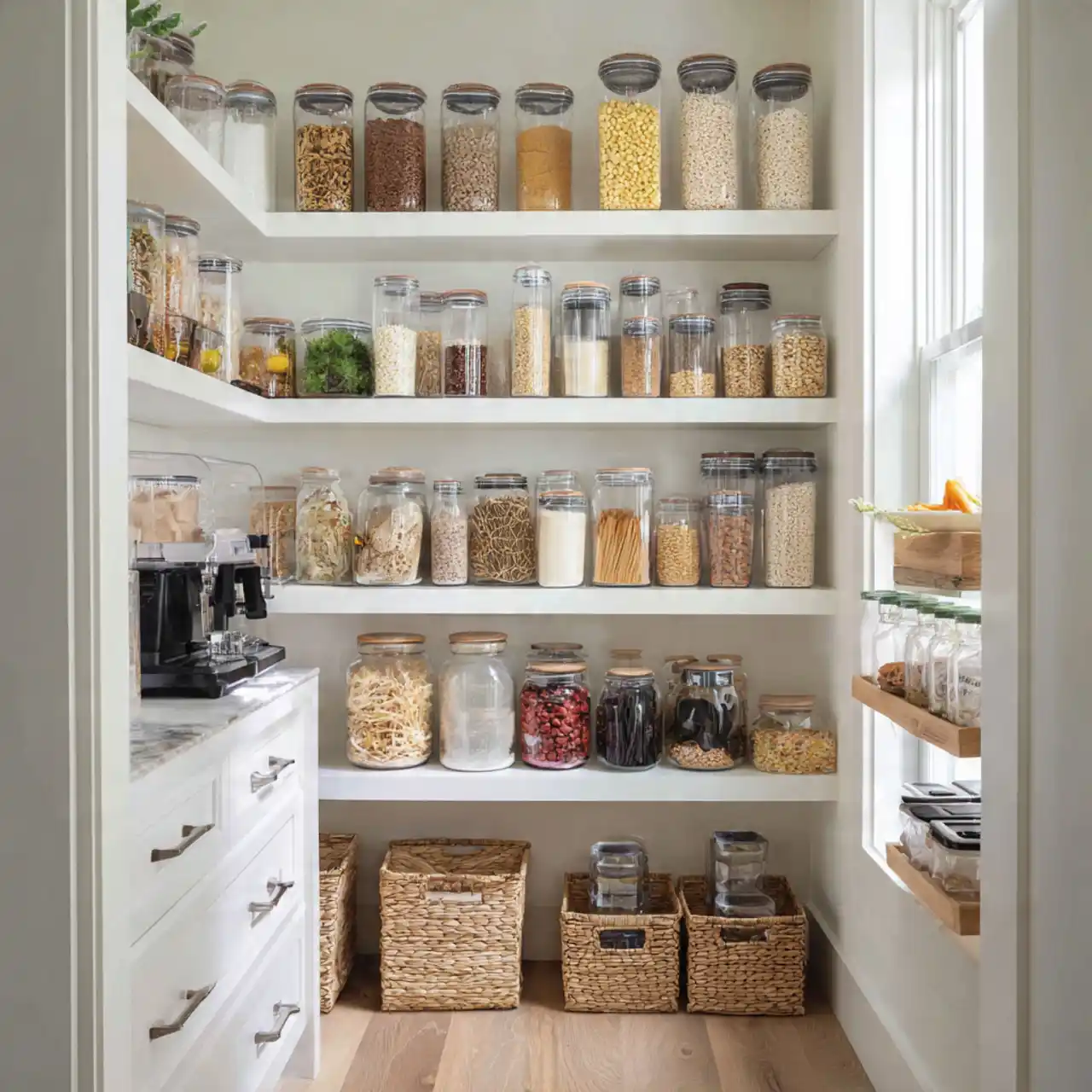

Your pantry is one cabinet or maybe two shelves, and you’re constantly buying pasta you already have because you can’t see what’s hiding in the back. Cans topple every time you grab something. Half your snacks are expired because they got shoved to the back and forgotten. Meanwhile, every organization article assumes you have a walk-in pantry with labeled bins and matching containers.
Small pantry organization is genuinely different from spacious pantry systems. You don’t have room for cute matching canisters taking up more space than original packages. You can’t dedicate entire shelves to single categories. You’re working with maybe 3-4 square feet total trying to store everything from breakfast cereal to canned goods to snacks to baking supplies.
Here’s what actually works. Forget the Instagram-perfect pantries with everything transferred to glass jars—that requires space you don’t have. Instead focus on visibility, accessibility, and realistic systems that prevent food waste and duplicate buying. The goal is seeing what you own and reaching it easily, not creating magazine spreads.
Walking through 11 pantry organization ideas designed for real small-space constraints. You’ll see which systems maximize limited shelf space, how to prevent items disappearing in back, what slim organizers fit narrow cabinets, and the specific solutions that keep small pantries functional instead of frustrating.
Making Limited Pantry Space Actually Function
- Visibility Prevents Waste: Seeing all food at once means using what you have versus forgetting and repurchasing. It’s like transparent storage where sight lines matter. The exposed arrangement prevents hidden expired food and duplicate purchases.
- Tiered Storage Maximizes Depth: Using risers and stepped organizers makes everything visible in deep cabinets. It’s like stadium seating where elevation creates visibility. The layered approach prevents items hiding behind front row.
- Uniform Containers Are Space Luxury: Matching canisters work in large pantries but waste precious space in small ones. It’s like parking efficiency where original packages often pack tighter. The practical approach prioritizes capacity over aesthetics.
- Door Space Provides Bonus Storage: Cabinet door backs offer shallow storage for spices and small items using otherwise wasted vertical space. It’s like bonus shelves where doors become storage surfaces. The supplemental area expands limited capacity.
Pantry Organization Small Space Ideas
Create functional food storage with these compact pantry solutions designed for cabinets, shelves, and genuinely limited space.
Tiered Shelf Risers
Use expandable shelf risers creating multiple visible levels in single shelf. The stepped display lets you see cans, boxes, and jars instead of just front items. I’ve found this single addition makes biggest difference in small pantries—suddenly you see everything you own.
Buy 2-4 expandable shelf risers ($8-20 each) creating 2-3 levels on each shelf. Place cans on risers, boxes behind, taller items on top tier. Costs $20-60 organizing 30-40 items per shelf versus 15-20 flat. The elevation prevents hiding food and wasting money on duplicates.
Lazy Susan Turntables
Install lazy susans on shelves making corner and deep spaces accessible. The rotating platforms bring back items to front without removing everything. And honestly, these work magic in those awkward corner cabinets where stuff disappears forever.
Use 2-3 lazy susans in 10-12 inch diameter ($10-25 each) on shelves. Store oils, vinegars, sauces, baking supplies. Spin to access everything versus digging. Costs $25-60. The rotating access transforms dead zones into functional storage.
Over-Door Spice Rack
Mount multi-tier spice rack on pantry door storing 30-60 spices using zero shelf space. The door-back storage frees shelves for larger items while keeping spices visible and organized. Sound familiar? Door storage saves every tight space situation.
Install over-door spice rack with 4-6 tiers ($20-50) holding standard spice bottles. The vertical arrangement uses wasted door space storing entire spice collection. Costs $25-60. The relocated spices free substantial shelf space for other groceries.
Stackable Can Organizer
Use can dispenser racks storing cans vertically and dispensing from front. The rolling system ensures FIFO (first in, first out) while saving space. I mean, those tumbling can avalanches are nobody’s idea of good organization.
Buy stackable can organizers holding 3-4 cans each ($10-25 per unit). Use 2-4 units organizing 12-30 cans in space of 6-8 stacked messily. Costs $30-80. The organized system prevents forgotten cans expiring while maximizing vertical storage.
Clear Storage Bins with Labels
Group similar items in clear bins creating categories and visibility. The contained organization prevents small items spreading across shelves while transparency shows contents. This works way better than closed containers requiring opening to see inside.
Use 4-8 clear bins in varying sizes ($5-15 each) grouping snacks, baking supplies, breakfast items, pasta/grains. Label fronts clearly. Costs $30-100. The categorical organization makes finding items quick while clear sides show inventory levels at glance.
Hanging Basket Storage
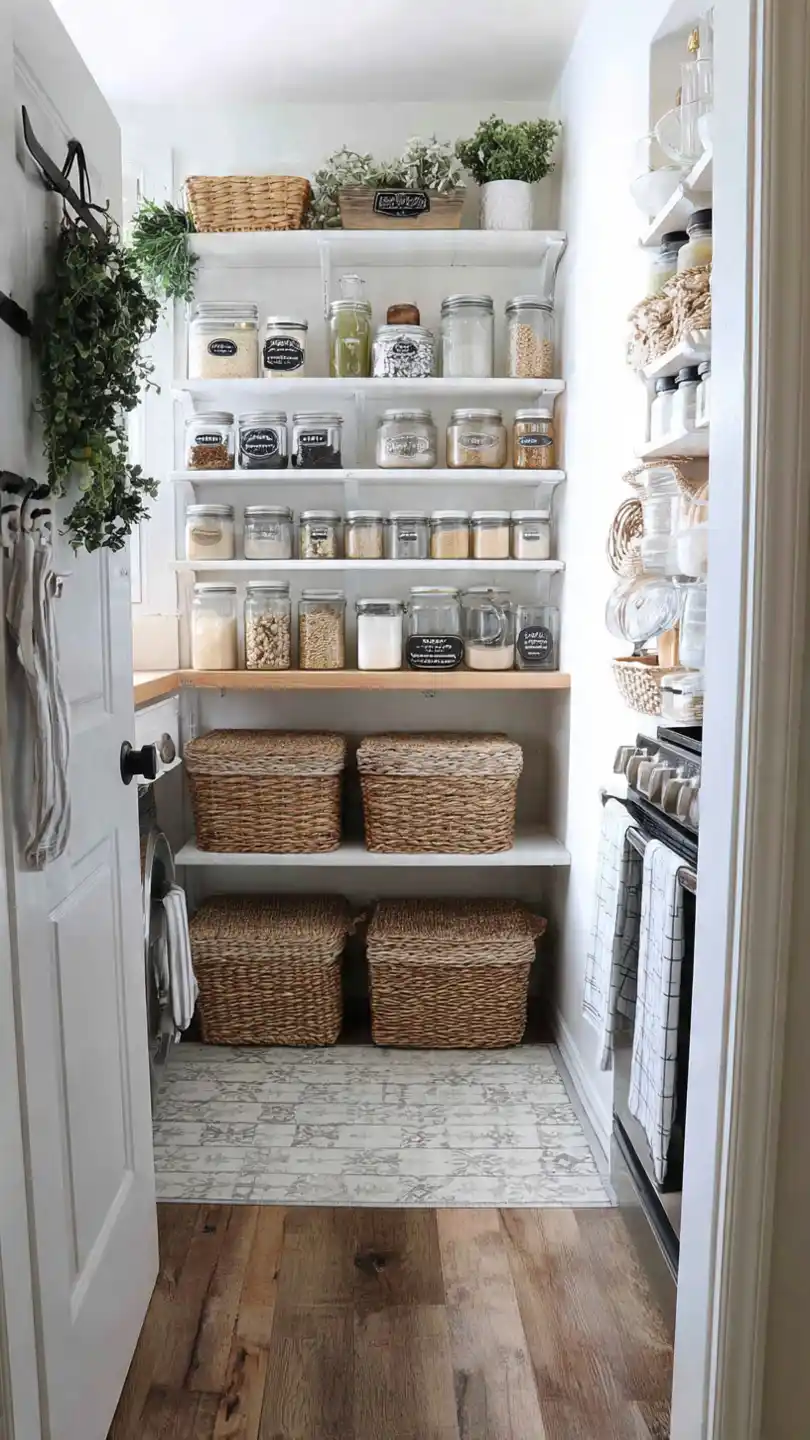
Attach hanging baskets under shelves creating additional storage levels. The suspended containers use gap between shelves without permanent installation. And honestly, this effectively gives you extra shelves without any construction.
Hang 2-4 wire baskets ($8-15 each) from shelf edges. Store produce, snacks, bread, or packaged items. Costs $20-50. The hanging approach adds capacity using that awkward 8-12 inch gap between shelves typically wasted.
Pull-Out Drawer System
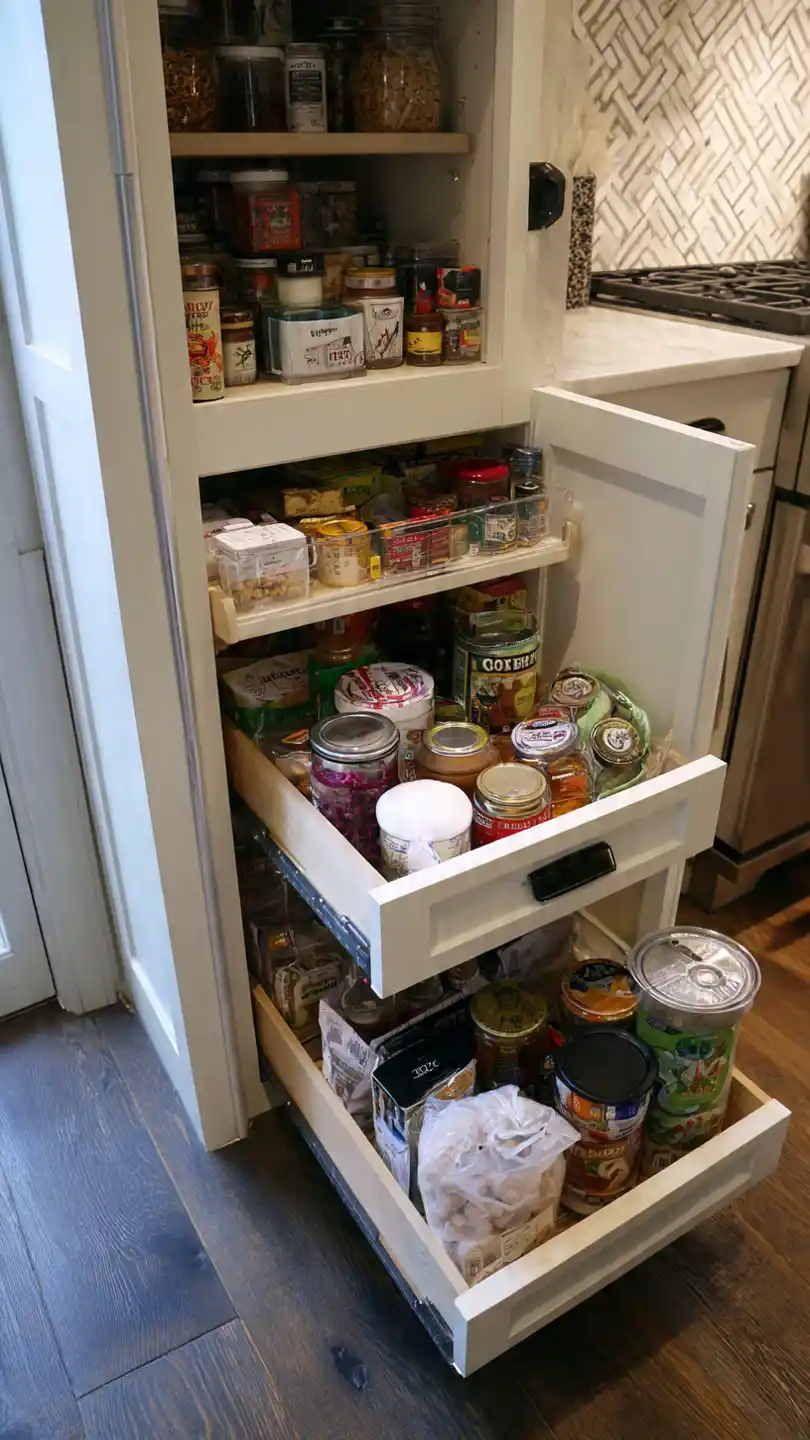
Install pull-out drawers in lower cabinets bringing back items forward. The sliding mechanism eliminates crawling on floor digging through dark cabinets. Sound familiar to those kitchen magic corner solutions? Same accessibility principle.
Add pull-out drawer or basket system ($25-80) to base cabinet. Store potatoes, onions, bulk items, or canned goods. Costs $30-100. The sliding access transforms least-functional storage into highly usable space.
Narrow Rolling Pantry Cart
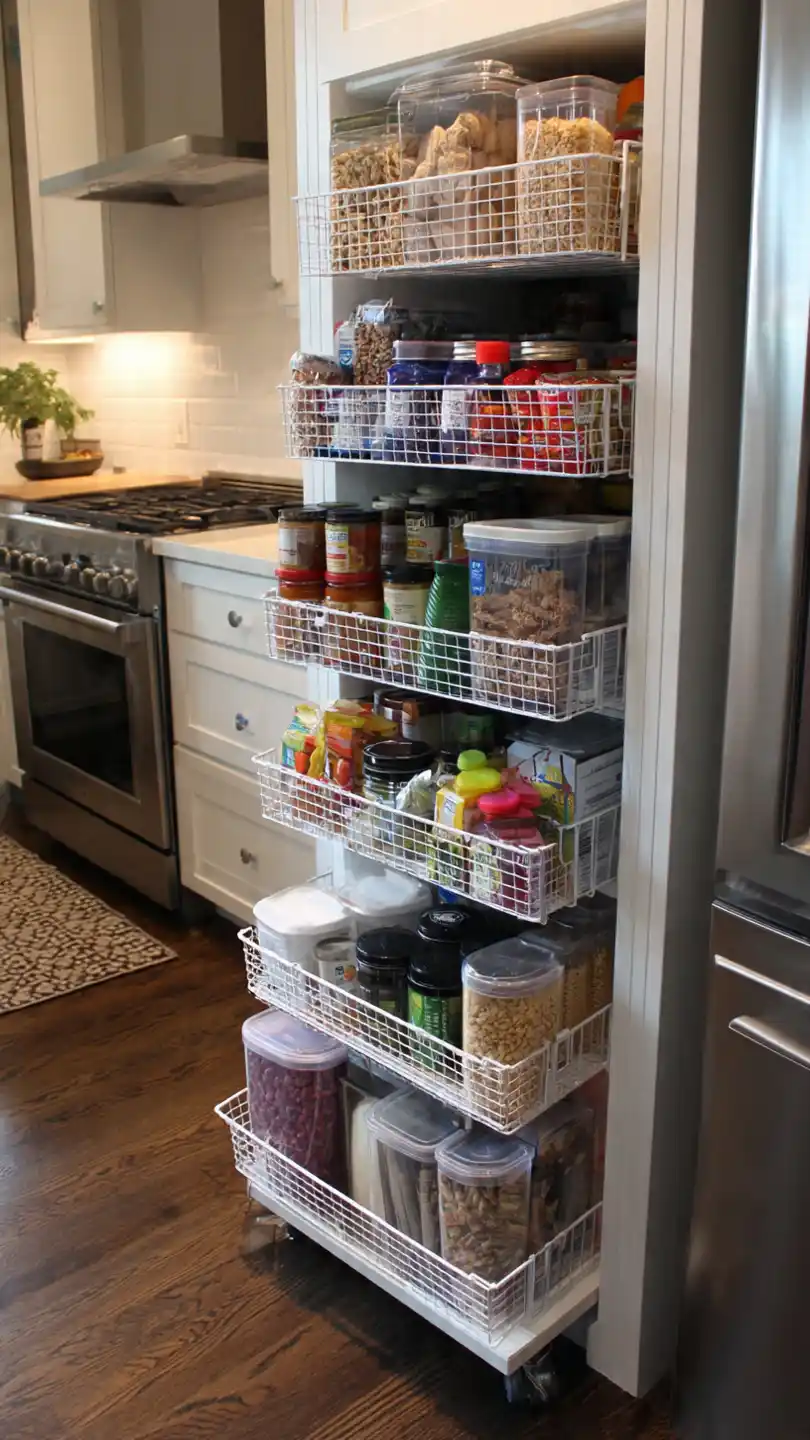
Use slim cart fitting beside refrigerator or in gaps creating mobile pantry overflow storage. The wheeled unit provides substantial vertical storage in 6-10 inch gaps. I’ve found these rolling carts are lifesavers when actual pantry space is non-existent.
Buy 3-5 tier rolling cart 6-10 inches wide ($35-80) fitting available gap. Store snacks, canned goods, baking supplies, or overflow items. Rolls out for access, tucks flush otherwise. Costs $40-90. The bonus vertical storage supplements inadequate cabinet space.
Magazine File Box Organization
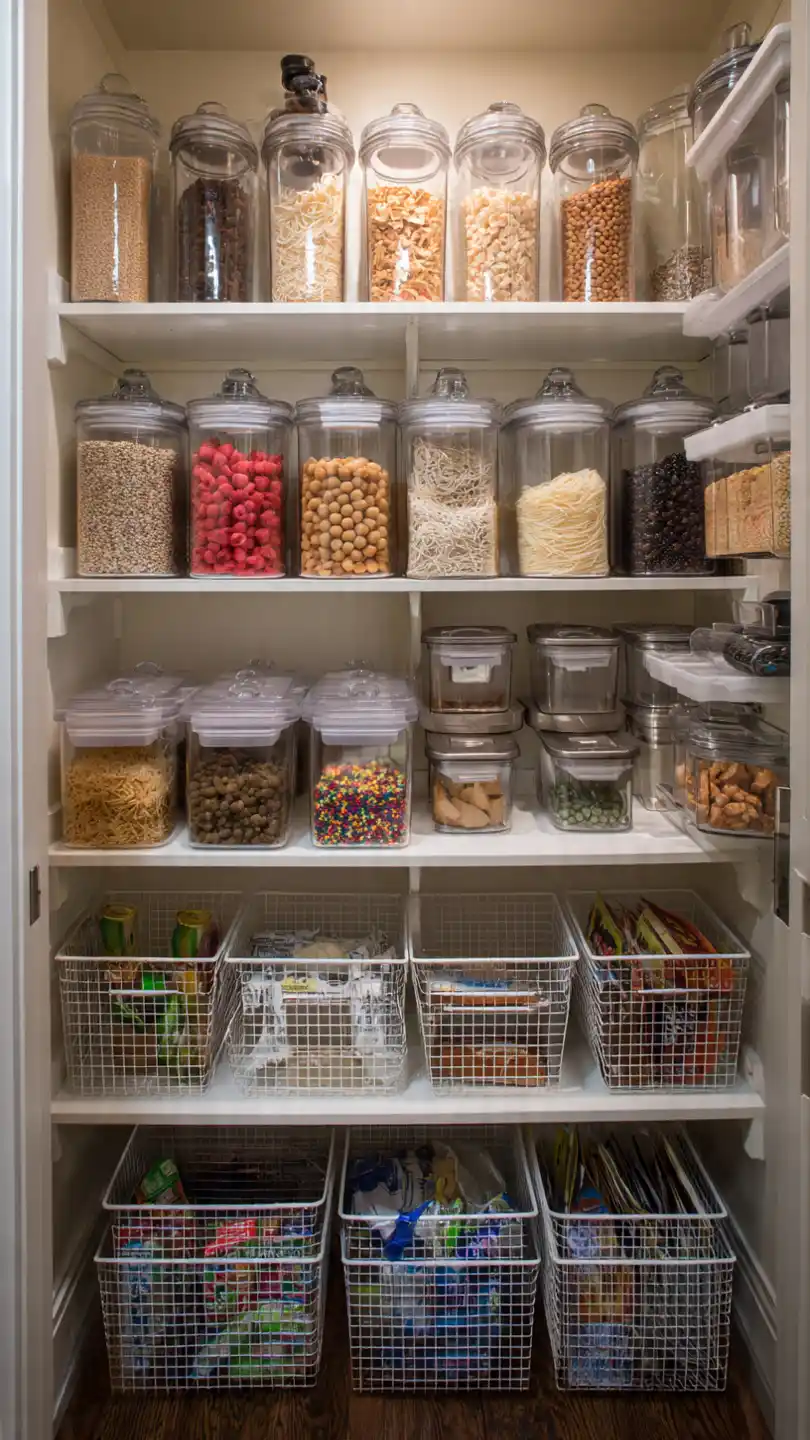
Use vertical magazine files storing packaged goods, pouches, and boxes upright. The filing system prevents toppling and makes everything visible. This is seriously underrated for organizing boxed foods and packets.
Buy 6-10 magazine files ($3-8 each) storing pasta boxes, rice packets, seasoning envelopes, snack boxes. Stand files on shelves creating vertical sections. Costs $25-70. The upright storage shows all packages at once preventing forgotten duplicate purchases.
Adjustable Shelf Clips
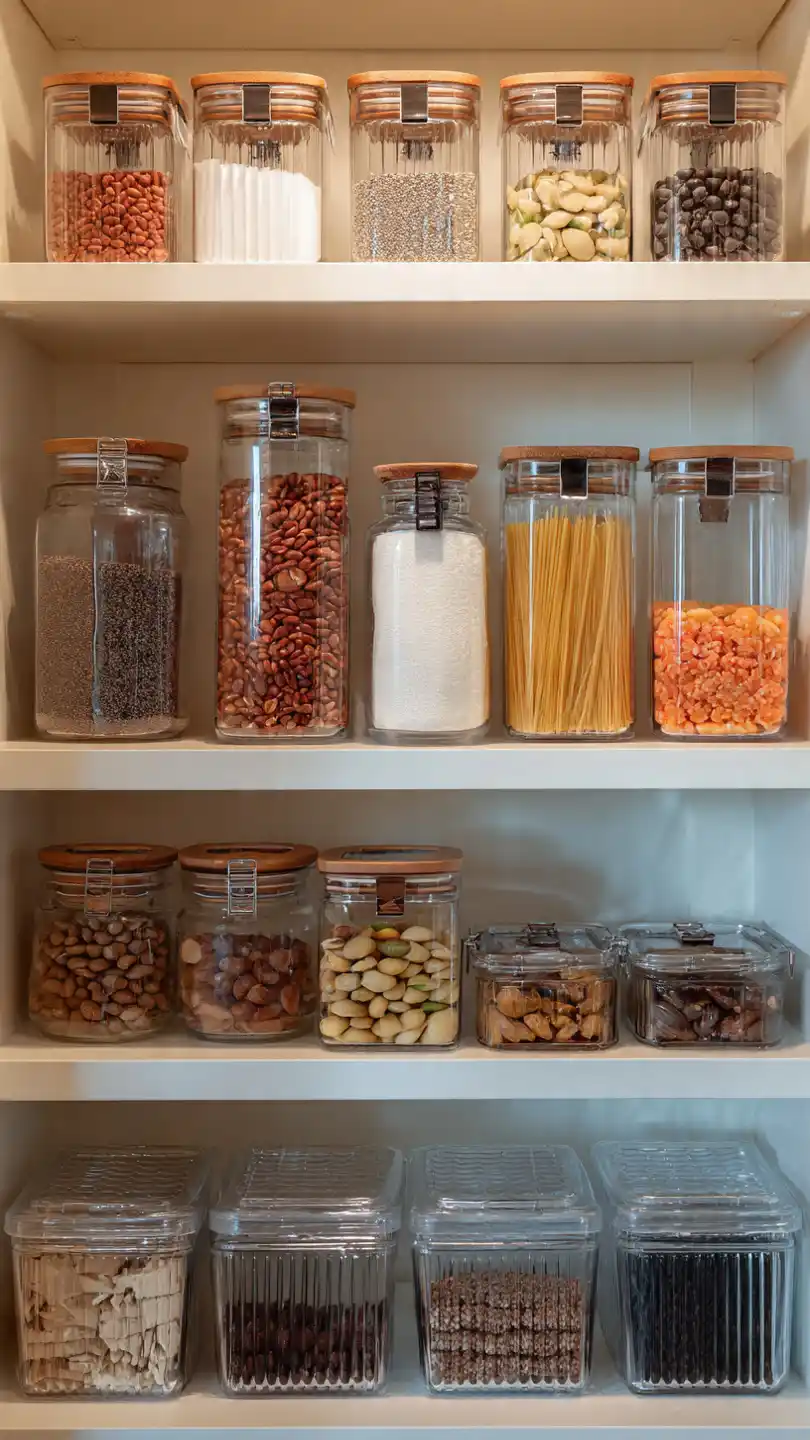
Add extra shelves using adjustable shelf clips maximizing vertical space. The additional levels accommodate more items in same cabinet footprint. And honestly, most pantry cabinets have way too much vertical space between shelves—adding more makes huge difference.
Install additional shelves ($15-30 each) using adjustable clips or brackets. Reduce shelf spacing from 12-14 inches to 8-10 inches. Costs $20-60 adding 2-3 shelves. The increased shelf count dramatically expands storage capacity in fixed space.
Wall-Mounted Narrow Shelves
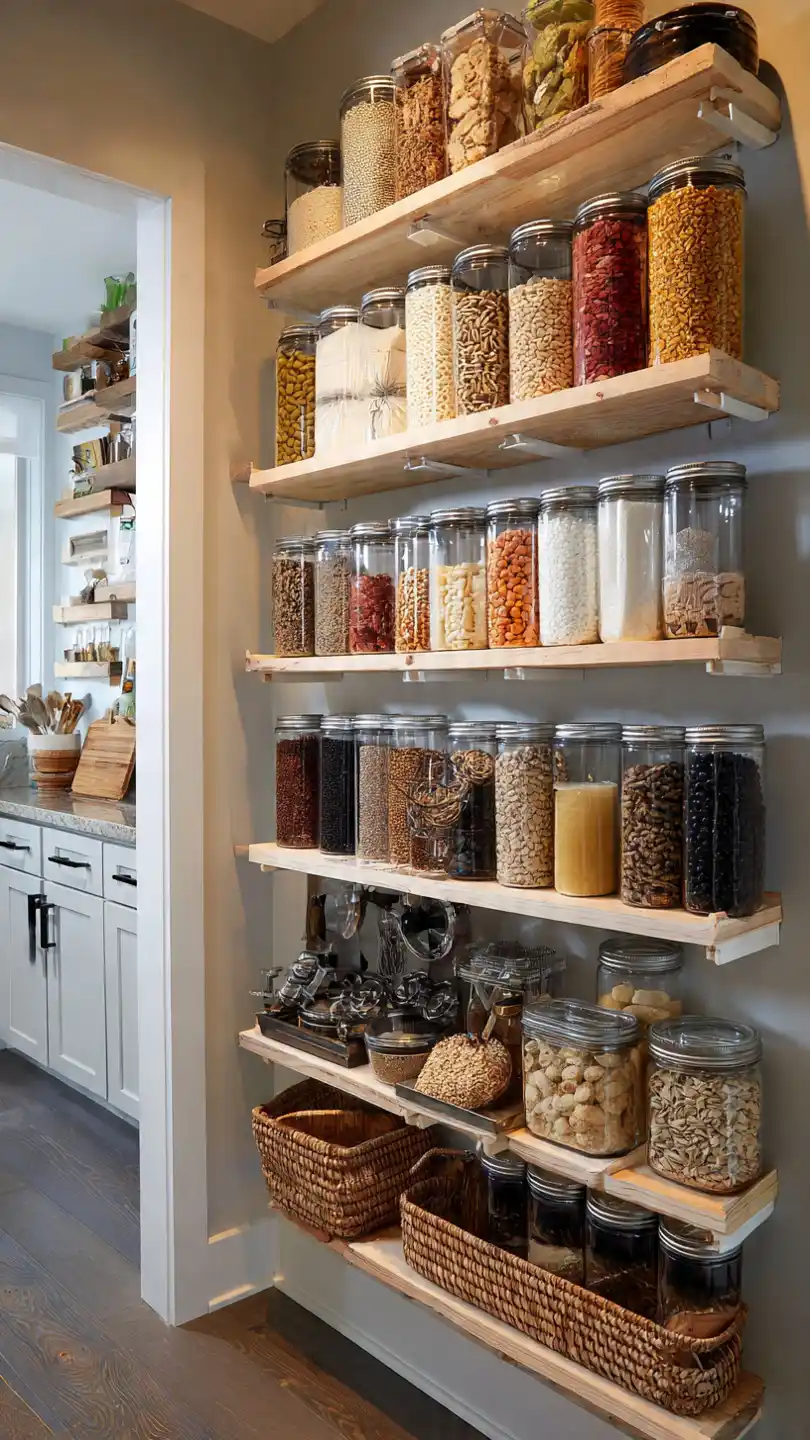
Mount slim shelves 4-6 inches deep on kitchen walls creating supplemental pantry storage. The shallow shelves hold spices, small cans, or boxes without protruding far. I mean, walls are just sitting there empty—might as well use them.
Install 2-3 narrow floating shelves ($15-35 each) on unused wall space. Store frequently-used items, spices, or small packages. Costs $35-90. The supplemental storage reduces pressure on limited cabinet space.
Maintaining Small Pantry Organization
- Shop Your Pantry First: Check existing inventory before grocery shopping preventing duplicates. It’s like wardrobe shopping where knowing what you own prevents overbuying. The conscious awareness reduces waste and saves money.
- First In First Out: Place new items behind older ones ensuring nothing expires forgotten. It’s like warehouse stock rotation where date management matters. The systematic approach prevents food waste.
- Purge Monthly: Quick 10-minute monthly sweep removes expired items and consolidates half-empty packages. It’s like closet editing where regular maintenance prevents overwhelming projects. The consistent attention keeps small spaces functional.
- Resist Bulk Buying: Large quantities overwhelm small pantries creating chaos and waste. It’s like tiny closets where realistic capacity matters. The restrained purchasing matches actual storage ability.
Frequently Asked Questions About Small Pantry Organization
How Much Food Fits in Small Pantry?
A single 18-inch wide cabinet accommodates 30-50 items with proper organization. Two cabinet shelves hold 60-100 items. One full cabinet (3-4 shelves) stores 100-150 items with tiered and organized systems.
Realistic inventory for small pantries includes essentials and frequently-used items only. Bulk storage, backup items, and seasonal products need alternative locations like hall closet or under-bed storage.
Should You Transfer Everything to Containers?
Not in small pantries—matching containers waste precious space. Transfer items that make sense: flour, sugar, rice, pasta, cereal. Keep canned goods, packaged items, and boxed foods in original packaging fitting more per shelf.
Glass jars look pretty but take more space than original packages. The practical approach prioritizes capacity over Instagram aesthetics in genuinely limited space.
What About No Walk-In Pantry?
Most people lack walk-in pantries—single cabinet or few shelves is normal. Supplement main pantry with door storage, wall shelves, and rolling carts. Consider dedicating hall closet shelf to overflow pantry storage.
The distributed approach spreads pantry items across multiple locations versus cramming everything into inadequate single cabinet. Accept that small spaces require creative distributed solutions.
How Do You Organize Without Shelves?
Use stackable storage bins, lazy susans, and tiered organizers creating artificial shelves within cabinet. The standalone organizers provide structure without permanent installation. Wire shelf inserts or tension shelves add levels without drilling.
The modular approach creates organization in builder-grade cabinets lacking adequate built-in shelving. Portable solutions work especially well for renters avoiding permanent changes.
Where Do You Store Bulk Items?
In small kitchens, bulk storage lives elsewhere—hall closet, under-bed bins, garage shelving, basement. Keep 1-2 week supply in kitchen pantry, store bulk quantities in secondary location. Transfer small amounts to pantry as needed.
The two-location system maintains small pantry functionality while allowing cost-effective bulk purchasing. Accept that tiny pantries can’t accommodate Costco quantities directly.
Creating Functional Small Pantry Systems
Pantry organization small space solutions prove that limited cabinets work efficiently with tiered storage and visibility-focused systems. The vertical organizers, door-back storage, and realistic approaches create functional food storage without requiring walk-in pantries. And honestly, seeing everything you own prevents wasting money on duplicate purchases and forgotten expired food.
Start by emptying pantry completely assessing actual available space. Purge expired items and consolidate half-empty packages. Measure shelf dimensions accurately. Choose organizers fitting actual space creating visibility and accessibility. The systematic approach transforms chaotic cabinets into functional food storage.
What’s your pantry situation—single cabinet, couple shelves, literally nothing, or something else? Tell me your space and main frustration and I’ll help figure out which solutions actually fit your specific constraints!