
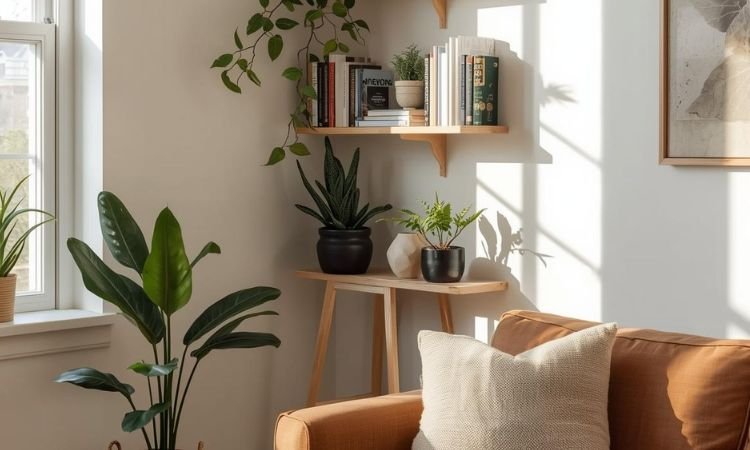

Your corners just sit there empty looking awkward and unfinished. You’ve tried ignoring them but they make your rooms feel incomplete, like something’s missing but you can’t figure out what. Furniture doesn’t fit, regular wall decor looks weird, and you’re running out of ideas for what actually works in these tricky spaces.
Corners are some of the most underutilized spaces in homes. Most people either cram furniture that doesn’t quite fit or leave them bare creating visual dead zones. The right corner decor transforms these problem areas into intentional design features that actually enhance your rooms. It’s not about filling every corner—it’s about making the ones you do decorate look purposeful.
I’m covering everything from floating shelves and plant displays to lighting solutions and creative artwork arrangements. You’ll see which approaches work for different corner types, how to make corners feel intentional rather than afterthoughts, what mistakes make corners look cluttered, and budget-friendly options that deliver impact. These ideas work in real rooms with actual corner dimensions and varying styles.
What Makes Wall Corner Decor Work
Height Draws Eyes Upward: Tall elements in corners utilize vertical space pulling attention toward ceilings making rooms feel larger. It’s like skyscrapers where height creates presence. The upward focus maximizes corner potential.
Functional Pieces Justify Presence: Corner decor that serves purposes beyond decoration looks intentional rather than forced. It’s like furniture where usefulness legitimizes placement. The practical approach prevents corners feeling over-decorated.
Scale Matches Space: Appropriately sized items fit corners without overwhelming or disappearing within them. It’s like proportions where balance determines success. The right scale makes corners feel finished not crowded.
Lighting Creates Focus: Adding light sources in corners prevents dark spots while making decorated corners into features. It’s like spotlights where illumination creates importance. The strategic lighting makes corners intentional design elements.
Wall Corner Decor Ideas That Turn Awkward Spaces Into Features
Transform unused corners with these wall corner decor ideas featuring creative solutions.
Tall Corner Shelving Unit
Install a tall corner shelf creating vertical storage and display space. The triangular or ladder-style shelving fits snugly maximizing the corner footprint. It’s like custom built-ins where shaped units utilize awkward angles.
Style shelves with books, plants, and decorative objects mixing functional and beautiful. The vertical storage claims dead space productively. This wall corner decor solution adds both storage and visual interest.
Statement Floor Plant
Place a large floor plant in the corner creating organic focal point. Tall plants like fiddle leaf figs or bird of paradise fill vertical space beautifully. It’s like living sculpture where plants become architecture.
Add a decorative planter elevating the plant’s aesthetic impact. The natural element softens hard corner angles. This wall corner decor option brings life to spaces while requiring minimal floor footprint.
Corner Gallery Wall
Create an L-shaped gallery wall wrapping both walls meeting at the corner. The artwork arrangement transforms the corner into cohesive design feature. It’s like turning pages where the corner becomes natural transition.
Mix frame sizes and orientations creating dynamic composition. Center a key piece at the corner apex. This wall corner decor approach makes corners feel intentional rather than leftover space.
Floating Corner Shelves
Mount floating shelves specifically designed for corners displaying small plants, books, or decorative items. The triangular shelves utilize corner space without floor footprint. It’s like balconies where elevated platforms maximize space.
Stack multiple shelves at varying heights creating vertical interest. Keep displayed items minimal preventing cluttered looks. This wall corner decor solution adds function without consuming floor space.
Floor Lamp Placement
Position a tall floor lamp in the corner providing ambient lighting and filling vertical space. The functional piece adds height while serving practical purposes. It’s like light towers where illumination justifies presence.
Choose lamps with interesting bases or shades adding sculptural interest beyond just function. The corner placement prevents lamps from cluttering walkways. This wall corner decor choice solves lighting needs while decorating simultaneously.
Oversized Mirror
Hang a large mirror—ideally arched or uniquely shaped—in the corner reflecting light and expanding perceived space. The reflective surface makes corners feel less closed-in. It’s like windows where mirrors open spaces.
Lean large mirrors against the corner walls rather than hanging for casual sophisticated looks. The mirror placement bounces light while creating focal points. This wall corner decor strategy serves both beauty and function.
Corner Ladder Shelf
Lean a decorative ladder against the corner using rungs for hanging plants, blankets, or accessories. The casual lean-to style adds height without permanent installation. It’s like easels where angled pieces feel intentional.
Wooden or metal ladders work depending on your style. The rungs provide multiple display levels. This wall corner decor option adds character while remaining easily movable.
Hanging Plant Collection
Suspend multiple hanging plants at varying heights in the corner creating living chandelier effect. The clustered plants fill vertical space with organic beauty. It’s like gardens where groupings create impact.
Use different planter styles and plant types adding visual variety. Stagger heights preventing uniform boring arrangements. This wall corner decor solution brings nature inside while utilizing overhead space.
Corner Reading Nook
Create a cozy corner reading spot with a comfortable chair, small side table, and wall-mounted reading light. The functional vignette makes the corner into destination. It’s like rooms within rooms where corners become zones.
Add a small bookshelf or floating shelf holding current reads. Layer with throw blanket and pillow. This wall corner decor approach transforms corners into usable living spaces.
Sculptural Accent Piece
Place a tall sculptural object—decorative branch, large vase, or art piece—creating vertical focal point. The statement item makes the corner feel curated. It’s like art installations where single pieces command attention.
Choose pieces with interesting silhouettes showing well against plain walls. The sculptural approach works especially well in minimalist spaces. This wall corner decor strategy creates impact through singular focus.
Stacked Vintage Suitcases
Stack vintage suitcases or decorative trunks in the corner creating both storage and visual interest. The stacked formation adds height while providing hidden storage. It’s like functional art where storage looks decorative.
Top the stack with a plant or lamp integrating into room decor. The vintage pieces add character and conversation. This wall corner decor idea combines practicality with personality.
Making Corner Decor Look Intentional
Choose One Approach Per Corner: Stick with single strategy per corner preventing overcrowded looks. It’s like focus where singular vision beats competing ideas. The dedicated approach creates cohesive results.
Match Room Function: Decorate corners with items supporting room purposes—reading nook in living room, plant in bathroom. It’s like appropriateness where context determines choice. The functional matching makes corners feel logical.
Consider Sight Lines: Decorate corners visible from main seating or entry points leaving less-seen corners simpler. It’s like prioritizing where attention determines effort. The strategic selection maximizes impact.
Leave Some Empty: Not every corner needs decoration—sometimes empty corners provide visual rest. It’s like pauses in music where silence matters. The selective approach prevents over-decorated spaces.
Frequently Asked Questions About Wall Corner Decor
Do All Corners Need Decorating?
No—decorating every corner creates cluttered, over-styled spaces. Focus on corners that feel empty or awkward, especially those visible from main seating areas or room entries. Leave corners that already feel complete or where furniture naturally fills space. Some rooms need just one decorated corner while others might need two or three.
The goal is making rooms feel finished and intentional, not filling every available space. In small rooms, too many decorated corners can feel overwhelming. Consider traffic flow—avoid decorating corners in walkways where items might get bumped. The selective approach creates curated looks rather than decorator showrooms where every surface gets attention.
What Works In Small Room Corners?
Vertical solutions work best in small spaces—tall thin plants, corner shelves, or hanging planters utilizing height without consuming precious floor space. Mirrors expand small rooms visually while filling corner space. Functional pieces like small reading chairs or corner desks make corners productive rather than just decorative.
Avoid bulky items that close in already tight spaces. Keep displayed items minimal—one or two carefully chosen pieces beat clusters of small items. Light colors and transparent materials like glass or acrylic maintain openness. Small room corners benefit from multi-functional choices where decoration also serves purposes like storage or lighting.
How Do You Decorate Corners Without Furniture?
Wall-mounted solutions like floating shelves, hanging plants, or artwork require no floor space. Tall floor plants in slim planters consume minimal footprint while filling vertical space. Lean large mirrors or decorative ladders against walls using corners without permanent installation or furniture commitment.
Floor lamps designed for corners provide both function and height. Multiple small wall-mounted elements like a gallery wall or stacked floating shelves create impact without furniture bulk. The key is thinking vertically and using wall space rather than defaulting to furniture filling corners. These approaches work especially well in rentals where you can’t install major built-ins.
Should Corner Decor Match Room Style?
Yes—corner decor should complement your overall room aesthetic rather than fight it. Modern rooms need contemporary corner solutions like geometric shelving or minimalist plants. Traditional spaces suit ornate mirrors or classic furniture pieces in corners. Bohemian styles embrace macrame plant hangers or eclectic stacked elements.
That said, corners offer opportunities for subtle personality injections without overwhelming rooms. A quirky corner reading nook or unexpected plant display can add character while still working with overall style. The balance is making corners feel like intentional parts of your design scheme rather than random additions from different aesthetics.
What’s The Biggest Mistake In Corner Decorating?
Forcing furniture into corners where it doesn’t naturally fit creates awkward cramped arrangements. Corners aren’t dumping grounds for pieces that don’t work elsewhere. Over-decorating corners with too many competing elements makes them look cluttered rather than curated. Using identical corner treatments in every corner creates repetitive boring looks.
Another common mistake is ignoring scale—tiny items disappear in large corners while oversized pieces overwhelm small corners. Forgetting about functionality and decorating purely for aesthetics creates corners that look styled but don’t contribute to living. The biggest error is treating corners as problems to solve rather than opportunities to enhance spaces thoughtfully.
Creating Your Perfect Corner Spaces
Wall corner decor ideas prove that awkward angles can become intentional design features with thoughtful approaches. The smart strategies utilize vertical space, add functionality, and enhance rooms rather than just filling dead zones. I’ve found that well-decorated corners make entire rooms feel more complete and professionally designed.
Start by identifying which corners actually need attention rather than forcing decor into every angle. Choose solutions matching room functions and your actual lifestyle needs. Consider scale, lighting, and sight lines making corners feel purposeful. The selective approach transforms problem corners into features while leaving others appropriately empty.
What’s your most awkward corner situation? Share your corner decorating challenges below!