
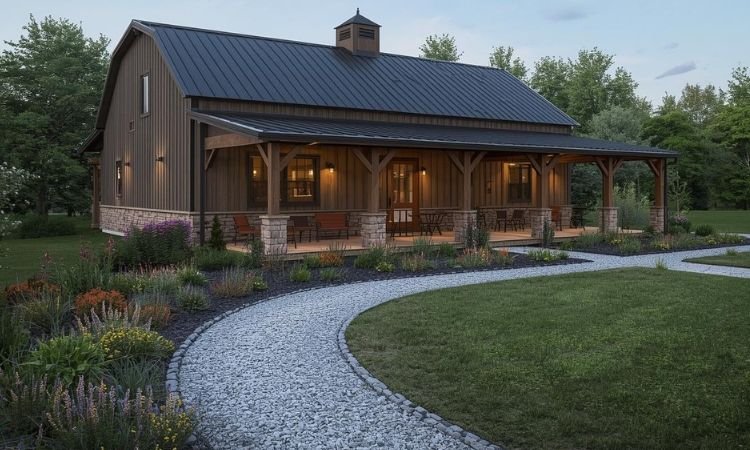

Barndominium owners spend $8,000-$25,000 on initial landscaping with 55% reporting disappointment when traditional suburban approaches clash with agricultural-style structures creating jarring visual disconnect. The mismatch occurs when manicured lawns and ornamental beds surrounding metal buildings look out of place while bare dirt emphasizes industrial rather than residential character costing appeal and property value.
Barndominium landscaping ideas reveal which approaches complement modern barn aesthetics versus suburban designs that fight architectural style. The best strategies embrace rural character while adding warmth and polish creating properties that feel intentionally designed rather than repurposed commercial buildings.
We’re covering 10 barndominium landscaping ideas featuring approaches that enhance rather than contradict metal building architecture. These practical strategies work across climates providing the visual softness and curb appeal that makes barndominiums feel like homes rather than shops.
Key points we’re exploring:
- Landscape styles complementing metal building aesthetics
- Low-maintenance approaches suiting rural properties
- Strategic plantings softening industrial materials
- Hardscaping choices matching barndominium character
- Budget considerations for large-lot landscaping
- Native plant selections requiring minimal care
Essential Qualities of Barndominium Landscaping
Appropriate Scale Matches Structure Size: Plantings, trees, and hardscape elements sized for 2,000-4,000 square foot metal buildings with 12-16 foot walls require larger specimens and bolder massing than suburban homes with traditional proportions. It’s like furniture scaling where size relationships determine success. The properly proportioned landscaping prevents tiny plantings appearing lost against massive walls.
Rustic Materials Echo Building Character: Weathered wood, galvanized metal, natural stone, and gravel surfaces complement metal siding and agricultural origins better than refined brick or decorative concrete fighting barndominium aesthetic. It’s like interior design where material consistency creates cohesion. The coordinated materials create intentional rather than confused appearance.
Low-Maintenance Design Suits Rural Context: Native grasses, drought-tolerant perennials, and naturalized areas require minimal care fitting barndominium owners often choosing rural living specifically avoiding suburban lawn maintenance. It’s like appropriate expectations where landscape matches lifestyle. The practical plant selections deliver beauty without becoming second job.
Strategic Softening Balances Hard Surfaces: Climbing vines, ornamental grasses, and flowing shrubs soften metal walls and rooflines without obscuring architectural features or creating maintenance headaches. It’s like accessorizing where additions enhance without overwhelming. The selective plantings add warmth while respecting building’s modern clean lines.
10 Barndominium Landscaping Ideas
Create cohesive attractive settings with these barndominium landscaping ideas featuring approaches that complement metal building architecture.
Native Wildflower Meadow
Replace traditional lawns with native wildflower meadows creating low-maintenance colorful landscapes suiting rural barndominium settings. The naturalized areas with regional wildflowers require mowing 2-3 times annually versus weekly lawn cutting while supporting pollinators. It’s like prairie restoration where native plants thrive without intervention.
Prepare soil by removing existing grass and broadcast native seed mixes suited to region. Allow establishing for full season before expecting blooms. Initial costs run $500-$2,000 per acre for quality seed and preparation. This barndominium landscaping eliminates constant mowing while creating natural beauty.
Gravel Courtyard Entry
Create crushed stone or pea gravel courtyards at main entries providing low-maintenance surfaces with rustic character. The permeable hardscaping with defined borders using weathered timbers or steel edging complements metal buildings while eliminating mud. It’s like European farmyards where gravel creates functional elegance.
Include landscape fabric beneath gravel preventing weed growth. Border with drought-tolerant ornamental grasses or lavender softening edges. Expect costs $3-$8 per square foot for gravel with edging. This barndominium landscaping creates polished entry without high maintenance.
Vertical Metal Arbor Plantings
Install metal arbors, trellises, or pergolas near entries supporting climbing vines that soften building facades. The vertical structures with wisteria, climbing roses, or clematis add organic elements against industrial materials while maintaining modern clean lines. It’s like living architecture where plants become structure.
Choose powder-coated steel or galvanized metal matching building finishes. Plant perennial vines with seasonal interest. Costs range $400-$1,500 for quality metal structures. This barndominium landscaping adds vertical softening without compromising modern aesthetic.
Mixed Native Grass Borders
Frame barndominium perimeters with drifts of ornamental native grasses creating textural contrast against flat metal walls. The swaying grasses—switchgrass, little bluestem, prairie dropseed—provide movement and seasonal color while requiring minimal care. It’s like natural frames where borders define without confining.
Plant in generous drifts of 5-9 specimens per variety creating visual impact. Cut back annually in early spring. Expect costs $8-$15 per plant with 40-60 plants creating substantial border. This barndominium landscaping provides four-season interest through low maintenance.
Reclaimed Wood Fence Integration
Install horizontal board fences using weathered barn wood or stained cedar creating rustic boundaries complementing barndominium materials. The contemporary horizontal slat design with wide spacing provides privacy without feeling suburban while wood texture softens metal building harshness. It’s like material echoing where wood and metal dialogue.
Space boards 1-2 inches apart for airflow and modern appearance. Stain natural gray or dark brown coordinating with building trim. Costs run $15-$35 per linear foot installed. This barndominium landscaping defines property with architectural consistency.
Boulder and Stone Accents
Incorporate large boulders, stacked stone walls, or flagstone pathways adding natural elements and permanent structure. The stone features with substantial scale appropriate for barndominium size provide texture contrast and rustic character. It’s like sculpture placement where natural materials ground metal structures.
Choose regional stone varieties maintaining local character. Position boulders in odd-numbered groups with varying sizes. Expect costs $200-$600 per ton for boulders placed. This barndominium landscaping adds timeless natural elements requiring zero maintenance.
Simple Foundation Plantings
Keep foundation plantings minimal using 3-5 evergreen shrubs—boxwood, dwarf conifers, ornamental grasses—at key entry points rather than surrounding entire building perimeter. The selective placement softens corners without overwhelming modern architecture or creating maintenance burden. It’s like jewelry where less creates impact.
Group plants in odd numbers allowing each breathing room. Mulch beds with natural wood chips or decomposed granite. Costs range $300-$1,200 for strategic foundation plantings. This barndominium landscaping adds warmth without traditional suburban appearance.
Metal Livestock Tank Planters
Repurpose galvanized livestock tanks as oversized planters creating whimsical rural connection while providing substantial scale. The 3-6 foot diameter tanks with drainage holes support ornamental grasses, vegetables, or flowering annuals while reinforcing agricultural aesthetic. It’s like industrial chic where function becomes decor.
Drill drainage holes in tank bottoms and fill with quality potting mix. Position near entries or gathering areas. Expect costs $50-$200 per tank plus plants and soil. This barndominium landscaping adds character through agricultural references.
Decomposed Granite Pathways
Create informal pathways using decomposed granite providing firm walking surfaces with natural appearance. The compacted stone fines in warm earth tones complement metal buildings while requiring minimal maintenance and excellent drainage. It’s like hiking trails where natural surfaces feel appropriate.
Edge paths with steel or weathered wood maintaining definition. Install over compacted base for stability. Costs run $3-$6 per square foot installed. This barndominium landscaping connects spaces with low-maintenance rustic charm.
Strategic Tree Placement
Plant shade trees 30-50 feet from barndominium providing energy savings without crowding structure or creating roof damage risks. The substantial native trees—oaks, maples, pecans—at appropriate distances soften property scale while respecting building’s modern lines. It’s like strategic screening where distance determines function.
Choose species native to region for drought tolerance and longevity. Avoid planting directly against building or overhead door areas. Expect costs $150-$500 per tree installed depending on size. This barndominium landscaping provides long-term shade and property value.
Implementing Barndominium Landscape Design
Start with Hardscaping Foundation: Install driveways, pathways, and gravel areas establishing property bones before adding plantings. It’s like building construction where infrastructure precedes finishes. The hardscape foundation defines spaces that plantings will enhance.
Embrace Asymmetry Over Formality: Avoid symmetrical foundation plantings or formal hedges that clash with modern barndominium aesthetic. It’s like contemporary art where balance doesn’t require symmetry. The informal arrangements complement architectural style naturally.
Use Repetition Creating Cohesion: Repeat 3-5 plant varieties throughout landscape rather than using dozens of different species creating busy confusion. It’s like color palettes where restraint creates sophistication. The limited plant selection unifies design while simplifying maintenance.
Consider Views from Inside: Plan landscaping enhancing views from large barndominium windows rather than focusing solely on curb appeal. It’s like interior design where rooms frame exterior vistas. The inside-out planning maximizes daily enjoyment.
Frequently Asked Questions About Barndominium Landscaping
How Much Should You Budget for Barndominium Landscaping?
Basic functional landscaping costs $5,000-$15,000 covering gravel areas, minimal plantings, and simple hardscaping. Mid-range designs with substantial plantings, pathways, and features run $15,000-$35,000. Elaborate landscapes with extensive hardscaping, irrigation, and mature trees reach $40,000-$80,000.
Calculate 5-10% of barndominium construction cost as reasonable landscape budget. Prioritize hardscaping and key plantings initially adding elements gradually as budget permits.
What Plants Work Best Around Metal Buildings?
Native ornamental grasses, drought-tolerant perennials, and regionally adapted shrubs require minimal water and care while thriving in full sun common around barndominiums. Avoid foundation plantings requiring constant moisture or shade. Choose heat-tolerant species handling metal building’s radiant heat.
Regional native plants adapted to local climate, soil, and rainfall patterns consistently outperform exotic species requiring constant intervention. The native preference reduces maintenance while supporting local ecosystems.
Should You Install Irrigation Systems?
Drip irrigation on limited plantings near entries and gathering areas makes sense. Whole-property irrigation systems contradict low-maintenance barndominium landscaping philosophy and cost $3,000-$8,000 for multi-acre installations. Native plantings and naturalized areas thrive without supplemental irrigation once established.
Focus water-dependent plantings in small zones where impact justifies maintenance. Let majority of property adapt to natural rainfall patterns through appropriate plant selection.
How Do You Landscape Large Barndominium Lots?
Intensively landscape 50-100 feet surrounding building with plantings, hardscaping, and maintained areas. Allow remaining acreage remaining natural or mow seasonally creating low-maintenance zones. The concentric approach focuses efforts where visible impact occurs.
Large lots benefit from meadows, native grasses, or leased pasture beyond immediate building zone. The differentiated approach balances appeal with practical maintenance on multi-acre properties.
Can You DIY Barndominium Landscaping?
Yes—straightforward projects like gravel pathways, raised bed gardens, and container plantings work as DIY saving 40-60% versus professional installation. Heavy projects requiring equipment—boulder placement, extensive grading, large tree installation—benefit from professional crews with specialized equipment.
Phased DIY approach allows spreading costs across months or years while learning property’s conditions. The incremental implementation prevents expensive mistakes while building landscape knowledge.
Creating Your Barndominium Landscape
Barndominium landscaping ideas reveal that embracing rather than fighting agricultural character creates most successful outdoor spaces. The rustic materials, native plantings, and informal arrangements complement metal building architecture while providing low-maintenance beauty appropriate for rural properties. The style-appropriate approach creates cohesive properties where landscaping enhances rather than contradicts architectural choices.
Start by defining maintained zones versus naturalized areas matching maintenance willingness to property size. Choose materials and plants echoing barndominium’s modern-rustic character rather than importing suburban landscaping conventions. The authentic approach creates distinctive landscapes that feel intentionally designed for metal building architecture.
What landscaping element would best complement your barndominium? Share your outdoor space priorities below!