Your closet is maybe 4 feet wide with a single rod and shelf, and you’re trying to fit everything you own in there. Clothes pile on the floor because there’s nowhere else to put them. You can’t see half of what you have, and getting dressed feels like playing Jenga hoping nothing falls. Meanwhile, those closet organization videos show walk-ins bigger than your bedroom.
Small closet organization requires completely different strategies than spacious ones. You can’t just add more hangers or bins—there’s literally no room. Instead you need to maximize every single inch vertically and horizontally, use slim-profile organizers, and honestly get ruthless about what actually deserves closet space. Half measures don’t work when you have 12 square feet total.
Here’s what I see constantly. People either cram more stuff into already-full closets creating chaos, or they assume small closets can’t be organized so they give up. But specific systems exist designed for reach-in closets and tiny spaces—you just need strategies that multiply capacity instead of working with what you’ve got.
Walking through 10 closet organization ideas specifically for small spaces with realistic dimensions. You’ll see which systems actually double capacity, how to use vertical space properly, what slim organizers fit tight quarters, and the specific tricks that make tiny closets function like they’re twice the size.
Maximizing Cramped Closet Space
- Vertical Space Is Everything: Using full height from floor to ceiling multiplies storage exponentially. It’s like stacking versus spreading where up creates capacity. The height utilization transforms limited width into functional storage.
- Slim Profile Prevents Crowding: Thin hangers and shallow organizers preserve precious depth in narrow closets. It’s like packing suitcases where efficient shapes fit more. The streamlined pieces prevent overwhelming tight spaces.
- Double-Hanging Multiplies Capacity: Adding second rod below first doubles hanging space instantly. It’s like bunk beds where vertical stacking creates rooms. The doubled rod accommodates shirts, pants, and skirts without requiring more width.
- Every Inch Counts: Floor space, door backs, corners, ceiling height—everything becomes storage opportunity. It’s like Tetris where fitting pieces perfectly matters. The comprehensive approach uses all available space systematically.
Closet Organization Ideas Small Space
Transform cramped closets into efficient storage with these space-maximizing solutions designed for reach-in closets and tight quarters.
Double-Rod Hanging System
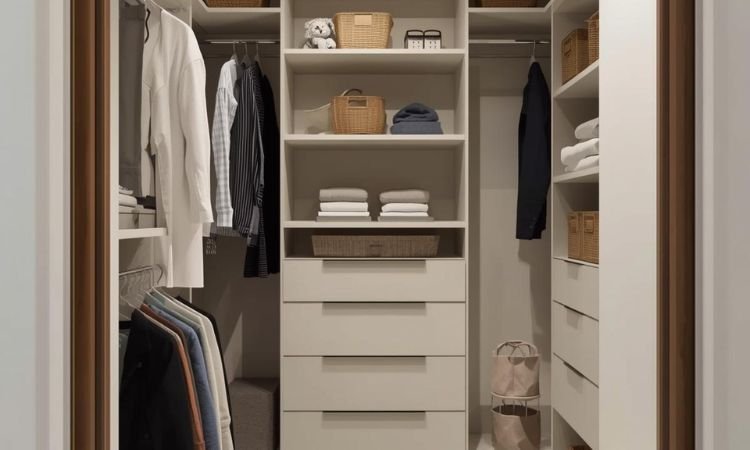
Install second hanging rod below existing rod doubling hanging capacity. The simple addition accommodates short items like shirts, folded pants, and skirts. I’ve found this single change makes biggest impact in small closets—you literally double usable space immediately.
Mount adjustable closet rod ($15-35) 40-42 inches below existing rod. Top rod holds dresses, coats, long items. Bottom rod holds shirts, pants, skirts. Costs $20-50 installed. Works in closets 5+ feet high. The doubled hanging eliminates floor piles instantly.
Slim Velvet Hanger Swap
Replace bulky plastic or wire hangers with ultra-thin velvet versions gaining 30-40% more hanging capacity. The slim profile means fitting significantly more clothes in same rod space. And honestly, this is easiest upgrade requiring zero installation.
Buy 50-pack slim velvet hangers ($15-30). The uniform appearance looks organized while space-saving profile fits more items per foot. Velvet prevents slipping unlike wire hangers. The simple swap immediately increases capacity without any construction.
Over-Door Shoe Organizer
Hang over-door organizer on closet door storing shoes, accessories, or small items using zero floor space. The door-back storage frees shelf and floor space for other items. Sound familiar? This is classic small space hack because it genuinely works.
Purchase 24-pocket over-door organizer ($15-30). Store 12 pairs shoes, or use pockets for scarves, belts, socks, small bags. The vertical storage uses completely wasted space. Choose clear pockets seeing contents or fabric pockets matching decor. Costs $15-30 maximizing dead space.
Shelf Dividers and Stacking
Add shelf dividers creating vertical sections preventing sweater avalanches. The dividers let you stack higher without toppling piles. I mean, those shelf collapses mid-morning are nobody’s idea of fun organization.
Install wire or acrylic shelf dividers ($12-25 for set) creating 4-6 sections per shelf. Stack folded clothes, bags, or boxes vertically in divided sections. Costs $15-30. The contained stacks maintain order while maximizing vertical shelf capacity.
Under-Shelf Hanging Baskets
Attach hanging baskets underneath existing shelves creating additional storage levels. The suspended containers use that awkward gap between shelf and hanging rod. This basically gives you extra shelves without installation.
Hang 2-3 wire baskets ($10-20 each) from shelf edges. Store accessories, socks, undergarments, or folded items. Costs $25-60 total. The hanging storage adds capacity without taking any existing space. Works perfectly in closets with 12+ inches between shelf and rod.
Stackable Shoe Boxes or Racks
Stack shoes vertically using clear boxes or modular racks maximizing floor space. The vertical approach stores 12-20 pairs in space of 4-6 pairs sprawled on floor. And honestly, seeing all shoes at once prevents forgetting what you own.
Buy stackable clear shoe boxes ($3-6 each) or modular shoe rack ($25-50). Stack on closet floor or low shelves. Clear boxes show contents, racks provide open access. Costs $40-100 organizing substantial shoe collection efficiently. The vertical stacking clears floor creating open functional space.
Hanging Closet Organizer
Use fabric hanging organizer with multiple shelves creating instant vertical storage. The suspended shelves hang from rod requiring zero installation or floor space. I’ve found these work brilliantly for renters or people avoiding permanent changes.
Purchase 5-7 shelf hanging organizer ($15-35) hanging from closet rod. Store folded clothes, shoes, bags, or accessories. Each shelf holds 2-3 folded items. Costs $15-35 adding substantial storage instantly. The portable solution moves easily and requires no tools.
Drawer Units on Closet Floor
Add narrow plastic drawer towers on closet floor organizing folded items and accessories. The drawer approach prevents pile digging while using floor space efficiently. This beats throwing everything on shelves hoping you remember where things are.
Choose 3-5 drawer tower 12-18 inches wide ($30-70). Store undergarments, socks, accessories, workout clothes. Costs $30-70 per tower. Use 1-2 units in small closets. The contained drawer storage maintains organization while maximizing floor footprint.
Corner Shelving Units
Install corner shelf unit capturing wasted angular space. The triangular shelves fit corners perfectly storing bags, shoes, or folded items. Sound familiar to shower corner caddies? Same concept, closet-sized.
Buy or build corner shelving ($25-80) fitting closet corners. 3-5 shelves create substantial storage in otherwise unused space. Costs $30-100. The corner utilization extracts capacity from dead zones making small closets more efficient.
Cascading Hooks and Hangers
Use cascading hooks creating vertical hanging chains from single hanger. The multiplication effect hangs 4-6 items using space of one. This works great for tanks, scarves, or lightweight items.
Buy cascading hanger hooks ($8-15 for set) creating vertical chains. Each chain holds 4-6 lightweight items. Costs $10-20 organizing multiple items per rod space. The vertical arrangement multiplies capacity without requiring additional rod installation.
Creating Functional Small Closets
- Purge Before Organizing: Remove items not worn in year creating space for actual wardrobe. It’s like moving where editing first makes packing easier. The ruthless purging prevents organizing stuff you don’t actually use.
- Use Uniform Hangers: Matching hangers create cohesive appearance while often saving space versus mixed types. It’s like matching dishes where consistency looks intentional. The visual uniformity makes small closets feel more organized.
- Organize by Category: Group similar items together—pants, shirts, dresses—making everything findable. It’s like grocery store layout where organization aids navigation. The categorical approach prevents frantic searching mid-morning.
- Maintain Weekly: Spend 10 minutes weekly returning items to homes and straightening. It’s like kitchen cleaning where consistent maintenance beats major overhauls. The regular attention prevents small messes becoming overwhelming chaos.
Frequently Asked Questions About Small Closet Organization
How Small Is Too Small to Organize?
Any closet 2+ feet wide organizes with right systems. Closets under 2 feet work better as specialized storage—shoes only, coats only, linens only. Most reach-in closets measuring 3-6 feet wide accommodate full wardrobes with strategic organization.
Even tiny closets function with double hanging, slim hangers, and vertical storage. The key is realistic expectations—you can’t fit 100 items in 3-foot closet regardless of organization.
What’s First Priority in Small Closet?
Double hanging if ceiling height allows—this instantly doubles capacity. Second priority: slim hangers replacing bulky ones. Third: door-back storage using wasted space. These three changes deliver maximum capacity increase with minimal investment.
Start with changes creating most additional space before buying specialized organizers. The foundational improvements often solve 70% of capacity issues.
Can You Fit Full Wardrobe in Reach-In?
A 4-6 foot wide reach-in closet accommodates 80-120 hanging items plus folded clothes, shoes, and accessories using proper organization. That covers most people’s actual seasonal wardrobe. The key is realistic inventory—not aspirational wardrobe or items never worn.
Seasonal rotation helps—store off-season clothes elsewhere bringing in only current season. The rotation prevents year-round crowding in limited space.
Where Do You Store Off-Season Clothes?
Under-bed storage, hall closet, storage unit, or vacuum bags in basement work for seasonal rotation. In small spaces, keeping only current season in primary closet makes huge difference in functionality and daily use.
Rotate seasonally—spring/summer wardrobe April-September, fall/winter October-March. The focused seasonal approach makes small closets feel more spacious and functional.
What About Shoes in Small Closets?
Vertical storage is critical—over-door organizers, stackable boxes, or narrow shoe racks. Avoid leaving shoes sprawled on floor eating precious space. Consider under-bed storage for off-season or special occasion shoes.
Most people wear 20% of shoes 80% of time. Keep daily shoes accessible, store rarely-worn pairs elsewhere. The focused approach keeps small closets functional.
Making Small Closets Work Daily
Closet organization ideas small space prove that limited closets function beautifully with strategic systems maximizing every dimension. The vertical storage, slim profiles, and comprehensive space usage create capacity dramatically exceeding apparent size. And honestly, well-organized small closet beats chaotic large one for daily functionality.
Start by measuring closet dimensions noting height, width, and depth. Purge ruthlessly keeping only worn items. Install double rod if height allows. Switch to slim hangers. Add door storage and vertical organizers. The systematic approach transforms cramped closets into efficient functional spaces.
What’s your closet’s exact dimensions and biggest challenge—not enough hanging space, shoe storage, or something else? Tell me your measurements and pain points and I’ll help figure out which solutions actually work for your specific situation!