Your bedroom’s cluttered and chaotic and you’re craving that clean minimal look you see everywhere. But every time you try decluttering, the space ends up feeling cold and empty like a hotel room, not somewhere you actually want to spend time. You’re stuck between wanting simplicity and needing your bedroom to feel like home.
Minimal bedroom design isn’t about stripping away everything until rooms feel sterile. It’s about intentional editing where what remains matters more and functions better. Done right, minimal bedrooms feel calm and restful rather than empty and unwelcoming. The difference comes down to choosing quality over quantity and knowing what to keep versus what to remove.
I’m covering 10 strategies from furniture selection and color choices to storage solutions and styling restraint. You’ll see which elements create genuine minimalism versus just empty rooms, how to add warmth without clutter, what mistakes make spaces feel uncomfortable, and budget approaches to achieving the look. These ideas work in real bedrooms where you need functional spaces for sleeping, getting dressed, and actually living.
The Essential Elements Of Minimal Bedroom Style
Quality Trumps Quantity Always: One well-made piece beats five cheap items creating visual calm through fewer better things. It’s like investment dressing where good basics outlast trendy excess. The selective approach creates sophistication through restraint.
Hidden Storage Maintains Surfaces: Everything needs homes behind closed doors keeping surfaces clear and minds peaceful. It’s like magic tricks where things exist without showing. The concealed organization prevents visual chaos.
Neutral Foundations Ground Spaces: Whites, grays, beiges, and blacks create calm canvases letting architecture and key pieces shine. It’s like blank pages where simplicity allows focus. The muted palette reduces visual noise.
Negative Space Matters Most: Empty areas give eyes places to rest making occupied spaces feel more intentional. It’s like silence in music where pauses matter as much as notes. The breathing room prevents overwhelming feelings.
Modern Minimal Bedroom Design That Actually Feels Livable
Create serene restful spaces with these modern minimal bedroom design ideas featuring thoughtful simplicity.
Platform Bed With Storage
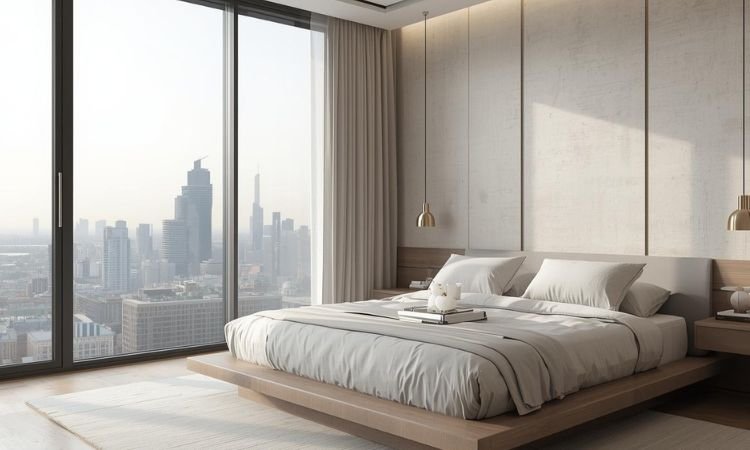
Choose a low platform bed with built-in drawers hiding clutter while maintaining clean lines. The integrated storage eliminates need for additional furniture. It’s like hidden compartments where function doesn’t show.
Select beds in natural wood, white, or upholstered finishes keeping designs simple. The storage prevents stuff from accumulating visibly. This modern minimal bedroom design foundation solves storage while looking intentional.
Floor-To-Ceiling Curtains
Hang simple floor-length curtains in solid colors creating soft texture without pattern clutter. The long panels add height and warmth without visual noise. It’s like fabric architecture where textiles soften without decorating.
Choose linen, cotton, or lightweight materials in whites, grays, or soft neutrals. Avoid patterns or multiple colors. This modern minimal bedroom design element adds necessary softness to stark spaces.
Single Statement Light Fixture
Install one beautiful pendant or sculptural light fixture serving as the room’s only decorative element. The singular focus creates impact through restraint. It’s like jewelry where one piece beats multiple.
Choose fixtures with interesting shapes or materials—black metal, natural wood, or simple glass. The functional art piece provides necessary lighting while adding visual interest. This modern minimal bedroom design choice proves less really means more.
Monochromatic Color Scheme
Use variations of one color—all whites, all grays, all beiges—creating calm cohesive spaces. The tonal approach eliminates color competition and visual busyness. It’s like monotone photos where simplicity creates impact.
Layer different shades and textures within your chosen color family adding depth. The unified palette makes spaces feel larger and calmer. This modern minimal bedroom design strategy delivers serenity through color discipline.
Streamlined Nightstand
Select minimal nightstands—simple cubes, floating shelves, or small tables—with clean lines and minimal styling. The understated pieces serve function without demanding attention. It’s like supporting actors where presence doesn’t overpower.
Style with only a lamp and maybe one small item. Avoid collections of books, photos, or decorative objects. This modern minimal bedroom design approach maintains the clean aesthetic at bedside.
Textured Bedding Layers
Add interest through textile texture—linen sheets, waffle weave blankets, chunky knit throws—rather than patterns or colors. The tactile variety creates warmth without visual clutter. It’s like sculpture where dimension comes from form not decoration.
Stick to neutral colors letting texture create all the interest. The layered linens add comfort and coziness. This modern minimal bedroom design detail proves texture beats pattern for minimal warmth.
Wall-Mounted Everything
Mount bedside tables, lights, and storage directly on walls freeing floor space and creating floating effects. The suspended pieces show floor beneath making rooms feel larger. It’s like hovering where revealed floor expands perception.
Choose simple profiles without ornamentation maintaining minimal aesthetic. The wall-mounted approach works especially well in small bedrooms. This modern minimal bedroom design technique maximizes visual and physical space.
Large Area Rug
Place one substantial area rug anchoring the bed and defining the sleep zone. The singular floor covering adds warmth without multiple small rugs creating visual chop. It’s like foundations where one piece grounds everything.
Choose solid colors or very subtle patterns in natural fibers. The large rug makes rooms feel complete without adding clutter. This modern minimal bedroom design element adds necessary coziness to potentially stark spaces.
Concealed Closet System
Hide clothing storage behind clean doors or in built-in closets keeping visual clutter contained. The closed system maintains surface calm regardless of internal organization. It’s like backstage where chaos stays hidden.
If closets show, use matching hangers and organize by color creating visual calm even when exposed. The concealed storage protects the minimal aesthetic. This modern minimal bedroom design requirement keeps clothing from ruining clean looks.
Minimal Art Display
Hang one or two large pieces rather than gallery walls creating focal points without busyness. The selective art display makes remaining pieces more impactful. It’s like museum curation where space around art matters.
Choose abstract or photography in simple frames. Position thoughtfully considering negative space. This modern minimal bedroom design approach proves intentional display beats covering walls.
Keeping Minimal Bedrooms Feeling Warm
Add Natural Materials: Wood, linen, wool, and stone bring organic warmth preventing cold sterile feelings. It’s like nature where real materials humanize spaces. The authentic textures create comfort through quality.
Layer Lighting Sources: Multiple light options—overhead, bedside, ambient—create warmth through varied illumination. It’s like candlelight where softer lighting feels welcoming. The layered approach prevents harsh single-source coldness.
Include Living Elements: Plants add life and organic shapes softening minimal hardness. It’s like gardens where living things create comfort. The greenery prevents spaces feeling too controlled.
Choose Warm Neutrals: Creams, beiges, and warm grays feel cozier than stark whites or cool grays. It’s like temperature where warm undertones affect perception. The tonal warmth prevents icebox effects.
Frequently Asked Questions About Modern Minimal Bedrooms
How Do You Make A Minimal Bedroom Feel Cozy?
Layer textures through natural materials—linen bedding, wool throws, jute rugs, wood furniture—creating tactile warmth without visual clutter. Add warm lighting with multiple sources including bedside lamps and ambient options rather than just harsh overhead fixtures. Include one or two plants bringing life and organic softness to stark spaces.
Choose warm-toned neutrals like cream, beige, and warm gray rather than stark white or cool gray making spaces feel more inviting. Use quality comfortable bedding and soft textiles prioritizing actual comfort over just aesthetics. The cozy minimal bedroom balances restraint with human needs using texture, lighting, and warm tones creating comfortable simplicity rather than cold emptiness.
What’s The Difference Between Minimal And Empty?
Minimal spaces contain carefully chosen quality items serving clear purposes while empty rooms just lack things period. Minimal design involves intentional curation—keeping what matters, removing what doesn’t—while emptiness results from not having or not bothering with furnishings. Minimal feels calm and purposeful while empty feels unfinished or uncomfortable.
Good minimal design includes everything needed for function and comfort just without excess. You’ll have proper lighting, adequate storage, comfortable bedding, and necessary furniture—just not decorative items or extras beyond what genuinely improves your life. Empty spaces lack even essentials creating discomfort. The distinction is thoughtful restraint versus deprivation or laziness.
Can You Have Minimal Bedrooms With Kids?
Yes but it requires excellent storage systems hiding toys and kid stuff when not in use. Built-in closets, under-bed storage, and wall-mounted cabinets conceal the necessary kid items. Establish daily routines putting everything away before bed maintaining visual calm. Choose quality multifunctional furniture serving multiple purposes reducing overall item count.
Keep your expectations realistic—true minimalism with young kids is tough. Focus on containing rather than eliminating since kids need their stuff. A modified minimal approach maintaining clear surfaces and organized storage works better than strict minimalism. The spaces can still feel calm and uncluttered even if you’re not achieving magazine-level minimalism during active parenting years.
How Much Furniture Do You Really Need?
Essential bedroom furniture includes just bed, nightstands (or alternatives), and clothing storage—dresser or closet system. That’s literally it. Additional furniture like benches, chairs, or extra tables are optional based on space and needs. Many minimal bedrooms function perfectly with just these three elements.
Consider your actual habits before adding furniture. If you never sit in bedroom chairs, don’t include them just because bedrooms “should” have seating. If you dress in closets or bathrooms, maybe you don’t need a dresser. The functional approach means your specific bedroom might need more or less than conventional wisdom suggests. Base decisions on real use not imagined ideal lifestyles.
Is Minimal Design Just A Trend?
Minimalism as aesthetic preference has existed for decades across various design movements—it’s not new or fleeting. What shifts is how extreme or strict interpretations become popular. Current minimal design feels more livable and less austere than earlier versions acknowledging people need comfort and personality alongside simplicity. The core principles of intentional living and reducing excess remain timeless.
The specific look might evolve—minimal scandinavian gave way to warm minimalism now trending—but the philosophy of less-but-better persists. Even if ultra-minimal aesthetics fall from peak trendiness, the benefits of reducing clutter and choosing quality over quantity remain valuable regardless of whether it’s stylish. The functional advantages outlast aesthetic trends making minimal principles worth considering regardless of what’s currently popular.
Creating Your Peaceful Minimal Bedroom
Modern minimal bedroom design proves that simplicity creates calm when done thoughtfully rather than just creating empty uncomfortable spaces. The smart strategies balance restraint with warmth, function with beauty, and simplicity with livability. I’ve found that successful minimal bedrooms focus on what enhances sleep and rest rather than just removing everything possible.
Start by editing ruthlessly keeping only items serving clear purposes or bringing genuine joy. Choose quality pieces over quantity replacing multiple mediocre items with fewer better ones. Add warmth through natural materials, textures, and lighting preventing cold sterile feelings. The thoughtful approach creates bedrooms that feel intentionally simple rather than accidentally empty.
What holds you back from going minimal? Share your bedroom challenges below!