
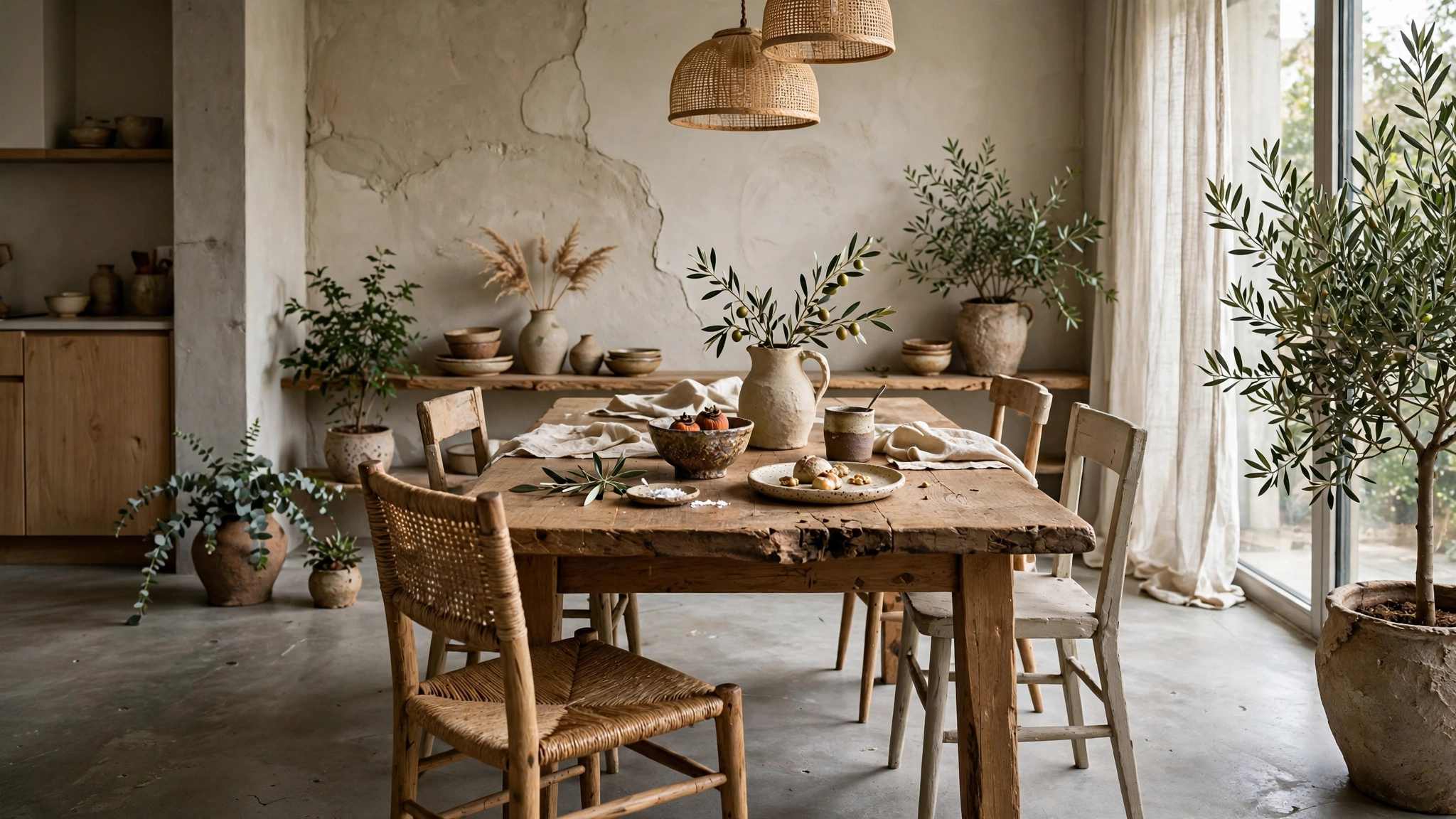

Wabi-sabi does not require you to live in a traditional Japanese home or abandon modern comforts. Its principles — simplicity, acceptance of imperfection, respect for natural materials, and appreciation of the passage of time — can quietly transform contemporary apartments, lofts, suburban houses, and even newly built spaces. The goal is not to create a themed interior, but to bring a calmer, more honest, and more grounded feeling into everyday modern life.
This guide shows practical, realistic ways to apply wabi-sabi thinking to modern living spaces without sacrificing function, comfort, or personal style.
Begin with a Shift in Mindset
Before changing any furniture or finishes, adjust how you look at your home. Wabi-sabi asks you to value what is already present and aging rather than constantly chasing the new and perfect. Notice the soft wear on a wooden table, the way light moves across a wall throughout the day, or the quiet beauty of an empty corner. This observational habit is the foundation. Without it, any design changes risk becoming superficial decoration.
Edit Ruthlessly and Create Intentional Empty Space
Modern homes often accumulate objects quickly. Wabi-sabi begins with subtraction.
- Remove items that are purely decorative, rarely used, or no longer meaningful.
- Keep surfaces relatively clear so the remaining objects can be seen and appreciated.
- Allow some walls and corners to remain empty. Empty space is not wasted space — it gives the eye rest and makes what remains more powerful.
- Avoid filling every shelf, countertop, and wall. Restraint creates calm.
This process works especially well in open-plan modern interiors, where visual clutter travels farther and feels more overwhelming.
Choose Materials That Age Gracefully
Modern design frequently favors sleek, uniform, and low-maintenance surfaces. Wabi-sabi encourages a different selection criteria: materials that show their nature and improve (or at least change honestly) with time.
Practical swaps and additions:
- Replace or balance high-gloss finishes with matte or raw surfaces.
- Introduce solid wood with visible grain, knots, or gentle wear instead of perfect veneers.
- Use linen, cotton, or wool textiles that soften and wrinkle naturally rather than synthetic fabrics that stay artificially crisp.
- Consider plaster, limewash, or softly textured walls instead of flat, flawless paint where appropriate.
- Bring in handmade ceramics, stone, or metal pieces that carry slight irregularities.
You do not need to overhaul everything at once. Even one or two honest materials in a modern room can shift the overall feeling.
Embrace Asymmetry and Natural Arrangement
Modern interiors often rely on symmetry and precise alignment for a polished look. Wabi-sabi prefers a more organic balance.
- Arrange objects in odd numbers or slightly off-center compositions.
- Allow books, ceramics, or branches to sit in a way that feels natural rather than perfectly staged.
- Let furniture placement respond to how the room is actually used instead of forcing rigid geometry.
- Accept that handmade or vintage pieces will not be identical — their differences add life.
This approach softens the sometimes rigid or corporate feel of purely modern spaces.
Work with Light and Shadow
Modern homes frequently emphasize bright, even illumination. Wabi-sabi values the quieter play of light and shadow.
- Use sheer curtains, paper screens, or simply leave windows unobstructed to allow soft natural light.
- Layer warm, low-level artificial lighting rather than relying only on bright overhead fixtures.
- Notice how light changes across textured surfaces during the day and position key objects to catch it.
- Accept some shadow and dimness as part of the atmosphere rather than eliminating every dark corner.
Soft, directional light makes textures richer and spaces more intimate.
Incorporate the Beauty of Imperfection
Modern design often hides or corrects flaws. Wabi-sabi invites you to leave certain things alone or even highlight them.
- Keep a wooden table that shows water rings or gentle scratches if the piece has character.
- Display a ceramic vase with a slight lean or uneven glaze.
- Consider kintsugi-inspired repairs (mending with visible gold or silver) for meaningful broken objects instead of discarding them.
- Allow linen covers to wrinkle and natural wood to develop a soft patina.
The point is not to create artificial distress, but to stop fighting the natural life of materials and objects.
Bring Nature In — Simply
Connection to the natural world is central. In a modern setting this can be understated:
- A single branch in a simple vase
- A smooth stone or piece of driftwood on a shelf
- Potted plants with an organic, slightly wild form rather than perfectly manicured specimens
- Views of the outdoors left open and unobstructed
Avoid turning nature into a decorative theme. One or two quiet elements are more powerful than an abundance of “natural” décor.
Balance Wabi-Sabi with Modern Comfort and Function
Wabi-sabi does not demand discomfort or inconvenience. Modern living spaces can retain clean lines, comfortable seating, efficient storage, and technology while still expressing the philosophy.
- Keep functional storage, but prefer closed or simple cabinets that reduce visual noise.
- Choose modern furniture with honest materials and good proportions rather than overly ornate or disposable pieces.
- Maintain the openness and light that many modern homes do well, while softening them with texture and restraint.
- Let technology recede visually when possible so it does not dominate the atmosphere.
The most successful integrations feel like a natural evolution of a modern space rather than a dramatic style change.
Common Mistakes to Avoid
- Treating wabi-sabi as a decorative theme by adding too many “Japanese” objects or motifs.
- Overdoing the distressed or rustic look until the space feels forced or neglected.
- Confusing wabi-sabi with pure minimalism and creating a cold, empty environment.
- Buying mass-produced “imperfect” items that lack genuine character.
- Ignoring the underlying mindset and focusing only on surface aesthetics.
- Applying the principles unevenly so the home feels inconsistent or unfinished in a careless way.
Frequently Asked Questions
Can wabi-sabi work in a very modern or minimalist apartment?
Yes. In fact, modern and minimalist spaces often provide an excellent foundation because they already value simplicity and clean lines. Adding natural materials, soft texture, intentional empty space, and acceptance of imperfection can make these interiors feel warmer and more human without losing their clarity.
How do I apply wabi-sabi if I have children or a busy household?
Focus on durable natural materials that handle real life well, reduce visual clutter so the home feels calmer even when active, and choose fewer but meaningful objects. Wabi-sabi actually supports family life by lowering the pressure to keep everything looking perfect.
Is it expensive to create a wabi-sabi influenced space?
It does not have to be. Editing what you already own costs nothing. Choosing fewer, longer-lasting pieces made from honest materials often proves more economical over time than constantly replacing trendy items. Handmade or vintage objects can be found at many price points.
How long does it take to incorporate these principles?
It is usually a gradual process rather than a single renovation. Start with editing and one or two material or object changes. Over months and years the home evolves into a quieter, more coherent expression of the philosophy.
Does everything in the room need to follow wabi-sabi?
No. The principles work best when applied selectively and sincerely. A modern sofa can sit comfortably beside a weathered wooden table and a handmade lamp. Consistency of feeling matters more than purity of style.
Final Thoughts
Incorporating wabi-sabi into modern living spaces is less about adopting a new look and more about practicing a different relationship with the objects and materials around you. It encourages editing, honesty, patience with imperfection, and attention to quiet beauty that already exists.
When done thoughtfully, the result is a home that feels calmer, more grounded, and more personal — a modern space that does not demand constant perfection from its inhabitants or its contents. The most successful examples do not announce “this is wabi-sabi.” They simply feel peaceful, authentic, and alive.