
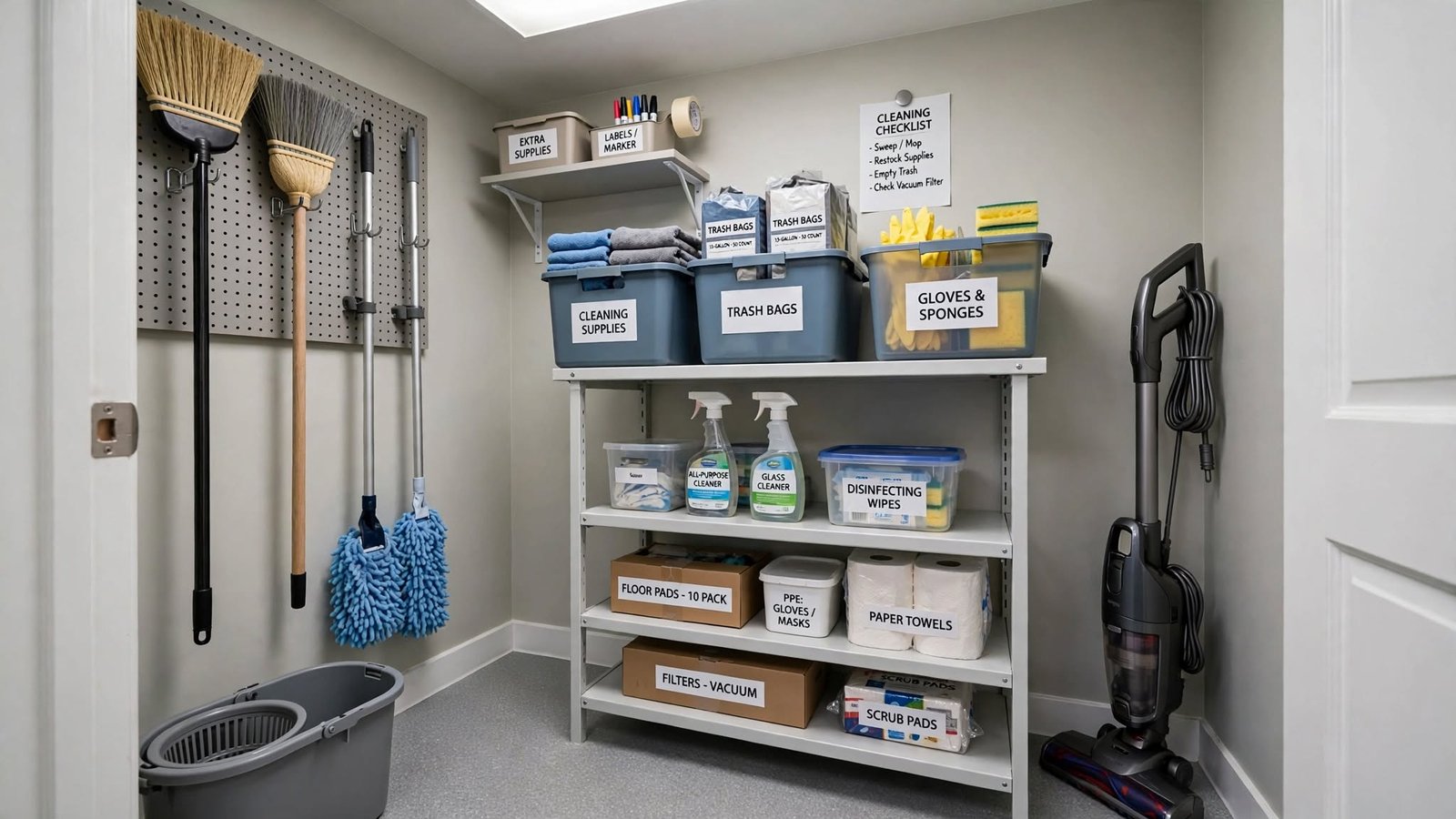

A utility and cleaning closet is one of the most hardworking spaces in any home, yet it is often the most neglected. Brooms tip over, cleaning bottles pile up in chaotic layers, vacuum attachments disappear, and the floor becomes a jumble of mismatched items. When this closet is disorganized, everyday cleaning tasks take longer and feel more frustrating than they need to be.
The good news is that a utility closet does not require a large footprint to function extremely well. With clear zones, vertical storage, and simple systems, even a narrow closet can hold everything you need and still remain easy to access. This expanded guide walks you through a complete process for turning a cluttered cleaning closet into a highly functional, easy-to-maintain space.
Assess What You Actually Own and Use
Before buying any organizers, empty the entire closet. Group items into categories:
- Daily cleaners and sprays
- Specialty cleaners (bathroom, glass, wood, etc.)
- Tools (brooms, mops, dustpan, duster)
- Vacuum and its attachments
- Cloths, sponges, and disposable wipes
- Gloves, masks, and protective items
- Backup paper goods or refills
- Rarely used or expired products
Be honest about what you still need. Discard empty bottles, dried-out sponges, and products you have not used in the past year. This single step often frees up 20–30% of the space.
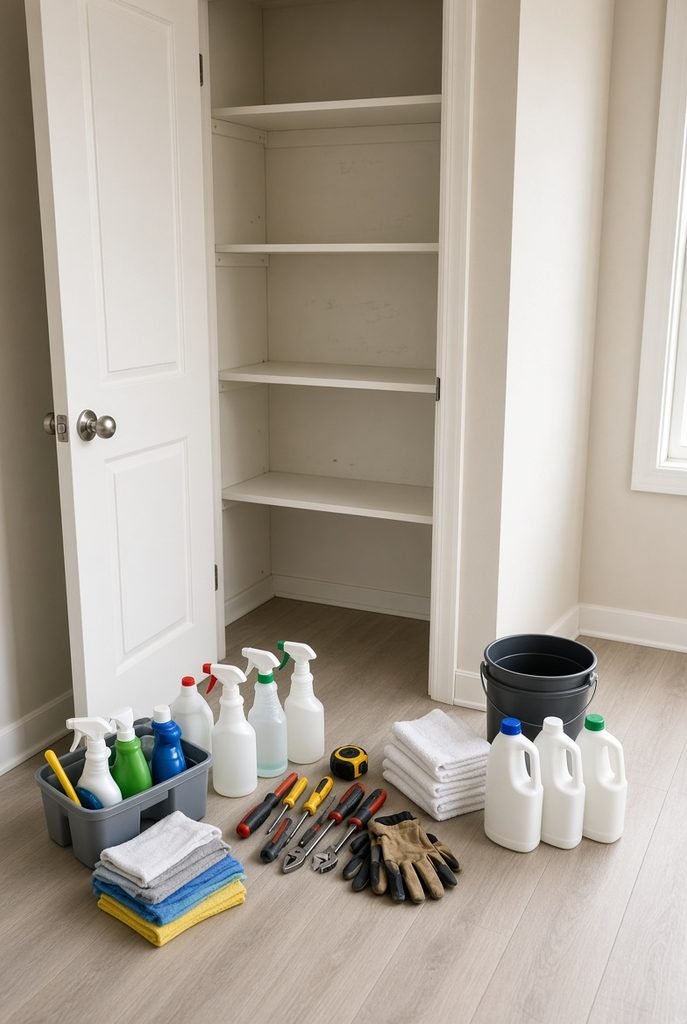
Define Clear Zones Inside the Closet
A functional utility closet works best when every category has a designated home. Typical zones include:
- Tall tool zone (brooms, mops, swiffer)
- Vacuum and attachment zone
- Cleaning product zone (eye-level or slightly below)
- Cloth and sponge zone
- Glove and small-supply zone
- Backup and bulk zone (higher or lower shelves)
Assigning zones prevents the common problem of everything being stacked in one disorganized pile.
Maximize Vertical Space
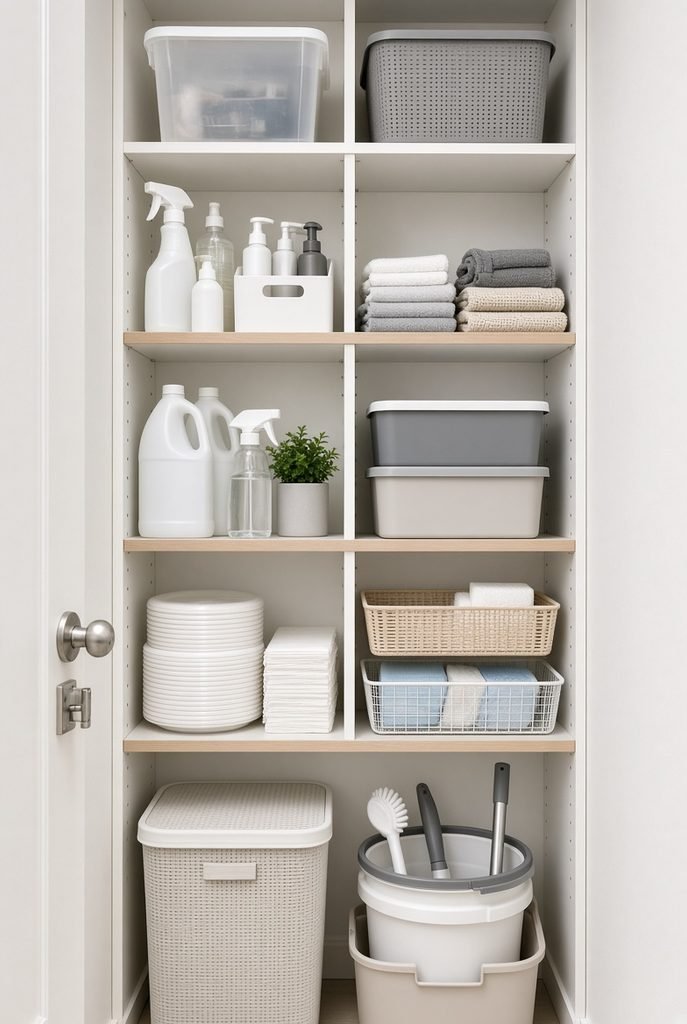
Most cleaning closets are taller than they are wide. Use that height deliberately.
- Install adjustable shelving if the closet currently has only one or two fixed shelves.
- Place heavier items (vacuum, large bottles) on lower shelves.
- Keep everyday cleaners between waist and eye level.
- Store lightweight backups and paper goods on the highest shelf.
- Use the back of the door for hooks, racks, or slim organizers.
Vertical storage keeps the floor clear and makes it easier to see and reach what you need.
Choose the Right Organizers for Cleaning Supplies
Not every organizer works well in a utility closet. Focus on durable, easy-to-clean solutions:
- Clear bins or caddies for cleaning bottles so you can grab a whole group at once
- Lazy Susans for corner shelves or deep spaces
- Narrow tiered shelves or risers to create levels on a single shelf
- Over-the-door racks for sprays, gloves, or cloths
- Wall-mounted or door-mounted holders for brooms and mops
- Small baskets for microfiber cloths, sponges, and gloves
Avoid oversized bins that waste space or make it hard to see contents. Label bins clearly so everyone in the household can return items correctly.
Store Long-Handled Tools Properly
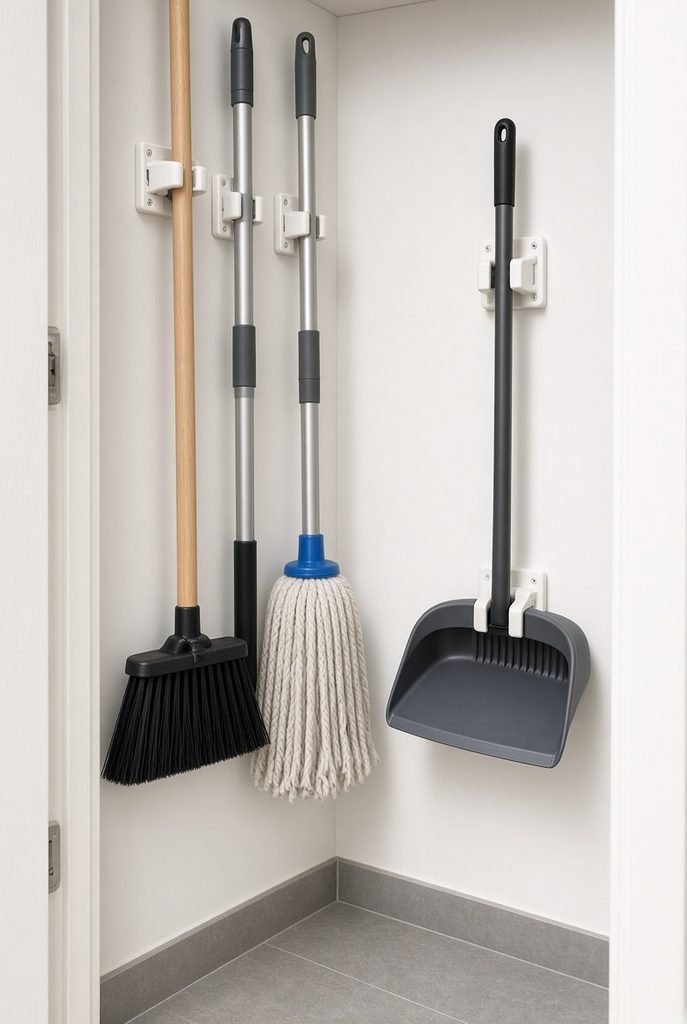
Brooms, mops, and dustpans are the items most likely to create mess. Solutions that work well:
- Wall-mounted grips or clips that hold handles securely
- Freestanding tool organizers that fit on the floor or a low shelf
- Over-the-door hooks designed for long handles
- A simple tension rod with S-hooks as a low-cost option
Store tools with heads up or down according to the design of the holder, but keep them from sliding or falling when the door opens.
Create a Portable Cleaning Caddy
One of the highest-impact upgrades is a well-stocked cleaning caddy that lives in the closet but can be carried from room to room. Include:
- All-purpose cleaner
- Glass cleaner
- Bathroom cleaner
- Microfiber cloths
- Sponges or scrub brush
- Gloves
When the caddy is ready to go, you avoid multiple trips back to the closet and are more likely to clean consistently.
Handle the Vacuum and Its Attachments
Vacuums and their parts often take up disproportionate space. Practical approaches:
- Store the vacuum in the most accessible low spot.
- Keep attachments in a clear bin or hanging pouch right next to it.
- If the vacuum is bulky, consider a slim or cordless model that is easier to store.
- Mount lightweight attachments on the wall or door if shelf space is limited.
Maintain the System Long-Term
Organization only lasts if it is easy to maintain. Build in simple habits:
- Return every item to its zone after use.
- Wipe shelves and bins every few months.
- Check expiration dates on cleaners twice a year.
- Resist the urge to shove new products in without a home.
- Keep a small trash bag or donation bag in the closet for empty containers and worn-out tools.
A five-minute reset once a week is usually enough to keep the closet functional.
Common Mistakes to Avoid
- Storing everything on the floor so items get tangled and dirty
- Using deep bins that hide products at the back
- Keeping too many half-empty bottles of the same cleaner
- Installing organizers that are difficult to remove and clean
- Ignoring the back of the door as valuable storage real estate
- Buying matching containers before deciding what actually needs to be stored
Frequently Asked Questions
How do I organize a very narrow utility closet?
Focus on wall-mounted and over-the-door solutions. Use slim bins, vertical tool holders, and a single column of adjustable shelves. Keep the floor as clear as possible.
Should cleaning products be stored in their original bottles?
Original bottles are fine if they are clearly labeled and not leaking. Decanting into uniform bottles can look neater but is optional and requires extra effort to maintain.
What is the best way to store microfiber cloths?
Fold or roll them in a small open basket or bin so they are visible and easy to grab. Avoid stuffing them into a closed container where they can stay damp.
How often should I declutter the cleaning closet?
A quick review every three to six months is ideal. Remove empty bottles, dried sponges, and products you no longer use.
Can I store cleaning supplies and bulk paper goods in the same closet?
Yes, as long as you keep them in separate zones. Place heavier bulk items on lower or higher shelves and reserve the most accessible area for daily cleaning tools and products.
Final Thoughts
A well-organized utility and cleaning closet saves time, reduces frustration, and makes household maintenance noticeably easier. The process is straightforward: empty and edit, create clear zones, use vertical space, choose practical organizers, and maintain simple habits.
You do not need a large closet or expensive systems. You need a logical layout that matches how you actually clean. Once the closet works for you, the rest of the home becomes easier to keep in order.