
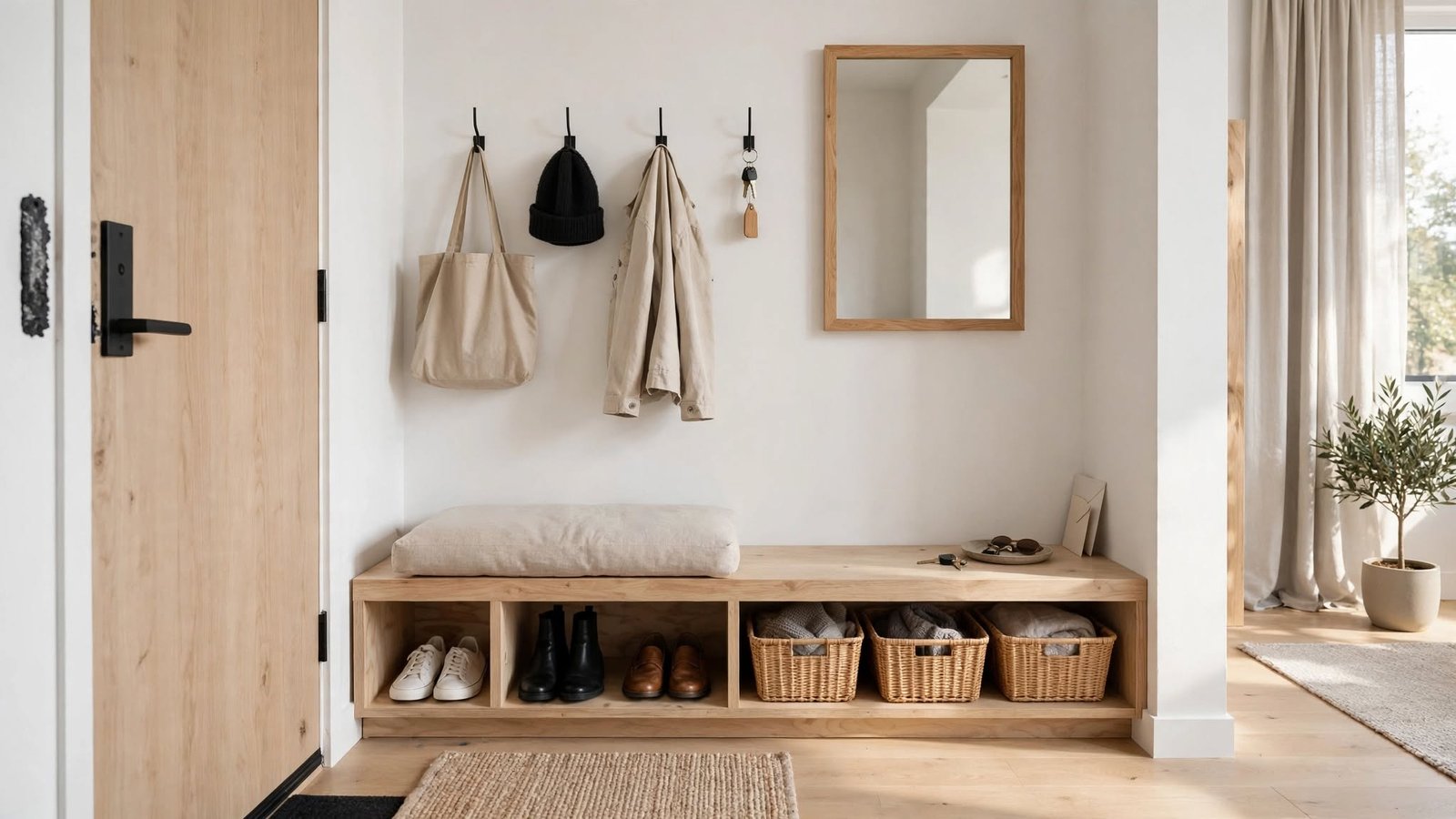

In a small studio apartment, the entryway is often the most overlooked and most abused square footage. With no separate foyer, the front door usually opens straight into the living or sleeping area. Without a clear plan, bags, shoes, coats, keys, and mail immediately spill into the main space, making the entire apartment feel cluttered and smaller than it is.
A well-planned drop-zone solves this problem. It creates a defined transition between outside and inside, contains daily clutter, and protects the rest of the studio. Even in a very tight footprint, a functional entryway is achievable with careful planning and the right solutions.
Why a Drop-Zone Matters in a Studio
In larger homes the entryway is a dedicated room. In a studio it must be carved out of shared space. Without one, every item that enters the apartment has nowhere logical to land. The result is visual chaos and constant tidying. A successful drop-zone does three things:
- Gives incoming items an immediate home
- Keeps the main living and sleeping areas clearer
- Creates a psychological threshold that makes the studio feel more intentional and organized
Even 2–4 square feet, used well, can transform daily life.
Assess Your Exact Entry Conditions
Before buying anything, measure and observe:
- How much clear wall space exists beside or opposite the door?
- Does the door swing inward and block potential furniture?
- Is there a closet near the entrance, or only open wall?
- How many people use the apartment daily?
- What items typically arrive with you (bags, shoes, coats, packages, keys, mail)?
Note the swing of the door and any baseboard heaters, outlets, or radiators that limit placement. These constraints determine whether you can use a bench, a slim console, wall-mounted solutions only, or a combination.
Core Elements of an Effective Studio Drop-Zone
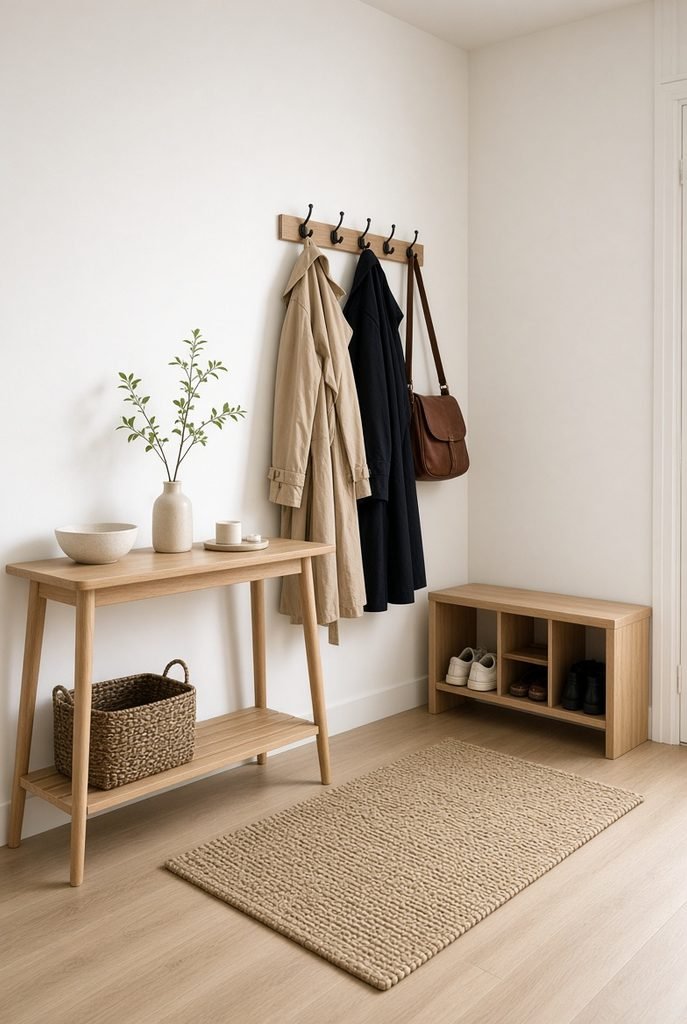
A functional drop-zone usually combines four elements, scaled to the available space:
1. Landing Surface
A place to set keys, mail, sunglasses, and bags the moment you walk in. Options include a narrow console, floating shelf, wall-mounted ledge, or the top of a small cabinet.
2. Hanging Storage
Hooks or a rail for coats, bags, hats, and umbrellas. Wall-mounted hooks are the most space-efficient solution in studios.
3. Shoe Storage
Shoes are the fastest way to make a small entry look messy. Solutions range from a low shoe rack or bench with storage to vertical shoe cabinets or over-door organizers.
4. Seating (Optional but Valuable)
A small bench or stool makes putting on and removing shoes easier and doubles as temporary bag storage.
Not every studio can fit all four. Prioritize according to your daily habits.
Space-Saving Drop-Zone Solutions by Footprint
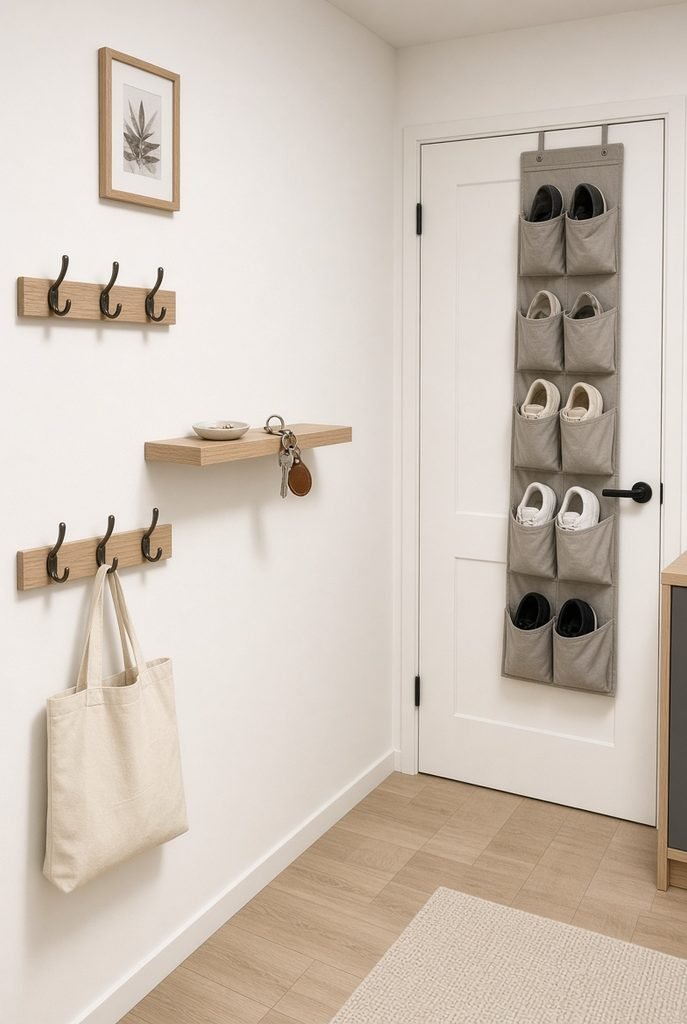
Ultra-Tight Entries (under 2 feet of wall space)
- Vertical hook rail or individual hooks at different heights
- Floating shelf or small wall-mounted ledge for keys and mail
- Over-door shoe organizer or slim hanging shoe pockets
- Magnetic key holder or small wall tray
Narrow but Usable Wall (2–4 feet)
- Slim console or console with drawers (10–12 inches deep)
- Bench with hidden shoe storage underneath
- Combination of hooks above a narrow shelf
- Tall, shallow cabinet or hall tree if height allows
Slightly More Generous Entries
- Small storage bench + wall hooks + floating shelf above
- Narrow freestanding shoe cabinet with a surface on top
- Open cubby unit that serves as both seating and storage
Always choose pieces with a small depth (preferably under 12–14 inches) so they do not obstruct the door swing or main walkway.
Vertical Thinking: The Studio Advantage
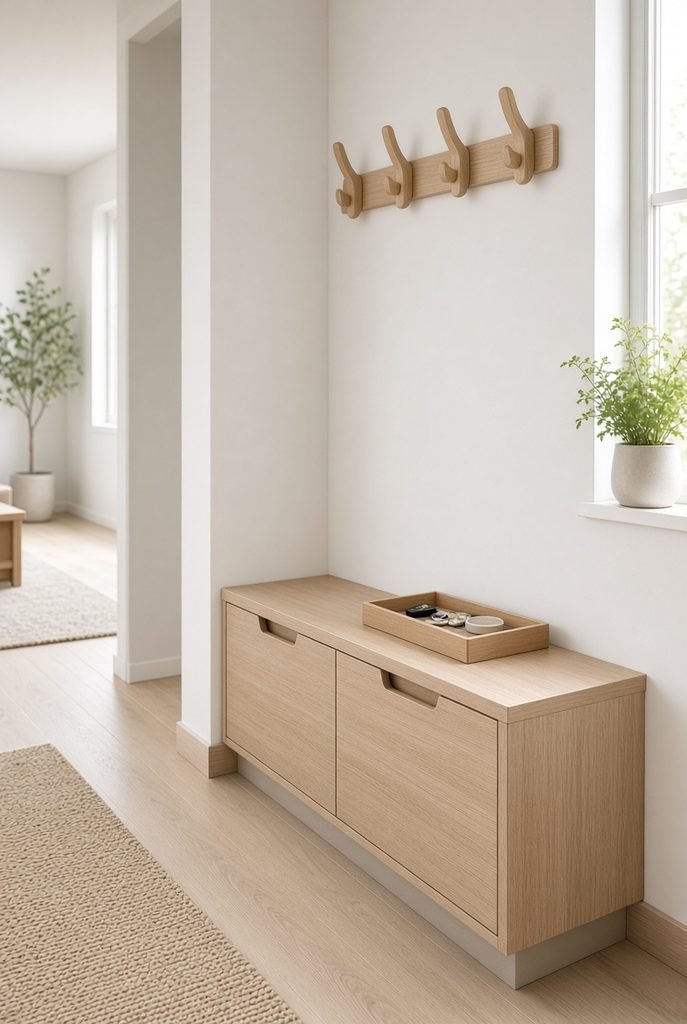
When floor space is limited, go up.
- Install hooks at two heights: higher for coats, lower for bags or children’s items.
- Use the full height above a console or bench for a mirror, floating shelves, or artwork that also hides a small key dish.
- Consider a tall, narrow bookcase or cabinet placed near the door for overflow storage (scarves, reusable bags, dog leashes).
- Pegboards or modular wall systems can be customized for exactly the items you carry daily.
Vertical storage keeps the floor clear and makes the entry feel organized rather than crowded.
Integrate the Drop-Zone with the Rest of the Studio
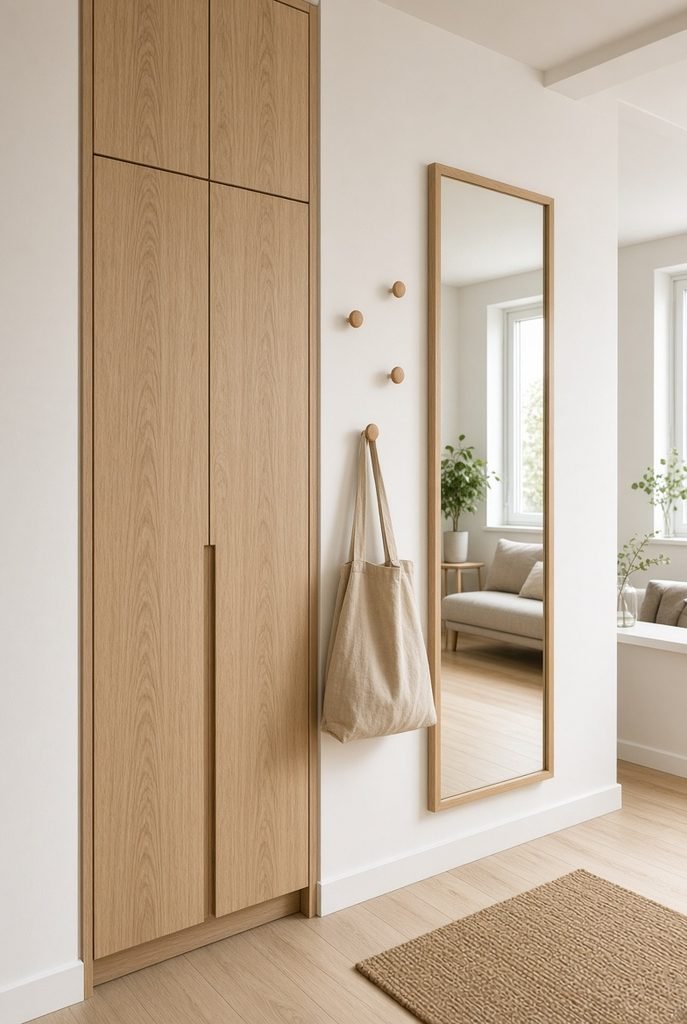
Because the entry sits inside the main room, its style and scale must relate to the rest of the apartment.
- Match finishes (wood tone, metal color, or paint) to other furniture so the drop-zone feels intentional rather than improvised.
- Use a small rug to visually define the zone without building walls.
- Keep the color palette light and simple so the entry does not visually shrink the space.
- Ensure lighting is adequate — a wall sconce or nearby lamp makes the zone functional at night.
A drop-zone that clashes with the rest of the studio will feel like clutter even if it is well organized.
Daily Habits That Make the System Work
The best physical setup fails without simple habits:
- Empty pockets and bags in the same spot every time
- Limit the number of shoes kept at the entry (store overflow elsewhere)
- Reset the surface nightly so it is clear for the next day
- Use closed storage for visual calm when possible
A drop-zone is only as good as the consistency with which it is used.
Common Mistakes to Avoid
- Choosing furniture that is too deep and blocks the door or walkway
- Installing hooks too low or too high for comfortable use
- Allowing the landing surface to become a permanent clutter pile
- Ignoring shoe storage until shoes take over the floor
- Buying trendy pieces that look good but lack real function
- Creating a drop-zone that is visually heavier than the rest of the small studio
Frequently Asked Questions
How much space do I actually need for a functional drop-zone?
As little as 18–24 inches of wall width can work with hooks, a floating shelf, and smart shoe storage. More space allows a bench or console, but even a tiny footprint is better than none.
What if my door opens against the only available wall?
Use the opposite wall or the wall beside the door swing. Over-door organizers and freestanding slim carts can also help when wall space is blocked.
Are freestanding pieces better than wall-mounted ones in a rental?
Both work. Wall-mounted solutions save floor space and often look cleaner, but freestanding pieces require no holes and are fully removable. Many renters successfully mix both.
How do I keep the drop-zone from looking messy?
Limit what is allowed to live there, prefer closed or semi-closed storage for shoes and smaller items, and reset the surface daily. Visual simplicity is more important than maximum capacity.
Can a drop-zone work in a true open studio with no defined entry?
Yes. Use a change in rug, a piece of furniture oriented to face the door, or a lightweight screen to suggest a threshold. The functional elements matter more than physical separation.
Final Thoughts
In a small studio, the entryway is not optional infrastructure — it is one of the highest-leverage areas you can improve. A thoughtfully planned drop-zone contains the chaos of daily arrivals, protects the rest of the apartment, and makes the limited square footage feel more deliberate and calm.
Measure your constraints, prioritize the items you actually carry every day, choose shallow and vertical solutions, and build simple habits around the system. Even a modest drop-zone, used consistently, can make a 500-square-foot studio feel noticeably more organized and spacious.