
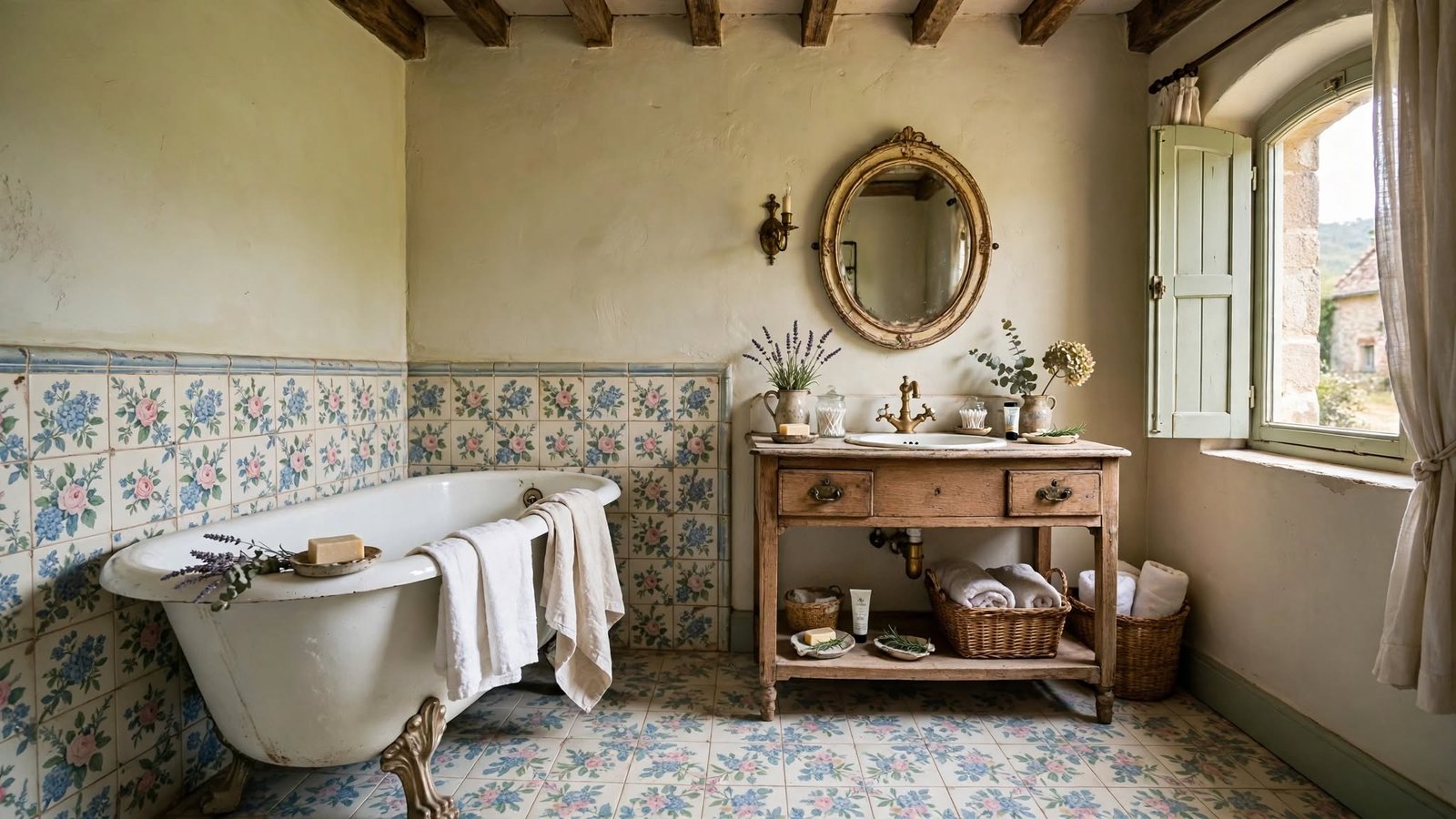

French cottage bathroom design captures a sense of quiet romance, lived-in comfort, and understated elegance. It draws from the charm of rural French homes — soft colors, natural materials, vintage-inspired details, and a feeling of gentle age — while remaining practical for modern daily use. Unlike more formal French styles, the cottage interpretation feels approachable, warm, and slightly imperfect in the most appealing way.
This guide explores the essential elements that define a French cottage bathroom. Whether you are planning a full renovation or simply refreshing an existing space, understanding these core components will help you create a bathroom that feels cohesive, inviting, and timeless.
Soft, Muted Color Palettes
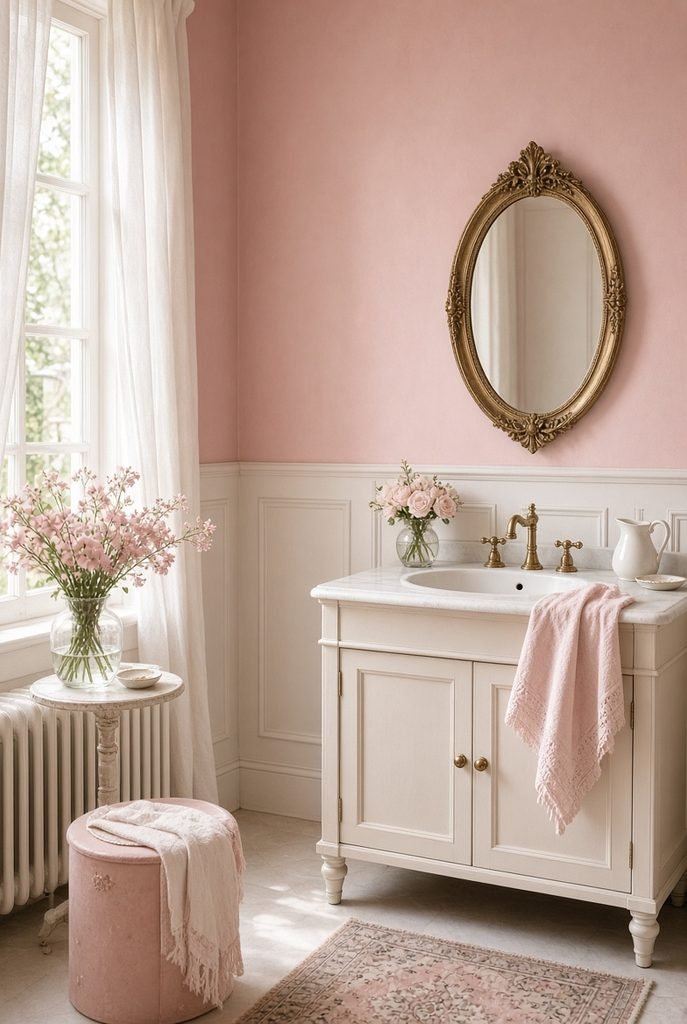
Color sets the foundation for the entire mood. French cottage bathrooms typically rely on a restrained, romantic palette rather than bold contrasts or stark modern neutrals.
Common choices include:
- Warm whites and soft ivories
- Pale blush or dusty rose
- Muted sage green or soft gray-green
- Light lavender or dusty blue
- Warm beige and stone tones
These colors are often layered rather than used in flat blocks. Walls might be a soft white or pale plaster tone, while cabinetry, textiles, and accents introduce gentle color. The overall effect should feel calm and slightly faded, as though the surfaces have softened with time.
Avoid high-contrast combinations or overly saturated hues. The goal is harmony and softness rather than drama.
Natural and Tactile Materials
Material choice is central to the French cottage aesthetic. Surfaces should feel authentic and pleasant to the touch.
Key materials include:
- Wood (especially painted or lightly distressed cabinetry and open shelving)
- Stone or marble (for counters, floors, or accents)
- Ceramic and porcelain with subtle variation
- Brass, bronze, or aged metal fixtures
- Linen, cotton, and other natural textiles
- Plaster or soft-finish walls
Wood brings warmth, stone adds quiet luxury, and natural textiles soften the space. Mixing these materials creates depth without clutter. When possible, choose finishes that show gentle variation or a slight sense of age rather than perfect uniformity.
Vintage-Inspired Fixtures and Hardware
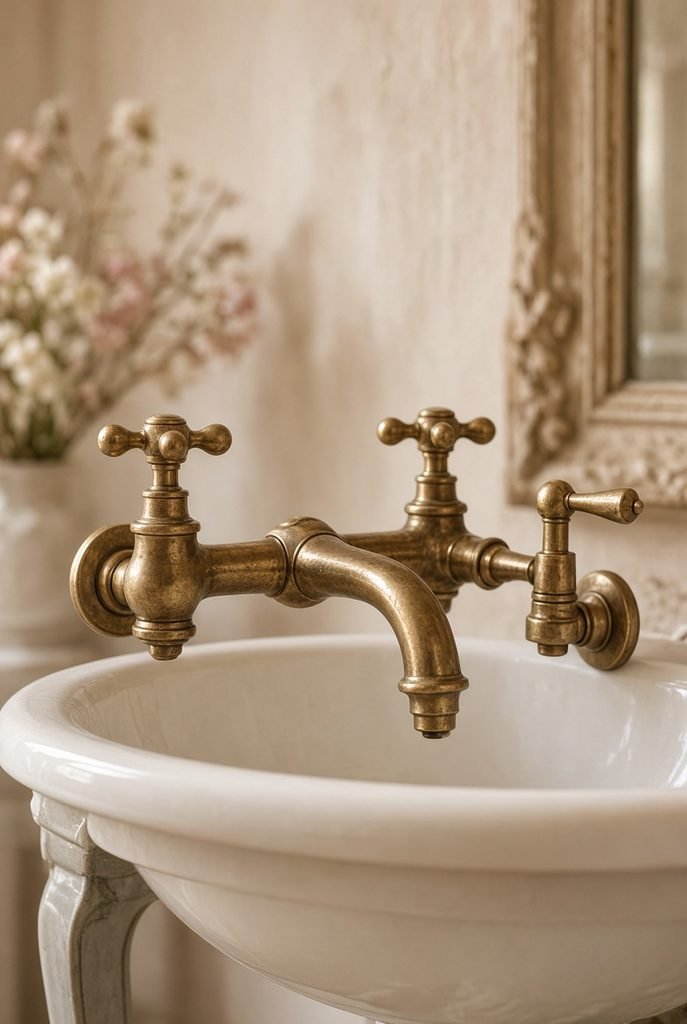
Fixtures play a major role in establishing the cottage character. Look for pieces that feel collected rather than matched from a single modern collection.
Characteristic elements include:
- Console or washstand-style sinks
- Cross-handle or vintage-style faucets in unlacquered brass, brushed nickel, or oil-rubbed bronze
- Freestanding or clawfoot tubs when space allows
- Simple, elegant mirrors with soft curves or lightly aged frames
- Classic towel bars, hooks, and hardware with traditional profiles
Unlacquered brass is especially popular because it develops a natural patina over time, reinforcing the lived-in quality of the style. Matching every fixture perfectly is less important than creating a sense of gentle consistency.
Soft Lighting and Layered Illumination
Lighting in a French cottage bathroom should feel warm and flattering rather than clinical or overly bright.
Effective approaches include:
- Wall sconces flanking the mirror (preferably with soft shades or vintage-inspired forms)
- A simple central pendant or small chandelier if ceiling height allows
- Warm-toned bulbs that avoid harsh white light
- Natural light maximized through soft window treatments
Layered lighting allows the room to shift from practical morning brightness to a softer evening atmosphere. Avoid cool-toned LEDs and overly modern light fixtures that clash with the romantic character of the space.
Textiles That Add Softness and Comfort
Textiles prevent the bathroom from feeling cold or purely utilitarian. In French cottage design they are used generously but thoughtfully.
Essential textile elements:
- Linen or cotton shower curtains in solid colors, subtle stripes, or gentle patterns
- Soft towels in warm whites, pale pastels, or natural tones
- A small rug or runner with a vintage or faded quality
- Window treatments such as simple linen curtains or café curtains
- Occasional upholstered details (a small stool or bench) if space permits
Natural fibers and slightly rumpled textures feel more authentic than crisp, hotel-style perfection. Layering a few well-chosen textiles adds warmth and acoustic softness.
Furniture-Like Storage and Open Displays
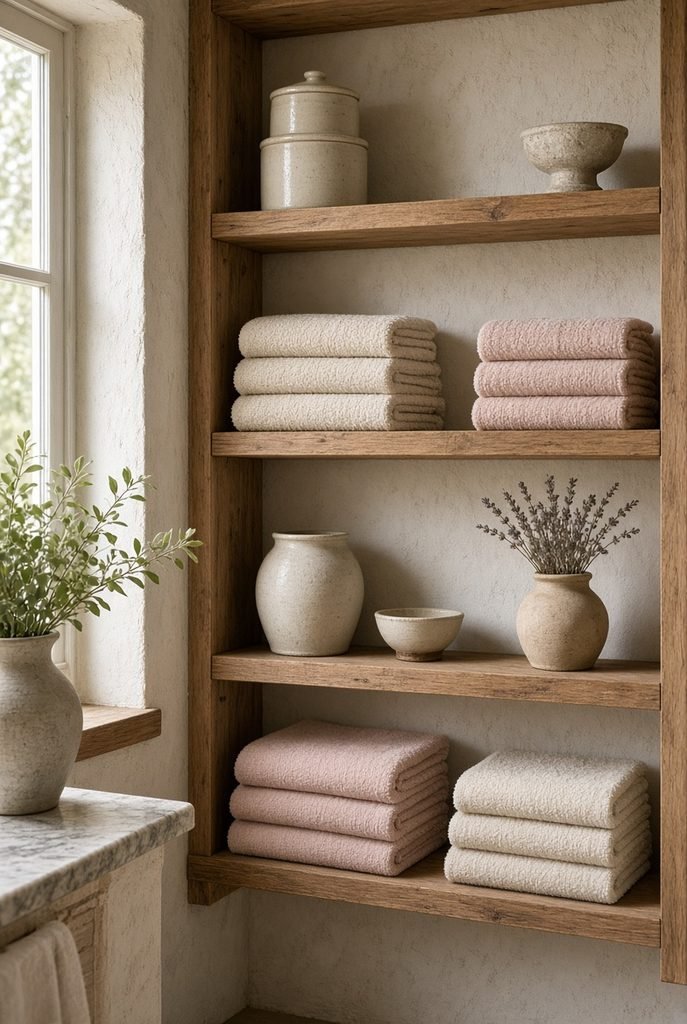
French cottage bathrooms often treat storage as furniture rather than purely built-in cabinetry. This approach contributes to the collected, residential feel.
Useful solutions include:
- Freestanding washstands or vintage-style vanities
- Open wooden shelves for towels and simple displays
- A small armoire or cupboard for extra storage when space allows
- Wall-mounted cabinets with soft detailing
- Baskets and ceramic containers for everyday items
Open shelving is common and provides an opportunity to display neatly folded towels, simple ceramics, or small decorative objects. The key is restraint — surfaces should feel curated rather than cluttered.
Subtle Pattern and Decorative Detail
Pattern appears in French cottage bathrooms, but it is usually quiet and secondary to texture and color.
Typical applications include:
- Soft floral, toile, or subtle stripe in shower curtains or towels
- Gently patterned floor tile or a vintage-inspired rug
- Simple wainscoting, beadboard, or panel molding on walls
- Decorative but understated mirror frames
- Small ceramic or glass accessories
The overall impression should remain calm. Pattern is used to add interest, not to dominate the room.
Connection to Nature and the Outdoors
French cottage style maintains a gentle relationship with the natural world. In the bathroom this can be expressed through:
- A view to the outdoors or soft natural light
- Simple greenery (a small plant or fresh flowers)
- Materials that reference nature (stone, wood, linen)
- Colors drawn from the landscape
Even a single vase of flowers or a small potted plant can reinforce the sense of freshness and quiet domesticity that defines the style.
Balancing Authenticity with Modern Function
While the aesthetic looks to the past, a successful French cottage bathroom must still function for contemporary life. Practical considerations include:
- Adequate storage for daily toiletries
- Proper ventilation and moisture-resistant materials
- Comfortable, usable lighting levels
- Durable finishes that can handle humidity
- Thoughtful placement of outlets and modern necessities so they do not disrupt the visual calm
The most appealing examples blend romantic character with everyday usability so the space feels both beautiful and livable.
Common Mistakes to Avoid
- Overdoing the “vintage” look until the room feels like a theme rather than a real bathroom
- Using too many patterns or overly ornate details that create visual noise
- Choosing cold, modern finishes that clash with the soft palette
- Neglecting practical storage in favor of purely decorative elements
- Making every surface distressed or aged until the room feels tired rather than charming
- Ignoring scale — oversized furniture or fixtures can overwhelm a smaller bathroom
Frequently Asked Questions
Is French cottage bathroom design only suitable for large spaces?
No. The style works well in small bathrooms when scaled appropriately. A simple washstand, soft colors, one or two vintage-inspired fixtures, and thoughtful textiles can create the feeling even in compact rooms.
How do I keep a French cottage bathroom from feeling outdated?
Focus on quality materials, a restrained palette, and clean overall composition. Avoid excessive clutter and overly literal rustic accessories. The style should feel quietly elegant rather than heavily themed.
What flooring works best?
Natural stone, softly patterned ceramic or porcelain tile, and wide-plank wood-look tile are all strong options. Choose finishes with subtle variation and a sense of softness underfoot.
Can I mix French cottage elements with more modern pieces?
Yes, carefully. A clean-lined modern tub or simple contemporary lighting can work if the majority of materials, colors, and fixtures support the cottage character. The overall atmosphere should remain cohesive.
How important is a clawfoot tub?
It is iconic but not required. Many beautiful French cottage bathrooms use built-in or freestanding tubs with classic proportions. The tub should feel elegant and in proportion to the room rather than forcing a specific style.
Final Thoughts
French cottage bathroom design succeeds when it feels collected, gentle, and genuinely comfortable. Soft colors, natural materials, vintage-inspired fixtures, layered textiles, and a touch of imperfection work together to create a space that is both practical and quietly romantic.
The essential elements are not about recreating a historical interior, but about capturing a feeling — one of calm, warmth, and understated beauty. When these components are balanced with modern function, the result is a bathroom that feels timeless rather than trendy, and inviting rather than staged.
Start with a soft palette and honest materials, then layer in fixtures, lighting, and textiles that support the same quiet mood. The most successful French cottage bathrooms do not announce their style loudly; they simply feel like a lovely place to begin and end the day.