
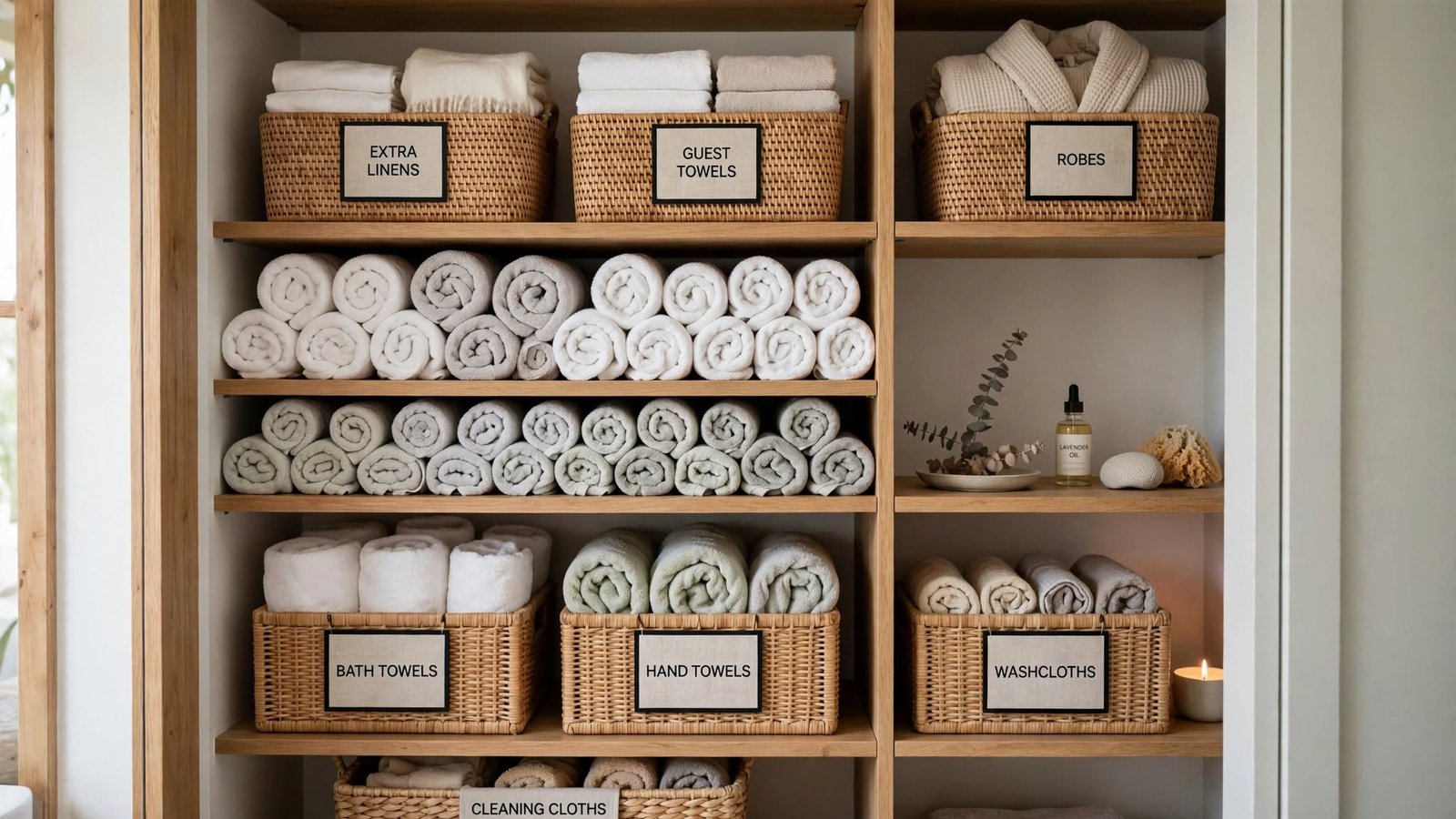

A bathroom linen closet is one of the most frequently used storage spaces in the home, yet it is rarely organized with the same care as a kitchen pantry or bedroom wardrobe. Towels get stuffed in uneven piles, extra sheets slide into messy stacks, bottles tip over, and the space quickly becomes a source of daily frustration. When you open the door and everything threatens to tumble out, the closet is no longer serving you — it is working against you.
The good news is that a linen closet responds extremely well to a clear system. With the right approach, even a narrow or awkwardly shaped closet can hold everything you need, look orderly, and stay that way with minimal effort. This comprehensive step-by-step guide walks you through the entire process of transforming a chaotic bathroom linen closet into a highly functional, easy-to-maintain space. The method works for standard reach-in closets, deeper closets, and even shallow cabinets used for linen storage.
Step 1: Empty the Closet Completely
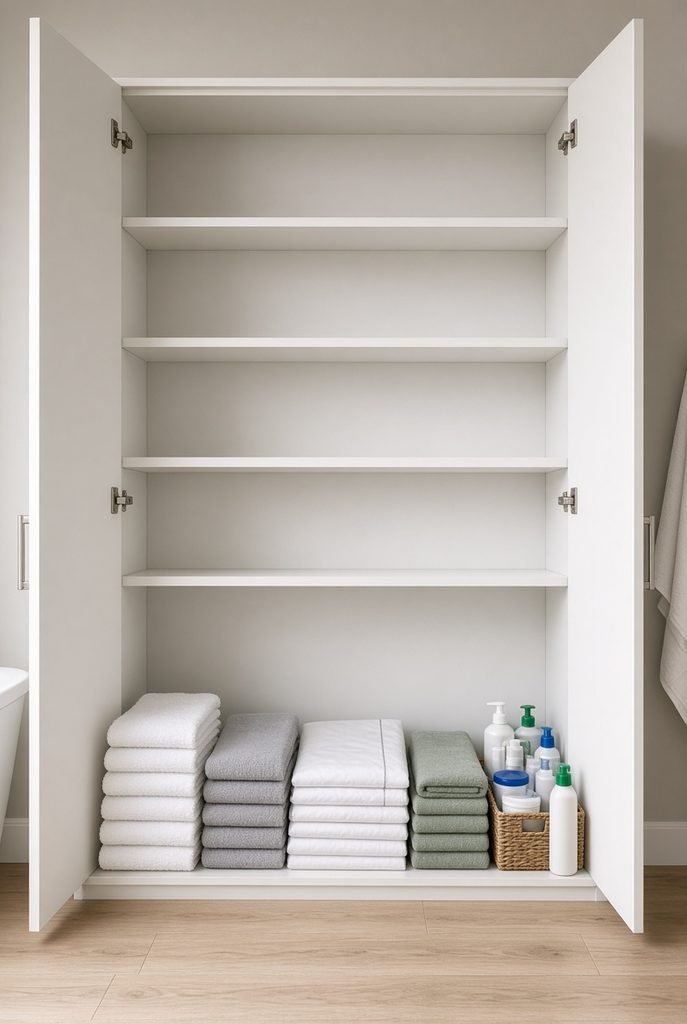
The only way to create a lasting system is to start with a blank slate. Remove every single item from the closet and place everything on a nearby bed, table, or clean floor. Do not attempt to reorganize while items are still inside — you will only rearrange the clutter instead of eliminating it.
As you empty the closet, group items loosely into broad categories so the next sorting step goes faster. Typical categories include:
- Bath towels and hand towels
- Washcloths and face cloths
- Bed sheets and pillowcases
- Extra blankets or throws
- Bathroom toiletries and backup products
- Toilet paper and paper goods
- Cleaning supplies that live in the linen closet
- First-aid or medication overflow
- Miscellaneous items that do not belong
Once the closet is empty, take a few minutes to wipe down the shelves, vacuum or sweep the floor, and check for any needed repairs such as loose shelf pins or sticky residue. A clean surface makes the finished organization feel more intentional.
Step 2: Declutter with Clear Decision Rules
This is the step most people rush, and it is the reason many organization projects fail within weeks. Be honest and decisive.
Use these practical rules:
- Towels that are stained, threadbare, or permanently dingy should be moved to the cleaning rag pile or discarded.
- Sheets that no longer fit any bed in the house or have matching problems can be donated or recycled.
- Expired toiletries, half-empty bottles you never finish, and hotel samples you will never use should go.
- Duplicate items beyond a reasonable backup supply can be pared down.
- Anything that does not belong in a bathroom linen closet (random cables, old electronics, sentimental items) needs a new home.
A good guideline for towels is to keep two to three complete sets per person in the household, plus a couple of guest sets if you entertain overnight visitors. For sheets, two sets per bed is usually sufficient — one on the bed and one clean set ready to go. Extra sets beyond that often create more bulk than benefit.
Work through every category until only the items you genuinely use and want to keep remain. This editing process typically frees up significant space and makes the later organizing steps much easier.
Step 3: Categorize and Decide on Zones
With only the keepers left, refine your categories and assign each one a specific zone inside the closet. Clear zones are what keep the closet functional long-term.
Recommended zones for most bathroom linen closets:
- Everyday towels (most accessible shelf)
- Guest towels or secondary sets
- Bed linens (grouped by bed size or room)
- Washcloths and hand towels
- Paper goods (toilet paper, tissues)
- Backup toiletries and personal care items
- Cleaning supplies (if stored here)
- Specialty or seasonal items (higher or lower shelves)
Place the items you reach for most often between waist and eye level. Heavier items and bulk backups belong on lower shelves. Lightweight or rarely used items can go higher. If the closet is deep, keep everyday categories toward the front and backups toward the back.
Step 4: Choose Practical Storage Solutions
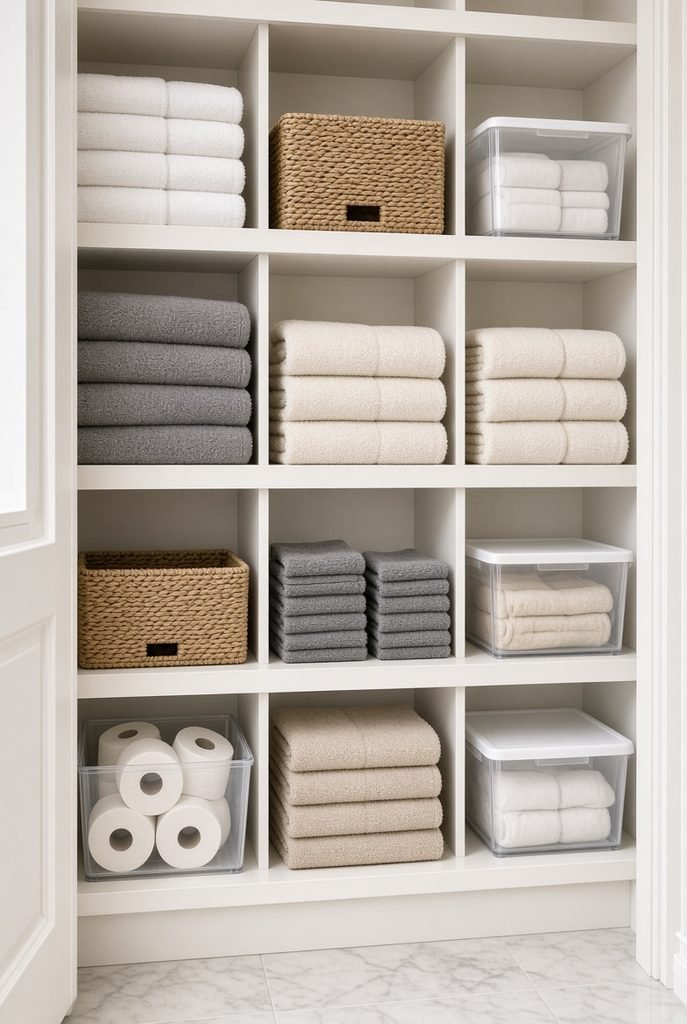
The right containers and dividers make a dramatic difference in both appearance and function. Focus on solutions that are easy to use daily rather than ones that simply look pretty.
Effective options include:
- Shelf dividers to keep towel stacks from toppling sideways
- Clear or labeled bins for smaller items such as washcloths, toiletries, and first-aid supplies
- Baskets with handles for easy pulling of entire categories
- Fabric or woven bins that hide visual clutter while still looking soft and appropriate for a linen space
- Stackable containers for bulk toilet paper or backup products
- Over-the-door organizers if the closet door can support them
- Tension rods or small risers to create extra levels on deep shelves
Measure your shelves before buying anything. Depth, height between shelves, and width all matter. Avoid containers that are so deep you lose items at the back or so tall they waste vertical space.
Step 5: Fold and Store Items for Maximum Accessibility
How you fold and place items affects both space efficiency and ease of use.
Towels
File-fold towels so they stand upright like files in a drawer, or stack them in even piles separated by shelf dividers. Upright storage makes it possible to remove one towel without disturbing the entire stack. Roll washcloths and hand towels and place them in bins or baskets for a clean look and easy grabbing.
Sheets
Keep each sheet set together. One popular method is to place the folded sheets and pillowcases inside one of the pillowcases so the entire set stays contained. Label the sets by bed size or room if multiple sizes live in the same closet. Store sheet sets vertically or in shallow stacks so you can see what you have at a glance.
Other Items
Store toiletries in caddies or bins grouped by type (hair care, skincare, dental, etc.). Keep toilet paper in its original packaging or transferred into a large bin so it stays clean and easy to count. Place heavier items on lower shelves to maintain stability.
Consistency in folding style makes the closet look calmer and makes it easier for everyone in the household to maintain the system.
Step 6: Use the Door and Vertical Space Fully
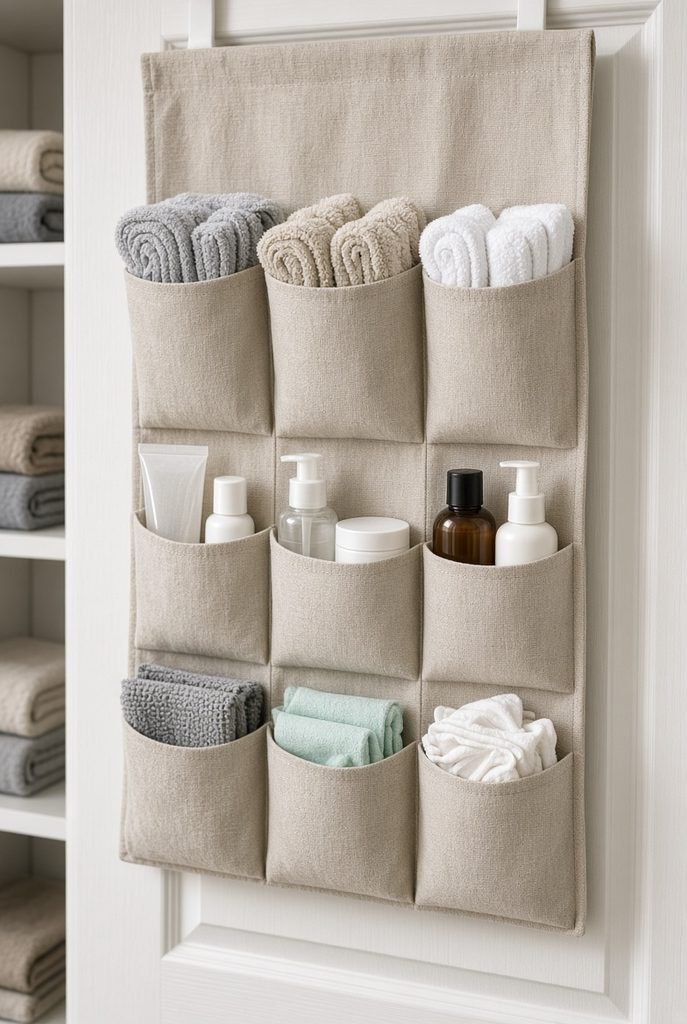
Most linen closets have unused potential on the door and in the vertical gaps between shelves.
- Install over-the-door racks or slim baskets for extra washcloths, cleaning cloths, or small toiletries.
- Add hooks on the inside of the door for robes or reusable shopping bags if appropriate.
- Use stackable shelf risers to create two levels on a single deep shelf.
- Consider a hanging organizer that suspends from a high shelf if floor or shelf space is limited.
These additions often provide storage equal to an entire extra shelf without enlarging the closet.
Step 7: Label Everything Clearly
Labels remove decision fatigue and help the system survive when multiple people use the closet. Use simple, readable labels on bins, baskets, and even shelf edges. Categories such as “Guest Towels,” “Queen Sheets,” “Washcloths,” and “Backup Toiletries” make it obvious where items belong.
If you prefer a minimal look, label the back or underside of bins so the labels are visible only when needed. The goal is clarity, not decoration.
Step 8: Maintain the System with Simple Habits
A beautifully organized linen closet will only stay that way if daily habits support it.
Practical maintenance rules:
- Return items to their assigned zone immediately after use or laundry.
- Refold towels and sheets the same way every time.
- When you bring new products in, remove an empty or expired one.
- Do a quick five-minute tidy once a week.
- Perform a deeper edit every six to twelve months to catch items that are no longer needed.
Teaching everyone in the household the basic system prevents the closet from slowly sliding back into disorder.
Common Mistakes to Avoid
- Keeping far more towels and sheets than the household actually uses
- Stacking items so high or deep that things at the bottom or back are forgotten
- Using containers that are difficult to open or too heavy when full
- Ignoring the door as valuable storage space
- Organizing only for appearance instead of daily function
- Failing to measure shelves before purchasing bins and dividers
- Mixing clean linens with cleaning chemicals in a way that risks contamination or odor transfer
Frequently Asked Questions
How many towels should I keep in a bathroom linen closet?
A practical guideline is two to three bath towel sets per person, plus one or two guest sets. More than that usually creates unnecessary bulk and makes the closet harder to keep neat.
Is it better to roll or fold towels?
Both methods work. Rolling can save space and look tidy in baskets. Folding and stacking (or file-folding) often works better on open shelves, especially when combined with dividers. Choose the method you are more likely to maintain.
How should I store sheet sets so they stay together?
Place the folded fitted sheet, flat sheet, and pillowcases inside one of the pillowcases. This keeps the full set contained and easy to grab. Label the bundle by bed size if needed.
What is the best way to organize a deep linen closet?
Use bins and baskets that can be pulled out like drawers so items at the back remain accessible. Place everyday categories at the front and backups behind them. Shelf risers and lazy Susans can also help with visibility.
Can I store cleaning products in the same closet as clean linens?
Yes, if you keep them in a clearly separated zone, preferably on a lower shelf or in a closed bin. Ensure bottles are tightly sealed and there is no risk of leaks onto clean textiles.
How often should I reorganize the linen closet?
A full reorganization is rarely needed more than once a year if you maintain the system. A quick declutter and reset every three to six months is usually enough to keep it functional.
Final Thoughts
Organizing a bathroom linen closet is less about achieving a perfect magazine image and more about creating a system that supports daily life. When towels are easy to grab, sheet sets stay together, and backup supplies are visible but not in the way, the closet becomes a quiet source of order rather than a daily irritation.
Follow the steps in order: empty and clean, declutter decisively, create clear zones, choose practical storage, fold consistently, use vertical and door space, label clearly, and maintain simple habits. The process takes a few focused hours, but the payoff lasts for months and years.