
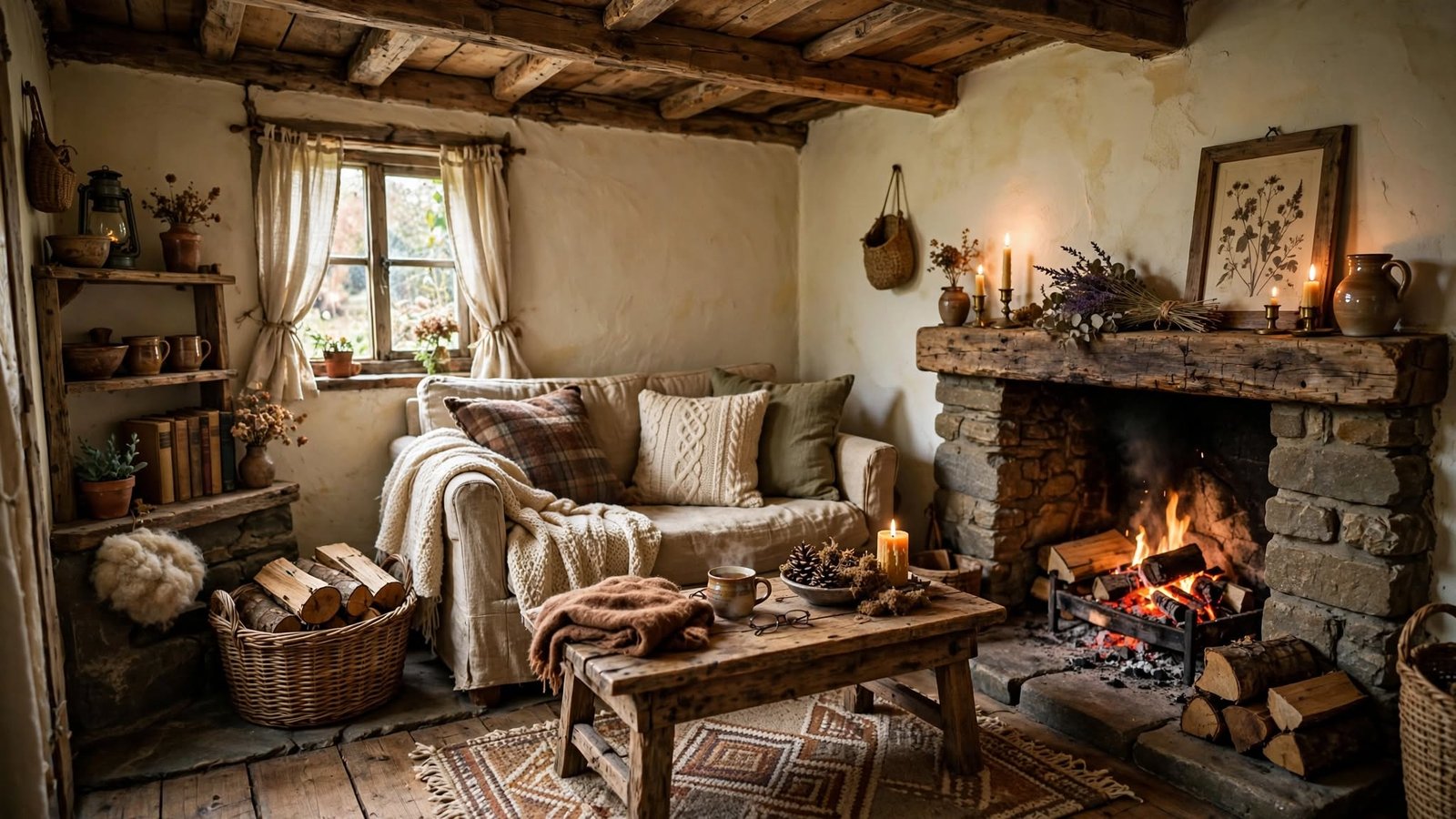

Small cottage interiors possess a natural charm that larger homes often struggle to replicate. Low ceilings, intimate proportions, and a sense of shelter create the perfect conditions for warmth and comfort. Yet the same qualities that make cottages feel cozy can quickly turn into visual and physical clutter when every surface is filled and every corner is claimed.
The central challenge of small cottage design is to cultivate genuine warmth while maintaining a sense of calm and order. This requires intentional principles rather than simply adding more soft furnishings or decorative objects. When these principles are applied with care, a small cottage can feel both inviting and uncluttered — a place that embraces comfort without visual noise.
Prioritize Scale and Proportion
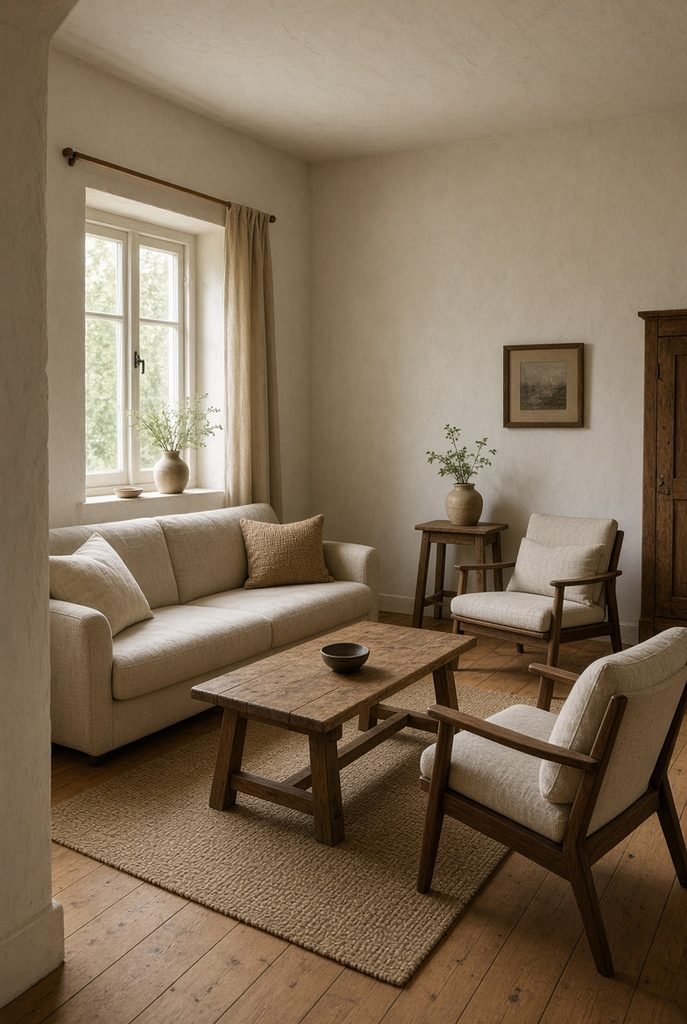
In a small cottage, furniture and objects must respect the limited proportions of the rooms. Oversized sofas, bulky tables, and tall storage pieces quickly overwhelm the space and make movement difficult.
Choose pieces that fit the architecture:
- Sofas and chairs with a lower profile and refined proportions
- Tables and desks that leave adequate circulation space
- Storage that uses vertical space without dominating the room
- Artwork and mirrors scaled to the wall rather than the entire house
When furniture is correctly scaled, the room feels more open and the architectural character of the cottage remains visible. Warmth then comes from materials and texture rather than from filling every inch.
Embrace a Restrained Color Palette
Color has a powerful effect on the perception of space and mood. In small cottages, a cohesive and relatively restrained palette creates visual calm while still allowing for warmth.
Effective approaches include:
- Soft whites, warm creams, and light neutrals as the dominant backdrop
- Gentle earthy accents such as muted greens, soft terracottas, or warm taupes
- Limited use of deeper tones for depth and contrast
- Consistent color relationships from room to room to avoid fragmentation
A calm palette allows texture, wood tones, and natural light to become the primary sources of interest. It also makes the space feel larger and more restful. Introducing too many competing colors is one of the fastest ways to create visual clutter in a small home.
Choose Materials That Add Warmth Through Texture
Warmth in cottage design comes less from decoration and more from the inherent qualities of materials. Natural and tactile surfaces create comfort even when the overall look remains simple.
Key materials that support this principle:
- Wood with visible grain and a soft or matte finish
- Linen, cotton, wool, and other natural textiles
- Stone, plaster, or softly textured walls
- Rattan, wicker, or simple woven elements
- Ceramics and glass with subtle variation
Layering a few honest materials produces depth and interest without requiring numerous objects. A wooden table, linen curtains, a wool throw, and a simple ceramic lamp can generate more genuine warmth than a room filled with accessories.
Edit Ruthlessly and Practice Intentional Emptiness
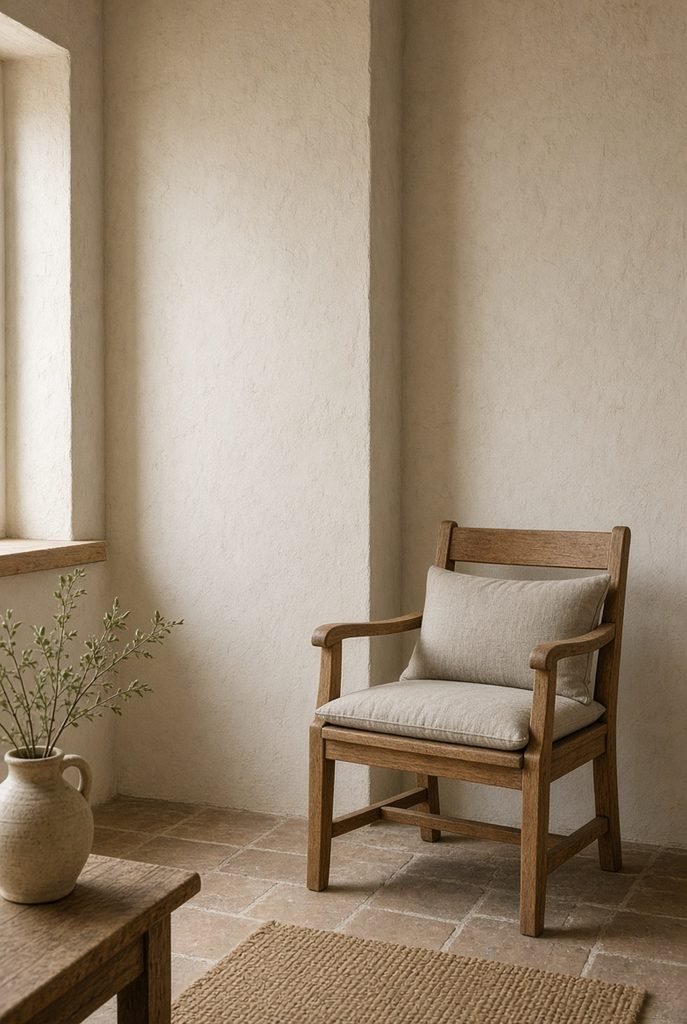
Clutter is the enemy of both calm and true cottage charm. In a small space, every object competes for attention. The most successful small cottages feel considered rather than crowded.
Practical editing habits include:
- Keeping only items that are useful or genuinely meaningful
- Allowing some surfaces and walls to remain clear
- Avoiding the urge to fill every shelf and corner
- Rotating decorative objects rather than displaying everything at once
- Choosing multi-functional pieces so fewer items are needed
Empty space is not a lack of design — it is an active element that lets the remaining pieces breathe. When the eye can rest, the warmth of the materials and the quality of light become more noticeable.
Maximize Natural Light and Soft Artificial Lighting
Light has a direct influence on how warm and open a small cottage feels. Natural light should be protected and enhanced wherever possible.
Helpful strategies:
- Use simple, light-filtering window treatments rather than heavy drapery
- Keep window areas relatively clear of large furniture
- Choose reflective or light-toned surfaces that bounce light deeper into the room
- Layer artificial lighting with warm-toned bulbs
- Include a mix of ambient, task, and low-level lighting so the space can shift from bright to intimate
Harsh overhead lighting can make a small room feel flat and uninviting. Soft, layered light supports the cozy atmosphere that cottages do best.
Create Comfort Through Textiles, Not Quantity
Textiles are essential for warmth, but they must be used with restraint in a small cottage. A few well-chosen pieces are more effective than an abundance of pillows, throws, and rugs.
Focus on:
- Quality over quantity
- Natural fibers that feel pleasant to the touch
- A limited range of complementary textures and colors
- Practical placement (a throw that is actually used, a rug that defines a seating area)
When textiles are edited carefully, they add softness and comfort without contributing to visual clutter. The goal is a sense of lived-in ease rather than staged coziness.
Use Storage That Disappears or Works Hard
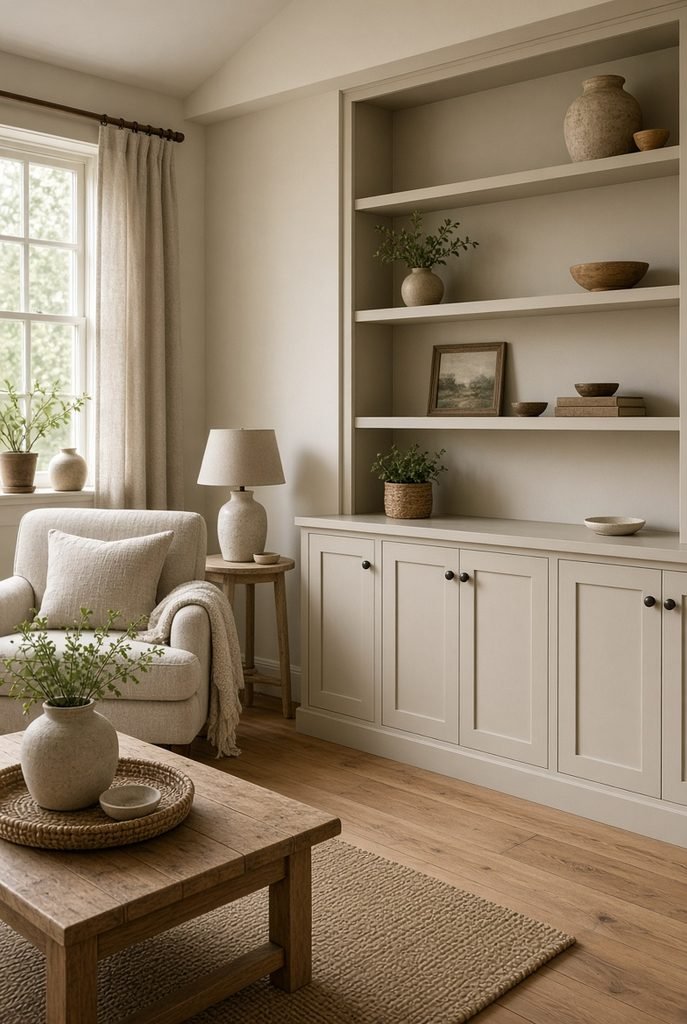
Clutter often accumulates because there is nowhere logical to put things. In a small cottage, storage must be both sufficient and discreet.
Effective solutions include:
- Built-in or custom storage that fits the architecture
- Furniture that conceals storage (benches with lids, ottomans, beds with drawers)
- Vertical storage that draws the eye upward
- Closed cabinets for items that create visual noise
- Open shelving used sparingly and kept strictly edited
When storage is well planned, everyday objects have a home and surfaces can remain clearer. This supports both function and the uncluttered aesthetic.
Maintain a Connection to Nature
Cottages traditionally sit close to the landscape, and bringing a sense of the outdoors inside reinforces warmth and calm.
Simple ways to do this:
- Maximize views through uncovered or lightly dressed windows
- Include a small number of plants or natural branches
- Choose materials and colors that reference the natural world
- Keep decorative objects grounded and organic rather than purely ornamental
A strong connection to nature makes the interior feel more expansive and restful, reducing the need for excessive interior stimulation.
Allow for Gentle Imperfection
Perfectly matched and overly polished interiors can feel cold, especially in a cottage setting. A degree of softness and imperfection supports the feeling of warmth.
This might appear as:
- Slightly worn wood surfaces
- Linen that is allowed to wrinkle naturally
- Handmade or slightly irregular ceramics
- A mix of older and newer pieces that feel collected over time
The key is authenticity rather than artificial distress. Spaces that feel too perfect often lack the human quality that makes cottages appealing.
Common Mistakes to Avoid
- Filling every surface in an attempt to make the space feel “cozy”
- Using furniture that is too large for the rooms
- Introducing too many colors, patterns, or decorative styles at once
- Relying on heavy window treatments that block light
- Neglecting storage so that clutter accumulates on surfaces
- Over-accessorizing open shelves and mantelpieces
- Treating the cottage as a showroom rather than a lived-in home
Frequently Asked Questions
How can I make a small cottage feel warm without adding more objects?
Focus on material quality, soft lighting, a cohesive color palette, and carefully chosen textiles. Warmth comes more from texture, light, and proportion than from the number of items in the room.
Is it possible to mix modern pieces with cottage style in a small space?
Yes, provided the modern pieces respect the scale of the rooms and share a similar sensitivity to material and proportion. Clean-lined furniture in natural materials often sits comfortably alongside older cottage elements.
How much decoration is the right amount in a small cottage?
Less than you might first assume. Choose a few meaningful or beautiful objects and give them space. When in doubt, remove rather than add. Empty space helps the remaining pieces feel more intentional.
What flooring works best for creating warmth in a small cottage?
Wood floors, stone with a soft finish, and natural-fiber rugs all contribute warmth. Light to medium wood tones often help small rooms feel larger while still providing a sense of comfort underfoot.
How do I keep a small cottage from feeling cluttered when I have limited storage?
Edit belongings regularly, use furniture that incorporates storage, and keep only what is actively used or truly valued. Vertical storage and closed cabinets help contain visual noise.
Final Thoughts
Creating warmth without clutter in a small cottage is an exercise in restraint and sensitivity. The most successful interiors rely on correct scale, honest materials, soft light, a calm palette, and deliberate editing. When these principles guide decisions, the limited square footage becomes an advantage rather than a limitation.
A small cottage does not need to be filled to feel complete. It needs to be carefully considered. By protecting empty space, choosing materials that carry warmth in themselves, and allowing the architecture and light to play their part, you can create a home that feels both deeply comfortable and visually restful — a place where warmth and calm exist together.