
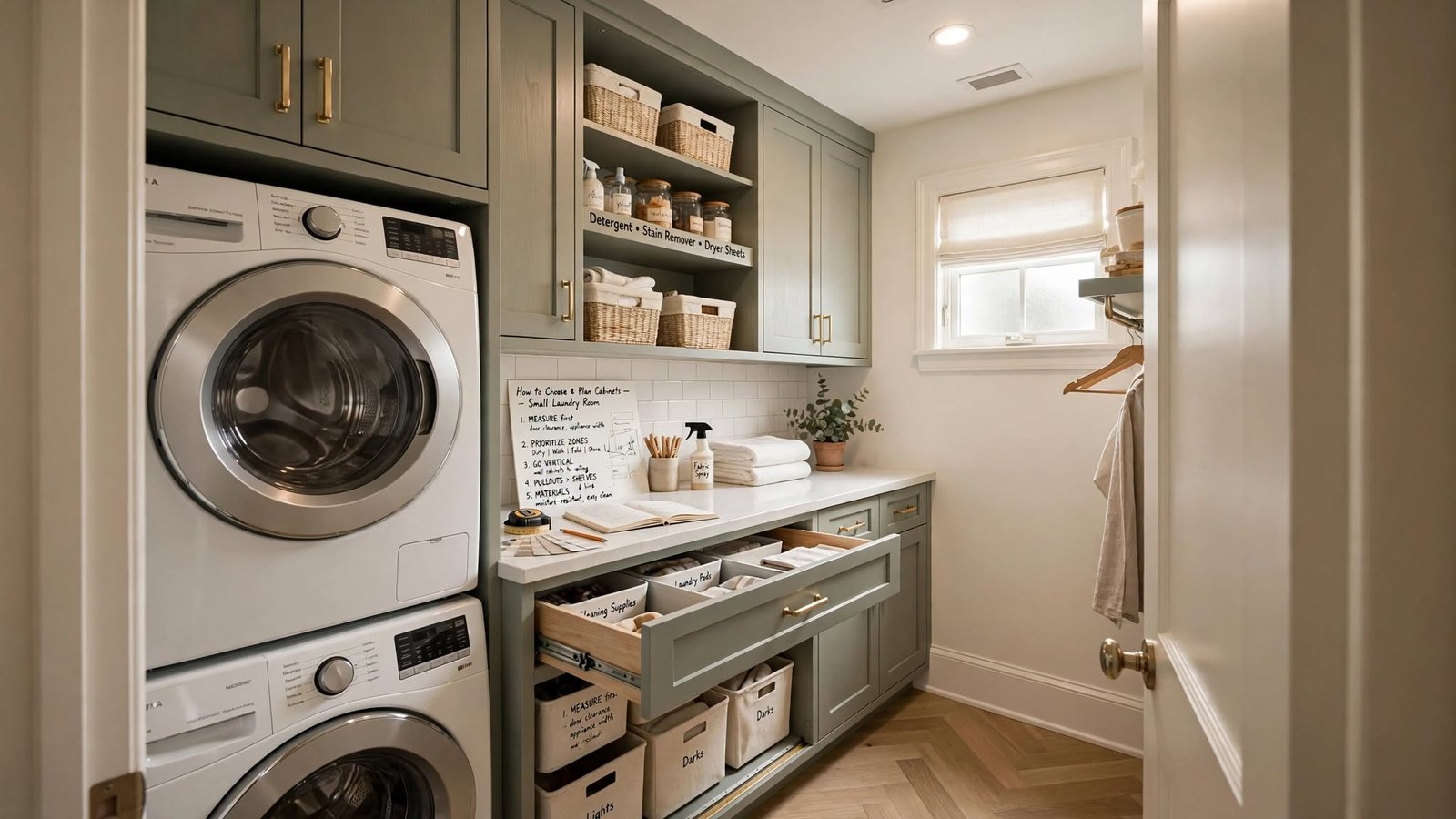

A small laundry room presents a unique design challenge. The space must accommodate appliances, cleaning supplies, dirty and clean laundry, hanging clothes, and often household overflow, all within a limited footprint. Without careful planning, the room quickly becomes cluttered and inefficient. Well-chosen cabinetry is the single most effective way to bring order, increase storage, and make daily laundry tasks smoother.
Functional cabinetry in a small laundry room does more than hide supplies. It creates defined zones, maximizes every inch of vertical and horizontal space, and supports a logical workflow. This guide walks you through how to assess your needs, plan the layout, select the right cabinetry, and avoid common mistakes so the finished room works hard for its size.
Assess Your Laundry Needs and Workflow
Before selecting any cabinets, clarify how the room is actually used. A laundry space that only handles washing and drying has different requirements than one that also serves as a utility closet, pet station, or household command center.
Key questions to answer:
- How many people use the laundry room regularly?
- Do you need space for sorting dirty clothes?
- Is hanging space for drip-dry items essential?
- How much detergent, softener, stain removers, and cleaning products do you store?
- Do you need room for an ironing board, vacuum, or other tools?
- Will the room also store bulk paper goods, pet supplies, or backup household items?
Mapping the workflow — from dirty laundry to clean and folded or hung — helps determine which cabinet types and configurations will support the process rather than interrupt it.
Measure the Space Accurately

Precise measurements are critical in a small laundry room because every inch matters. Record:
- Overall width, depth, and height of the room
- Dimensions and clearances of the washer and dryer (including doors and venting)
- Location of plumbing, electrical outlets, and dryer vent
- Door swing or pocket-door clearance
- Window or other fixed elements that limit cabinet placement
Note the height of the appliances. Many modern washers and dryers can accept a countertop above them, which opens valuable opportunities for upper cabinets or open shelving. Also measure the depth carefully — standard base cabinets are often 24 inches deep, but shallower options may be necessary in tight spaces.
Define Essential Storage Zones
Effective laundry cabinetry organizes items into logical zones so everything has a clear home. Common zones include:
- Detergent and cleaning product storage
- Dirty laundry sorting (if space allows)
- Clean laundry folding or temporary holding
- Hanging space for items that cannot go in the dryer
- Tool and equipment storage (ironing board, vacuum attachments, etc.)
- Bulk or backup supply storage
Assigning zones before choosing cabinets prevents the common problem of random, inefficient storage that looks organized at first but fails in daily use.
Choose Cabinetry Types That Maximize a Small Footprint
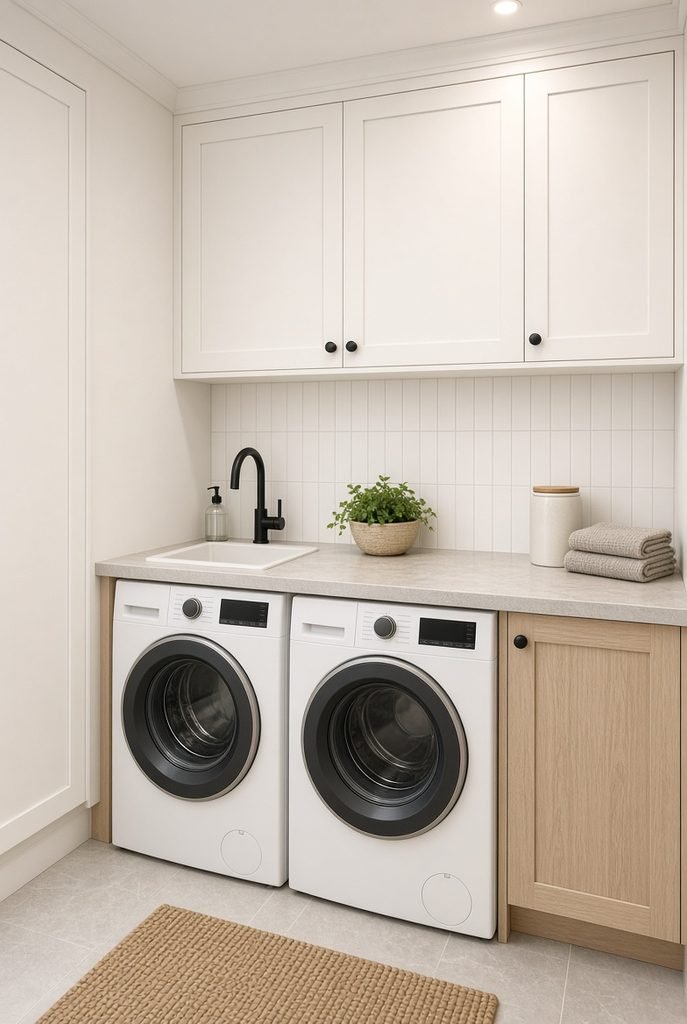
Not every cabinet style works equally well in a compact laundry room. Prioritize configurations that deliver high storage density without crowding the floor.
Upper Cabinets
These are often the highest-value addition. Wall-mounted cabinets above the washer and dryer or along an empty wall keep supplies off the counter and floor. Choose cabinets that go as high as practical to use full vertical space. Glass-front or open shelves can lighten the visual weight if solid doors feel too heavy.
Base Cabinets and Drawer Banks
Where floor space allows, base cabinets provide closed storage for heavier items and create a surface for folding. Drawers are generally more accessible than deep lower cabinets for frequently used supplies.
Tall Utility Cabinets
A single tall cabinet can hold an ironing board, vacuum, brooms, or bulk items while occupying minimal floor width. These are especially useful in narrow laundry rooms.
Open Shelving
Open shelves work well for baskets, folded towels, or decorative storage bins. They are less expensive than closed cabinets and keep items visible, but they require more discipline to stay tidy.
Specialty Laundry Cabinets
Some manufacturers offer cabinets designed specifically for laundry use, including pull-out hampers, tilt-out sorting bins, and built-in hanging rods. These can be highly efficient when the budget allows.
In very small rooms, a combination of upper cabinets plus a countertop over the appliances often delivers the best balance of storage and usable surface.
Prioritize Moisture-Resistant and Durable Materials
Laundry rooms experience humidity, occasional spills, and temperature changes. Cabinetry materials should be chosen with this environment in mind.
Practical recommendations:
- Moisture-resistant plywood or quality particleboard with a durable finish
- Thermofoil, laminate, or properly sealed painted finishes that stand up to humidity
- Soft-close hinges and drawer slides rated for frequent use
- Hardware that resists corrosion (avoid untreated metal that may rust)
Solid wood can work if it is well sealed, but it may expand and contract more than engineered materials in a humid space. Whatever material you choose, ensure the finish is easy to wipe clean.
Plan Counter Space and Work Surfaces
A functional laundry room benefits from at least some flat surface for sorting, treating stains, folding, or setting down supplies. In small rooms this surface is often created by running a countertop over front-loading washer and dryer units.
Guidelines for planning:
- Leave enough clearance above the appliances for comfortable use and ventilation
- Choose a durable, water-resistant countertop material
- Consider a slightly deeper counter if space allows so items do not feel cramped
- Integrate a small sink if plumbing and space permit — it greatly increases functionality
Even a modest counter transforms the usability of the room.
Incorporate Smart Interior Fittings
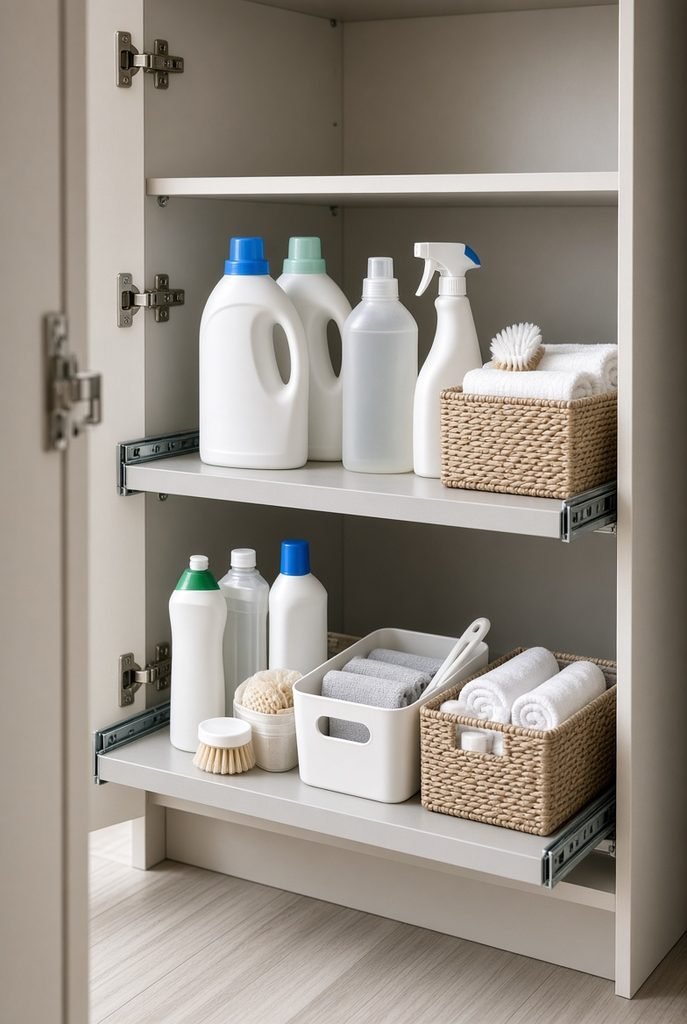
The inside of the cabinets matters as much as the exterior layout. Functional fittings make daily use easier and increase effective capacity.
Useful interior options:
- Pull-out trays or deep drawers for heavy detergent bottles
- Adjustable shelves so heights can be changed as needs evolve
- Vertical dividers for baking sheets, cutting boards, or flat items if the laundry room shares utility functions
- Pull-out hampers or tilt-out bins for dirty laundry
- Door-mounted racks for small bottles or gloves
- Built-in or add-on hanging rods for drip-dry clothes
These details often determine whether the cabinetry feels merely adequate or genuinely efficient.
Consider Workflow and Clearances
Cabinetry should support movement rather than obstruct it. Maintain adequate clearance in front of appliances so doors can open fully and baskets can be moved easily. Avoid placing cabinets where they interfere with the dryer vent, utility shut-offs, or the room door.
If the laundry room is also a passageway, keep the center of the floor as clear as possible. In galley-style layouts, cabinetry on only one wall is often more practical than trying to force cabinets on both sides.
Balance Closed Storage and Visual Lightness
Solid cabinetry provides maximum concealment but can make a small room feel boxy or dark. Strategies to keep the space feeling open include:
- Combining closed upper cabinets with some open shelving
- Using lighter cabinet colors
- Adding under-cabinet lighting
- Choosing glass-front upper cabinets for part of the run
- Keeping the floor and lower walls visually lighter
The goal is enough closed storage to hide visual clutter while preserving a sense of airiness.
Common Mistakes to Avoid
- Installing cabinets without first confirming appliance dimensions and clearances
- Choosing deep base cabinets that make the room feel cramped
- Neglecting vertical space and stopping cabinets short of the ceiling
- Using materials or finishes that cannot handle humidity
- Creating storage that looks neat but does not match actual daily habits
- Forgetting to plan for hanging space or dirty-laundry sorting
- Overfilling the room with cabinetry so that workflow and movement suffer
Frequently Asked Questions
Should I put cabinets over the washer and dryer?
In most small laundry rooms, yes. Upper cabinets or a combination of cabinets and open shelves above the appliances provide valuable storage without consuming floor space. Ensure proper clearance and ventilation.
What depth of cabinet works best in a small laundry room?
Standard 24-inch deep base cabinets can feel bulky. Where space is tight, 12- to 18-inch deep upper cabinets and shallower base units often work better. Measure carefully and prioritize circulation.
Is it better to have open shelves or closed cabinets?
Closed cabinets hide clutter and protect supplies from dust and moisture. Open shelves are more accessible and visually lighter but require consistent tidiness. Many successful small laundry rooms use a combination of both.
How high should upper cabinets go?
Taking cabinets to the ceiling maximizes storage and reduces dust-collecting surfaces. If reaching the top shelves is difficult, use them for rarely needed bulk items and keep everyday supplies lower.
Can I install laundry cabinetry myself?
Simple upper cabinets and open shelving are manageable for experienced DIYers. Full base cabinet runs, countertops over appliances, and plumbing or electrical modifications are often better handled by professionals to ensure safety and proper function.
Final Thoughts
Functional cabinetry transforms a small laundry room from a purely utilitarian corner into an organized, efficient workspace. The key is planning before purchasing: understand your workflow, measure precisely, define storage zones, and choose moisture-resistant materials and smart interior fittings.
When cabinetry is selected and arranged with the realities of daily laundry in mind, even a compact room can handle appliances, supplies, sorting, folding, and hanging without feeling crowded. Prioritize vertical storage, protect clearances, and balance closed storage with visual lightness. The result is a laundry room that supports the work rather than complicating it — a small space that performs far beyond its square footage.