
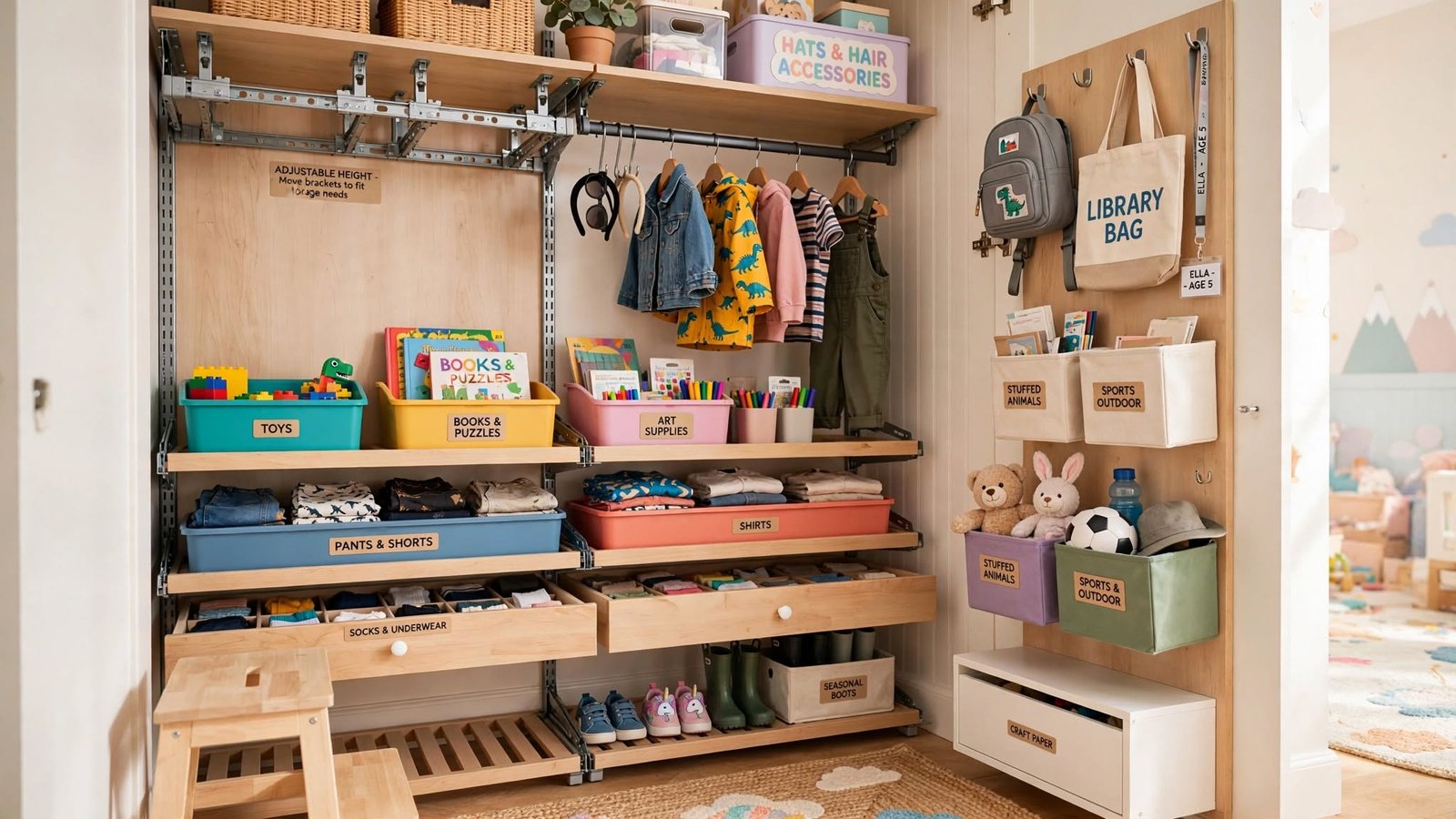

Children grow quickly, and their storage needs change just as fast. A closet that works perfectly for a toddler can become frustrating and inefficient within a couple of years. Clothes get longer, shoe sizes increase, toys and accessories multiply, and the child eventually wants more independence in choosing and putting away their own items. The most successful kids’ closets are therefore not static — they are designed from the beginning to adapt.
An adaptable kids’ closet storage system anticipates growth, supports independence, and remains functional through multiple stages of childhood. This guide walks you through how to plan, build, and adjust a closet that evolves with your child rather than needing a complete overhaul every few years.
Start with the Long-Term Vision
Before installing a single shelf or rod, think about the full span of years the closet will serve. A system that works from roughly age 2 or 3 through the early teen years offers the best return on effort and cost. Key principles that support this longevity include:
- Adjustable shelving and rods that can be moved as needed
- A mix of hanging, folded, and bin storage that can be rebalanced over time
- Lower zones that a child can reach independently, with higher zones reserved for adult-managed or out-of-season items
- Durable materials and simple designs that withstand daily use
- Clear visual organization so both parent and child can maintain the system
Designing with these principles in mind prevents the closet from becoming obsolete as the child grows.
Measure and Map the Closet Space
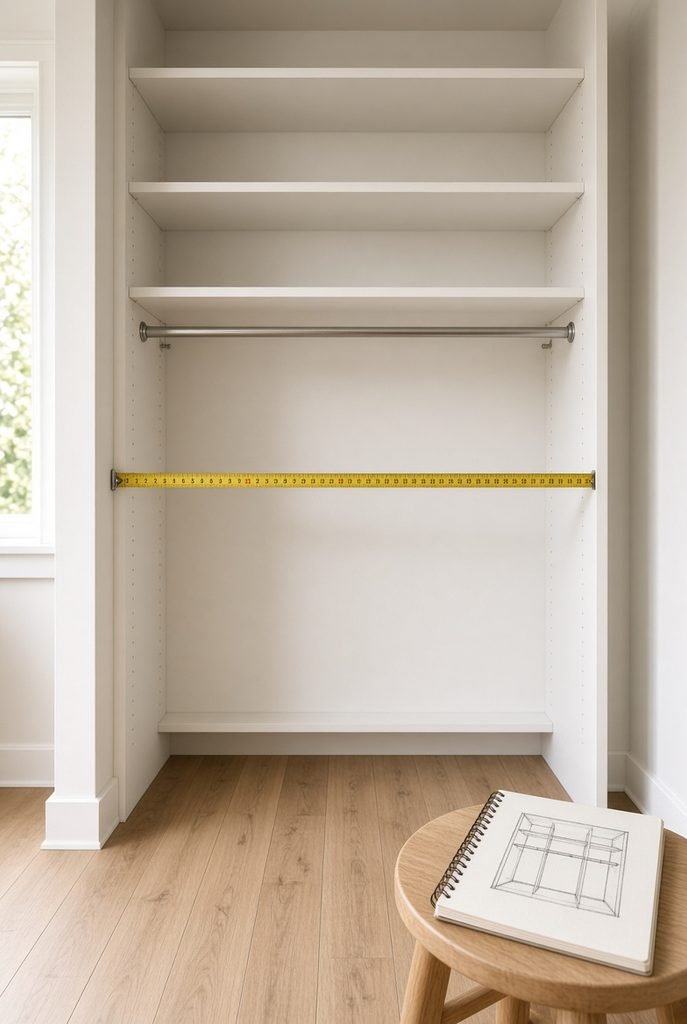
Accurate measurements are essential. Record:
- Width, depth, and height of the closet
- Location of the door swing or sliding doors
- Existing rods, shelves, or obstacles
- Available wall space for additional components
Sketch a simple elevation of the closet and mark potential zones. Leave flexibility in the plan so shelves and rods can shift upward or downward as needs change. If you are starting from an empty closet or removing an old system, this is the ideal time to install an adjustable track or modular system that allows future reconfiguration without new holes or major work.
Choose an Adjustable Framework
The foundation of an adaptable closet is a system that can change. Options range from fully modular closet kits to simple DIY solutions:
- Adjustable shelf tracks and brackets (widely available and relatively affordable)
- Modular closet systems with movable rods and shelves
- Freestanding or wall-mounted units that can be reconfigured
- A combination of fixed upper storage and adjustable lower zones
Avoid permanent, fixed-height rods and shelves for the main clothing areas. Even a basic adjustable track system dramatically increases the closet’s usable lifespan. If budget is limited, focus adjustable components on the hanging and everyday folded zones, and use fixed shelving for higher backup storage.
Create Zones That Can Evolve
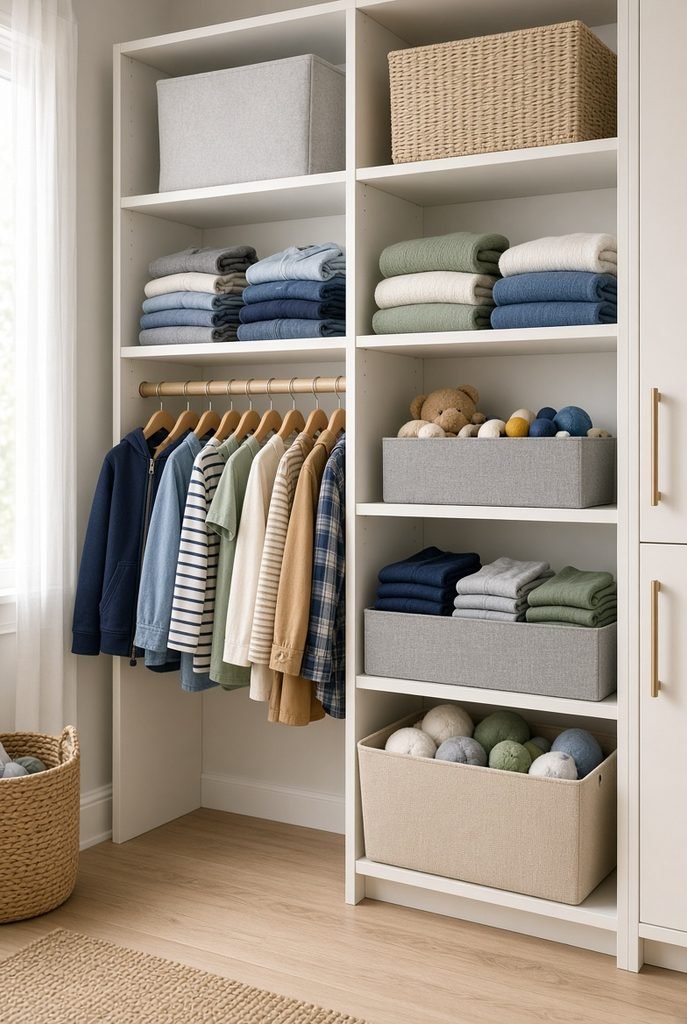
A well-designed kids’ closet divides space into clear, purposeful zones that can be adjusted over time. A practical zone structure includes:
Everyday Hanging Zone
A lower rod (reachable by the child) for current-season shirts, dresses, jackets, and school clothes. As the child grows, this rod can be raised. A second, higher rod can be added later for adult-length garments or formal clothes.
Folded Clothing Zone
Shelves or cubbies for pants, shorts, sweaters, and pajamas. Adjustable shelves allow you to change the height and number of compartments as clothing sizes and volumes change.
Bin and Basket Zone
Open bins or pull-out baskets for items that are hard to fold or that children can manage easily — socks, underwear, accessories, or small toys. Label these clearly. Bins can be swapped or repositioned as interests and needs shift.
Shoe Zone
Low shelving, a shoe rack, or clear bins on the floor or a low shelf. This area often needs expansion as shoe collections grow and sizes increase.
Backup and Out-of-Season Zone
Higher shelves for extra clothes, seasonal items, luggage, or rarely used pieces. This zone stays largely adult-managed and can remain relatively fixed.
Special or Changing Zone
A flexible section that might hold costumes, sports gear, backpacks, or hobby items. This zone often changes most dramatically from year to year.
Designing with distinct zones makes it easier to adjust one area without disrupting the entire closet.
Prioritize Accessibility and Independence
One of the greatest benefits of a well-planned kids’ closet is that it supports growing independence. When children can reach and put away their own everyday clothes, mornings become smoother and responsibility develops naturally.
Practical guidelines:
- Keep current daily clothing between roughly knee and shoulder height for the child.
- Use open bins or low drawers so items are visible and easy to grab.
- Avoid deep shelves where clothes get lost at the back.
- Choose lightweight hangers that small hands can manage.
- Add a small step stool if needed, and store it nearby.
As the child grows taller, simply raise the primary hanging rod and adjust shelf heights rather than redesigning the whole closet.
Select Durable, Easy-to-Use Storage Components
Materials and hardware matter because kids’ closets experience heavy daily use.
Recommended choices:
- Sturdy adjustable metal or wood shelf systems
- Plastic or fabric bins that are easy to clean and lightweight
- Clear or labeled containers so contents are visible
- Quality hanging rods that can be repositioned
- Soft-close or simple hardware that withstands repeated use
- Non-slip shelf liners to keep stacks tidy
Avoid overly delicate or purely decorative organizers that will not survive real childhood use. Function and durability should lead the decisions.
Make the System Understandable with Labels and Visual Cues
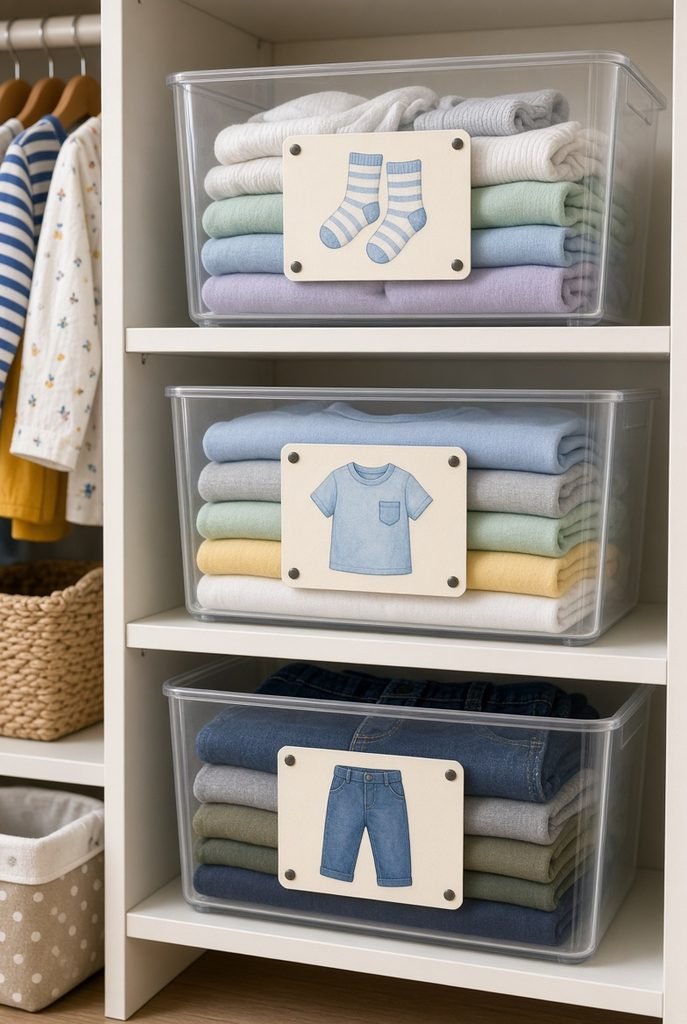
Labels turn an organized closet into a maintainable one. Young children benefit from picture labels; older children can use word labels. Label bins, shelves, and even sections of the rod if helpful.
Color-coding can also work well — for example, one color for school clothes and another for play clothes. The clearer the system, the more likely the child will participate in keeping it tidy.
Plan for Seasonal Rotation and Growth Spurts
Adaptable closets handle change smoothly when seasonal rotation and size transitions are built into the routine.
Twice a year (or as needed):
- Move out-of-season clothes to the higher backup zone or under-bed storage
- Bring current-season items into the accessible zones
- Reassess shelf heights and rod positions
- Edit clothes that have been outgrown
- Adjust bin contents to match current needs
This regular review keeps the closet from becoming overcrowded and ensures the accessible zones always contain what the child actually wears.
Maintain Flexibility as the Child Ages
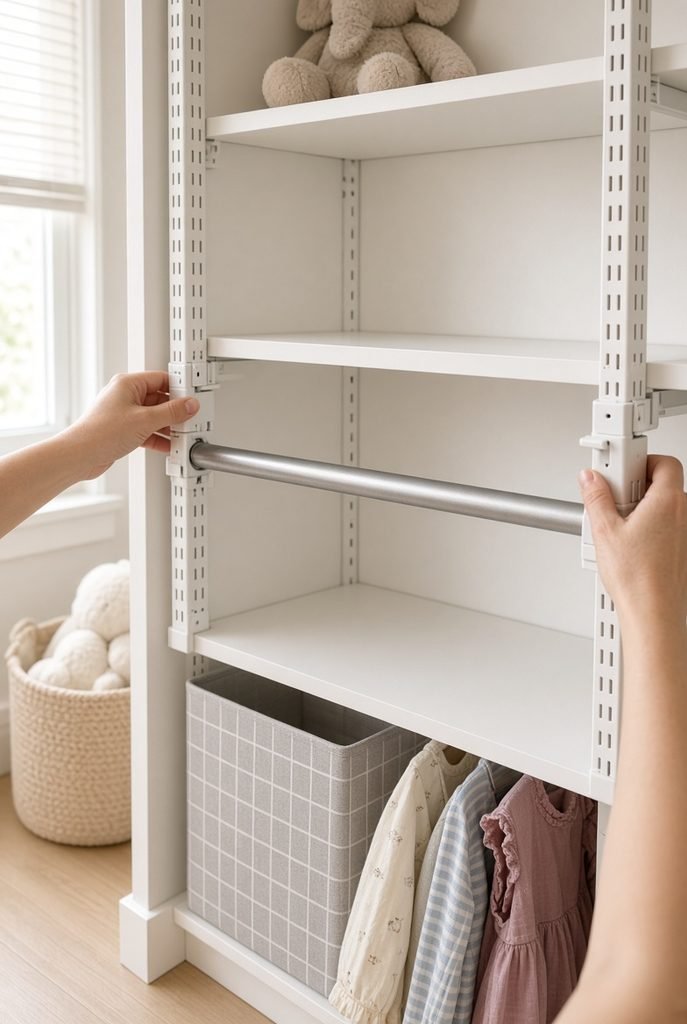
What works at age four will look different at age nine or twelve. The advantage of an adaptable system is that the same basic framework can shift:
- Toddler years: Lower rods, more bin storage, simpler categories
- Early elementary: More hanging space, clearer divisions between school and play clothes
- Later elementary and pre-teen: Higher rods, more folded storage for larger clothes, space for emerging personal style and accessories
Because the infrastructure is adjustable, these transitions require repositioning rather than replacement.
Common Mistakes to Avoid
- Installing fixed rods and shelves that cannot be moved as the child grows
- Filling the closet with current clothes only and leaving no room for growth or seasonal items
- Placing everyday items too high for the child to reach
- Using too many small containers that create visual and practical clutter
- Designing only for today’s sizes and ignoring the next two to three years
- Neglecting labels so the system makes sense only to the adult who created it
- Choosing purely decorative solutions that do not hold up to daily use
Frequently Asked Questions
At what age should I start building an adaptable closet system?
The best time is when the child moves into a regular bedroom closet, often around age 2 or 3. Starting early with adjustable components means fewer major changes later.
Are expensive modular closet systems necessary?
No. A simple adjustable track-and-bracket system combined with sturdy bins and a couple of quality rods can be highly effective and far more affordable than full custom systems.
How do I involve my child in keeping the closet organized?
Make the accessible zones easy to understand and use. Picture labels, open bins, and a consistent place for everything help. Involve the child in seasonal resets so they learn the system.
What should I do with clothes that are between sizes or seasons?
Store them in the higher backup zone or in labeled under-bed bins. Keeping only current, wearable items in the everyday zones prevents overcrowding.
How often should the closet be adjusted?
A light seasonal review twice a year is usually enough. Additional small adjustments can be made whenever you notice the child struggling to reach items or when a growth spurt changes clothing sizes significantly.
Can the same system work for shared closets with two children?
Yes, with clear division. Assign each child distinct zones or color-coded bins and rods. Adjustable components make it easier to rebalance space as the children grow at different rates.
Final Thoughts
An adaptable kids’ closet is one of the most practical investments you can make in a child’s room. By choosing adjustable infrastructure, creating clear zones, prioritizing accessibility, and building in room for growth, you create a system that supports both current daily life and the years ahead.
The goal is not perfection on day one, but a flexible framework that can evolve. When the closet grows with the child, it remains useful, reduces daily friction, and teaches organization skills in a natural way. Start with solid measurements, invest in adjustability where it matters most, and keep the system simple enough that both you and your child can maintain it. The result is a closet that works — not just for now, but for the many stages still to come.