
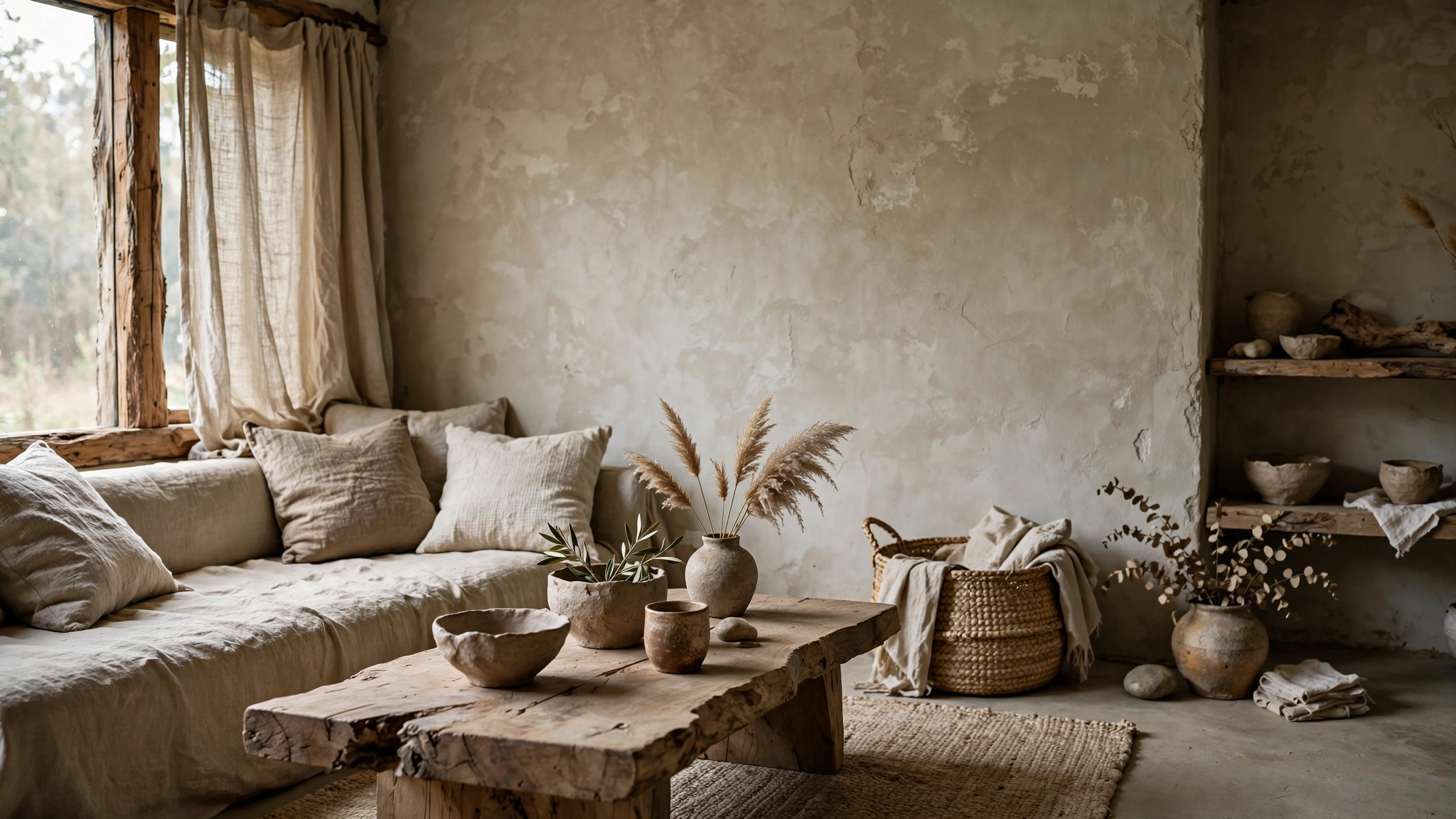

Wabi-sabi is not a decorating style in the conventional sense. It is a way of seeing. Rooted in Japanese aesthetics and Zen philosophy, wabi-sabi finds beauty in imperfection, impermanence, and incompleteness. In interior design, it translates into spaces that feel calm, honest, and deeply human — rooms that welcome the passage of time rather than fighting it.
Unlike trends that chase perfection or constant newness, wabi-sabi invites us to value the cracked bowl, the weathered wood, the uneven texture, and the quiet empty corner. This guide explores the core philosophy, guiding principles, essential materials, and practical ways to bring wabi-sabi into a modern home without turning it into a theme park version of Japanese design.
The Philosophy Behind Wabi-Sabi
Wabi-sabi emerged from Japanese tea ceremony traditions and Buddhist thought. “Wabi” originally referred to the beauty of humble, rustic simplicity and a sense of quiet melancholy. “Sabi” speaks to the beauty that comes with age, wear, and the passage of time — the patina on metal, the soft fading of color, the marks left by use.
Together they form a worldview that accepts transience and imperfection as essential parts of life. Nothing lasts, nothing is finished, and nothing is perfect. Instead of resisting these truths, wabi-sabi finds quiet beauty in them.
In a home, this philosophy shows up as restraint, authenticity, and a preference for objects and materials that show their history. It is the opposite of glossy, mass-produced perfection. A wabi-sabi space feels lived-in, grounded, and peaceful rather than staged.
Core Principles of Wabi-Sabi Interior Design
Several overlapping principles guide wabi-sabi spaces:
Simplicity and Restraint Fewer objects, cleaner lines, and intentional emptiness. Clutter is avoided not for the sake of minimalism alone, but because empty space allows what remains to be truly seen and appreciated.
Asymmetry and Irregularity Perfect symmetry and machine-made uniformity are avoided. Handmade objects, slightly uneven edges, and organic arrangements feel more alive and natural.
Natural Imperfection Cracks, knots, rough textures, and signs of wear are not hidden — they are celebrated as evidence of life and time.
Transience and the Beauty of Aging Materials that change gracefully over time (wood that darkens, metal that develops a patina, linen that softens) are preferred over those that try to stay permanently new.
Quietness and Subtlety Colors are muted, textures are tactile, and the overall atmosphere is calm rather than dramatic or attention-seeking.
Connection to Nature Natural light, views of the outdoors, organic materials, and a sense of the seasons moving through the space are central.
These principles work together. A single imperfect ceramic vase on a simple wooden table in soft natural light can express more wabi-sabi feeling than a room full of “Japanese-inspired” décor.
Key Materials in Wabi-Sabi Interiors
Materials are chosen for honesty, texture, and how they age.
Wood Unfinished or lightly finished woods with visible grain, knots, and variation. Reclaimed wood, rough-sawn timber, and pieces that show tool marks or weathering are especially valued. Avoid high-gloss or heavily stained surfaces that hide the material’s character.
Clay, Ceramics, and Stoneware Handmade pottery with irregular shapes, subtle glaze variations, and occasional cracks or repairs (such as kintsugi, the art of mending with gold). These objects carry a sense of human touch and history.
Stone and Earth Materials Raw or lightly worked stone, plaster walls with soft texture, and earthen finishes that feel cool and grounded.
Natural Textiles Linen, cotton, wool, and hemp in their natural or softly dyed states. Fabrics that wrinkle, soften, and show wear over time fit the philosophy far better than synthetic, perfectly smooth materials.
Metal with Patina Iron, bronze, or copper that has been allowed to age. Darkened, slightly rusted, or hand-forged pieces feel more authentic than shiny chrome or polished stainless steel.
Paper and Natural Fibers Washi paper, woven grasses, and simple paper lanterns that diffuse light softly.
The common thread is that every material is allowed to be itself. Nothing is forced to look newer, smoother, or more perfect than it naturally is.
Color Palette and Light
Wabi-sabi interiors favor a restrained, earthy palette: soft grays, warm beiges, muted greens, clay tones, charcoal, and the natural colors of wood and stone. Bright, saturated colors and high-contrast schemes are generally avoided because they feel too assertive.
Light is treated as a material in its own right. Soft, diffused natural light is ideal. Sheer curtains, paper screens, or simply uncovered windows allow light to move gently across textured surfaces throughout the day. Artificial lighting tends to be warm, low-level, and layered rather than bright and uniform.
How to Bring Wabi-Sabi into a Modern Home
You do not need to live in a traditional Japanese house to practice wabi-sabi. The principles can be applied quietly in almost any setting:
- Edit belongings ruthlessly. Keep only what is useful or genuinely meaningful.
- Choose fewer, better objects that show craftsmanship or age gracefully.
- Leave some walls and surfaces empty so the eye can rest.
- Prefer handmade or imperfect items over mass-produced perfection.
- Allow materials to show wear instead of constantly refinishing or replacing them.
- Bring in natural elements — a simple branch, a stone, a handmade bowl — without over-styling them.
- Accept and even highlight the marks of daily life rather than hiding them.
The goal is not to create a museum-like space, but a home that feels calm, honest, and comfortable with its own imperfections.
Common Misunderstandings
Wabi-sabi is often confused with minimalism, rustic farmhouse style, or simply “Japanese décor.” While there is some overlap, the differences matter. Minimalism can feel cold or austere; wabi-sabi feels warm and accepting. Rustic style may celebrate roughness, but not necessarily the deeper philosophical acceptance of transience. And simply adding a few Japanese objects does not create a wabi-sabi interior if the overall approach still chases perfection or novelty.
True wabi-sabi is quieter and more profound than any surface aesthetic.
Frequently Asked Questions
Is wabi-sabi the same as minimalism?
No. Minimalism focuses on reducing possessions and visual noise, often toward a clean, modern ideal. Wabi-sabi also values simplicity, but it specifically embraces imperfection, aging, and the beauty of the incomplete. A wabi-sabi space can feel softer and more soulful than a strictly minimalist one.
Can I mix wabi-sabi with other styles?
Yes, carefully. Wabi-sabi principles can gently influence a modern, Scandinavian, or even industrial space through material choices, restraint, and acceptance of imperfection. The key is not to force a theme but to let the philosophy guide decisions about what to keep, what to buy, and how to live with things as they age.
Does wabi-sabi mean everything has to look old or damaged?
Not at all. It means valuing authenticity and the natural life cycle of objects. A new handmade ceramic piece with slight irregularities fits as well as an old wooden table with a worn surface. The emphasis is on honesty rather than artificial distress.
How do I start if my home currently feels cluttered and polished?
Begin with editing. Remove items that no longer serve or bring quiet pleasure. Then introduce one or two natural, imperfect objects and allow more empty space. Over time, replace glossy or synthetic pieces with materials that age more gracefully. The shift is gradual and personal.
Is wabi-sabi only for certain types of homes?
No. While it is often associated with simple or natural interiors, the underlying philosophy can be practiced in apartments, modern houses, or even more traditional Western homes. It is less about architecture and more about attitude toward objects, materials, and time.
Final Thoughts
Wabi-sabi interior design is ultimately an invitation to slow down and see differently. It asks us to find beauty in what is ordinary, imperfect, and fleeting rather than constantly seeking the new and flawless. In a culture that often equates worth with perfection and novelty, this perspective can feel quietly radical.
When applied with sincerity, wabi-sabi creates homes that feel peaceful, grounded, and deeply livable — spaces that do not demand perfection from us or from the things we live with. The most successful wabi-sabi interiors are not those that look the most “Japanese,” but those that feel the most honest.